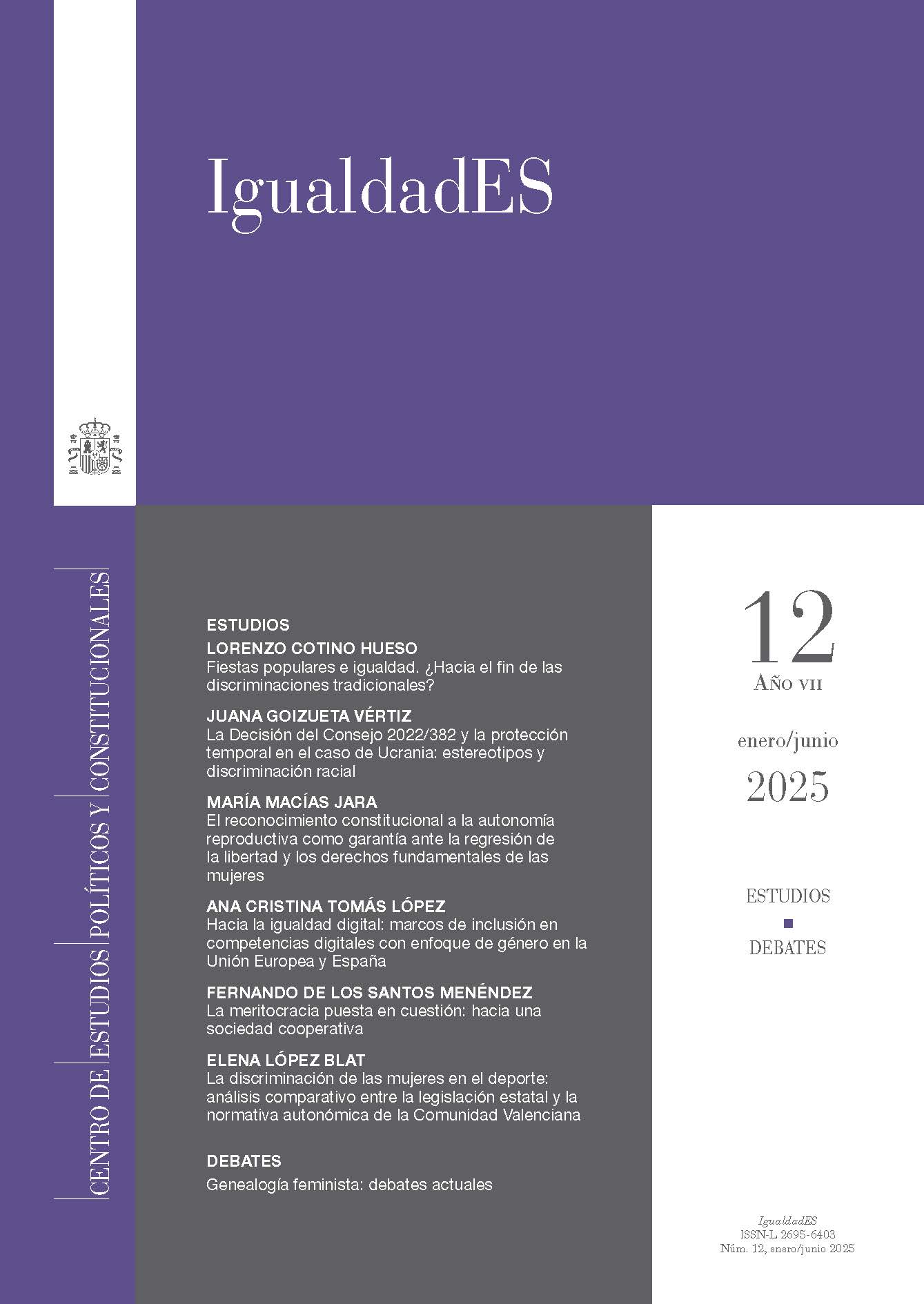
Fiestas populares e igualdad. ¿Hacia el fin de las discriminaciones tradicionales?
DOI:
https://doi.org/10.18042/cepc/IgdES.12.01Palabras clave:
Fiestas populares; fiestas religiosas; reinas de las fiestas; derecho constitucional; igualdad de género; discriminación estructural; patrimonio cultural inmaterial; UNESCO; derechos fundamentales; identidad de género.Resumen
El estudio analiza el conflicto entre la tradición y el principio de igualdad en las fiestas populares en casos de exclusión de la mujer de actos o espacios, los papeles diferenciados, cuestiones sobre indumentaria o su participación limitada en la toma de decisiones. Se examinan figuras como las reinas de las fiestas y su necesaria actualización. Respecto al alcance de la igualdad en asociaciones festivas y religiosas, se observa cómo la privatización de las fiestas en los Alardes vascos se ha utilizado para eludir la prohibición de discriminación. No obstante, la reciente STC 132/2024 podría modificar esta situación al limitar la discriminación en asociaciones con una posición dominante en el ámbito cultural, festivo y religioso. Se subraya la obligación de las Administraciones de garantizar la igualdad en subvenciones, contratos, licencias o la ocupación de la vía pública, por lo que discriminar puede salir caro a asociaciones y entidades privadas. También se estudia el impacto en la igualdad del reconocimiento de las fiestas como patrimonio cultural inmaterial de la UNESCO.
Descargas
Publicado
Cómo citar
Número
Sección
Licencia
Derechos de autor 2025 Lorenzo Cotino Hueso

Esta obra está bajo una licencia internacional Creative Commons Atribución-NoComercial-SinDerivadas 4.0.
Los firmantes conservarán sus derechos de autoría y garantizarán a la revista el derecho de primera publicación de su obra, el cual estará simultáneamente sujeto a la Licencia de reconocimiento de Creative Commons Reconocimiento-No comercial-Sin obra derivada 4.0 España que permite a terceros compartir la obra siempre que se indique su autor y su primera publicación esta revista.
También podrán adoptar otros acuerdos de licencia no exclusiva de distribución de la versión de la obra publicada (p. ej.: depositarla en un archivo telemático institucional o publicarla en un volumen monográfico) siempre que se indique la publicación inicial en esta revista.