
El impacto de la calidad de la gobernanza de un país en la adopción de la computación en la nube en las empresas de la UE
DOI:
https://doi.org/10.38191/iirr-jorr.25.004Palabras clave:
Instituciones, adopción de la computación en la nube, digitalización, buena gobernanza, calidad de la gobernanza del país, UE (Europa), indicadores de gobernanza del Banco Mundial, índice de calidad de gobiernoResumen
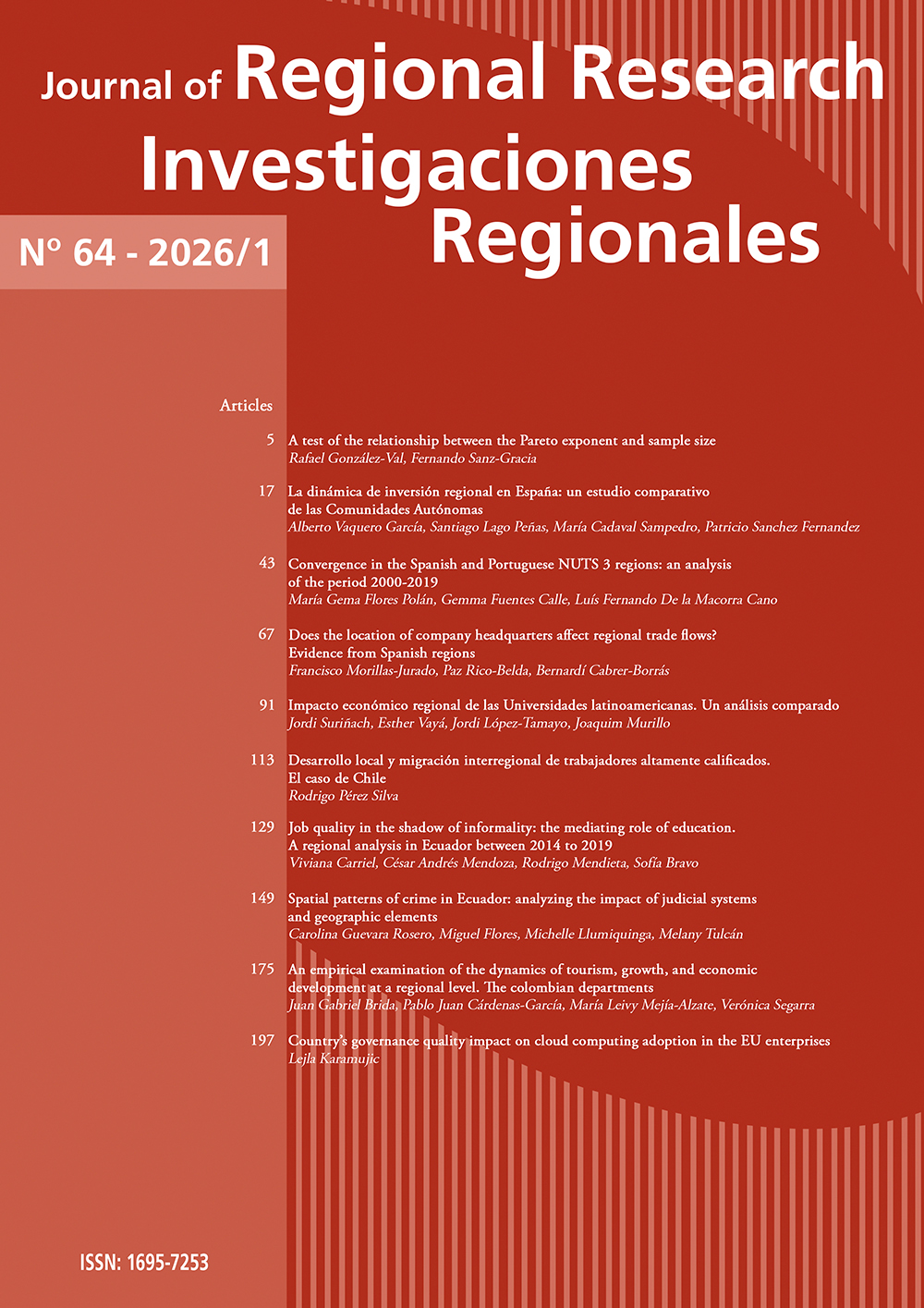
La computación en la nube es ampliamente reconocida como una tecnología clave que facilita la digitalización e impulsa el crecimiento de la economía digital. Utilizando los Indicadores de Gobernanza del Banco Mundial, en este documento examinamos cómo la calidad de la gobernanza (o buena gobernanza) de un país impacta en el uso de la computación en la nube en las empresas de la UE y, por consiguiente, en su digitalización. En un análisis empírico de 27 países de la UE entre 2014 y 2021, se concluyó que la buena gobernanza influye positivamente en la adopción de la computación en la nube en las empresas de la UE. En apoyo de la teoría institucional, demostramos que la mejora de la calidad de la gobernanza de un país es un paso importante para acelerar la adopción de la computación en la nube por parte de las empresas de la UE. Este hallazgo proporciona una importante información al gobierno de la UE en la ejecución de la Estrategia Industrial 2030, en la que la digitalización y la adopción de la computación en la nube desempeñan un papel fundamental. Las empresas que operan en países de la UE con una gobernanza de mayor calidad tienen mayor probabilidad de implementar la computación en la nube en sus operaciones, una tecnología que beneficia tanto a los costes como al rendimiento, lo que constituye una valiosa perspectiva para las empresas de la UE, que se benefician directamente de una mayor adopción de la computación en la nube en sus negocios.
Descargas
Publicado
Número
Sección
Licencia
Derechos de autor 2024 Lejla Karamujic

Esta obra está bajo una licencia internacional Creative Commons Atribución-NoComercial 4.0.
Aquellos autores/as que tengan publicaciones con esta revista, aceptan los términos siguientes:
En el momento de aceptar la publicación de sus artículos en Investigaciones Regionales / Journal of Regional Research, los autores acceden a utilizar la licencia Creative Commons CC BY-NC. IIRR/JRR es una revista abierta que permite a los autores retener el máximo control sobre su trabajo. Los autores aceptarán utilizar la licencia Creative Commons Attribution-NonCommercial. Esta licencia permite a cualquier persona copiar y distribuir el artículo con propósitos no comerciales, siempre y cuando se atribuya adecuadamente la atribución del trabajo a la revista y a los autores.
