La política exterior neoconservadora en Estados Unidos: cambios, continuidades y perspectivas
Palabras clave:
Estados Unidos, Barack Obama, política exterior, cambio, continuidadResumen
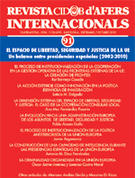
Revista CIDOB d’Afers Internacionals, nº 91
Cuatrimestral (octubre- diciembre 2010)
ISSN:1133-6595 | E-ISSN:2013-035X
La asunción de Barack Obama como presidente de Estados Unidos suscitó la idea de posibles cambios sustanciales en la política exterior estadounidense. No obstante, la realización de un estudio preciso del poder norteamericano, en situación de hegemonía, nos conducirá a reemplazar las opciones analíticas que explican la política exterior de George W. Bush a partir de su excepcionalidad histórica –como antecedente inmediato a ser modificado– por una fundamentación basada en los factores subyacentes que la condicionan. El análisis de la política exterior de Bush, sus fundamentos, así como la observación de la política exterior aplicada por Obama, nos permitirán concluir sobre la presencia de factores condicionantes, continuidades, cambios y, del mismo modo, posibles perspectivas.
Citas
BUSSO, Anabella. “La política exterior estadounidense a partir de la administración de George W. Bush; su impacto mundial y regional”. 2002: http://www.utdt.edu/cei/area_instituciones/ConferenciaBusso.PDF. CLINTON, Hillary. “Security and Opportunity for the Twenty-first Century”. Foreign Affairs (Noviembre/ Diciembre 2007).– “Foreign Policy Address at the Council on Foreign Relations” (15 de julio de 2009). Washington.
DAALDER, Ivo y LINSAY, James. America Unbound: The Bush Revolution in Foreign policy. Washington: Brookings, 2000. Debate Transcript. October 11, 2000. Commission on Presidential Debate: www.debates.org/pages/ trans2000b_p.html.
DUECK, Collin. “Hegemony on the Cheap Liberal Internationalism from Wilson to Bush”. World Policy Journal. Vol. XX. No. 4 (invierno 2003/04).
FUKUYAMA, Francis. “The End of History”. The National Interest. No. 16 (verano 1989).
GILPIN, Robert. War and Change in World Politics. Cambridge: Cambridge University Press, 1981. HARRIES, Owen. Benign or Imperial: Reflections on American Hegemony. Sydney: ABC Books, 2004. P. 21.
HENDRICKSON, David. “Toward universal Empire: The Dangerous Quest for Absolute Security”. World Policy Journal. Vol. 19 (2002).
IKENBERRY, John. “America’s imperial Ambition”. Foreign Affairs. Vol. 81. No. 5 (septiembre/octubre 2002).
JERVIS, Robert. “Understanding the Bush Doctrine”. Politics Science Quarterly. Vol. 118. No. 3 (2003).
KAGAN, Robert. Paradise & Power: America and Europe in the New World Order. Londres: Atlantic Books, 2003.
KRAUTHAMMER, Charles. “The Unipolar Moment Revisited”. The National Interest. Vol. 70 (invierno 2002/03).
MANN, James. Rise of the Vulcans: The History of Bush’s War Cabinet. Nueva York: Viking Adult, 2004.
MARKEY, Daniel. “Pakistan´s Shrewd Shift in Dialogue”. Council Foreign Relations (25 de marzo de 2010).
MONIZ BANDEIRA, Luis. La formación del Imperio Americano. De la guerra contra España a la guerra en Irak. Buenos Aires: Grupo Norma, 2007.
MONTEN, John. “The Roots of the Bush Doctrine”. International Security. Vol. 29. No. 4 (primavera 2005).
NEIBUHR, Reinhold. The Irony of American History. Nova York: Scribner, 1952. P. 24.
NYE, Joseph. The Paradox of American Power: Why the World Only Superpower Can´t Go It Alone. Nueva York: Oxford University Press, 2002.
OBAMA, Barack.– Discurso pronunciado con motivo del Consejo de Relaciones Internacionales. Chicago, 12 de julio de 2004.
– Discurso pronunciado con motivo del Debate Demócrata en la Universidad de Texas, Austin. 21 de febrero de 2008. Remarks by the President at the 20th Anniversary of the National Endowment for Democracy. Washington D.C. 6 de noviembre de 2003. Remarks by the President at 2002 Graduation Exercise of the United States Military Academy. White House Press Release. 1 de junio de 2002. RICE, Condoleezza. “Campaign 2000: Promoting the National Interest”. Foreign Affairs. Vol. 79 (enero/ febrero de 2000).
– “Rethinking the National Interest”. Foreign Affairs (julio/agosto de 2008).
ROSATI, J. SCOTT, J. The Politics of United States Foreign Policy Belmont: Ed. Thomson Wadsworth, 2007.
RUSSELL, Roberto. “El orden internacional post Irak”. En: Hirst, Monica; Pérez Llana, Carlos; Russell, Roberto y Tolkatlian, Juan. Imperio, estado e instituciones. Buenos Aires: Ed. Altamira, 2004.
SULLIVAN, John. Manifest Destiny, 1839. The New York Times. “Obama Completes Arms Control Deal With Russia” (26 de marzo de 2010).
TIME. “The End of Cowboy Diplomacy”. (17 de julio 2006).
WHITE HOUSE. “President Bush, Prime Minister Koizumi Hold Press Conference”. White House Press Release (18 de febrero de 2002)– “President Thanks World Coalition for Anti-Terrorism Efforts” (11 de marzo de 2002).– “President, Vice President Discuss the Middle East” (21 de marzo de 2002).– “The National Security Strategy of the United States of America” (septiembre de 2002). – “The National Security Strategy of the United States of America” (septiembre de 2006). – “The National Security Strategy of the United States of America” (septiembre de 2010).