The Parody of Musical Instruments in Medieval Iconography
DOI:
https://doi.org/10.37536/RPM.2017.31.0.58895Keywords:
Middle Ages, Jesters, Parody, Marginalia, Musical IconographyAbstract
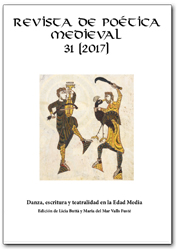
The vast field of musical iconography during the Middle Ages must necessarily deal with the rich and surprising imagery of western manuscripts, showing a fanciful proliferation of playing creatures and bizarre deformations, sometimes inspired by exotic suggestions. In marginal miniatures of 14th century we can discover an interesting and puzzling topic: the parody of entertainers, with hybrid men playing a vielle with tongs, mermaids or apes playing jawbones and so on. The spreading of this topic in medieval iconography is linked to a satirical purpose aimed at professional entertainers, harshly condemned by Christian writers. Strange instruments made out of everyday objects like grills and distaffs, or ‘exotic’ animals like peacocks, mingle in the grotesque underworld of marginal miniatures, in which the noble art of music is often replaced by the cacophonous noises suggested by the devil.
Downloads
Métricas alternativas
Downloads
Additional Files
Published
How to Cite
Issue
Section
License
The opinions and facts stated in each article are the exclusive responsability of the authors. The University of Alcalá is not responsible in any case for the credibility and aunthenticity of the studies.
Authors will retain the rights on their work, even if they will be granting the journal a non-exclusive right of use to reproduce, edit, distribute, publicly communicate and show their work. Therefore, authors are free to enter into additional, independent contracts for non-exclusive distribution of the works published in this journal (such as uploading them to an institutional repository or publishing them in a book), as long as the fact that the manuscripts were first published in this journal is acknowledged.
Works are published under the terms stipulated in the Attribution-NonCommercial-ShareAlike 4.0 International License (CC BY-NC-SA 4.0) that allows third parties to share the work under the following conditions:
Attribution — You must give appropriate credit, provide a link to the license, and indicate if changes were made. You may do so in any reasonable manner, but not in any way that suggests the licensor endorses you or your use.
NonCommercial — You may not use the material for commercial purposes.
ShareAlike — If you remix, transform, or build upon the material, you must distribute your contributions under the same license as the original.