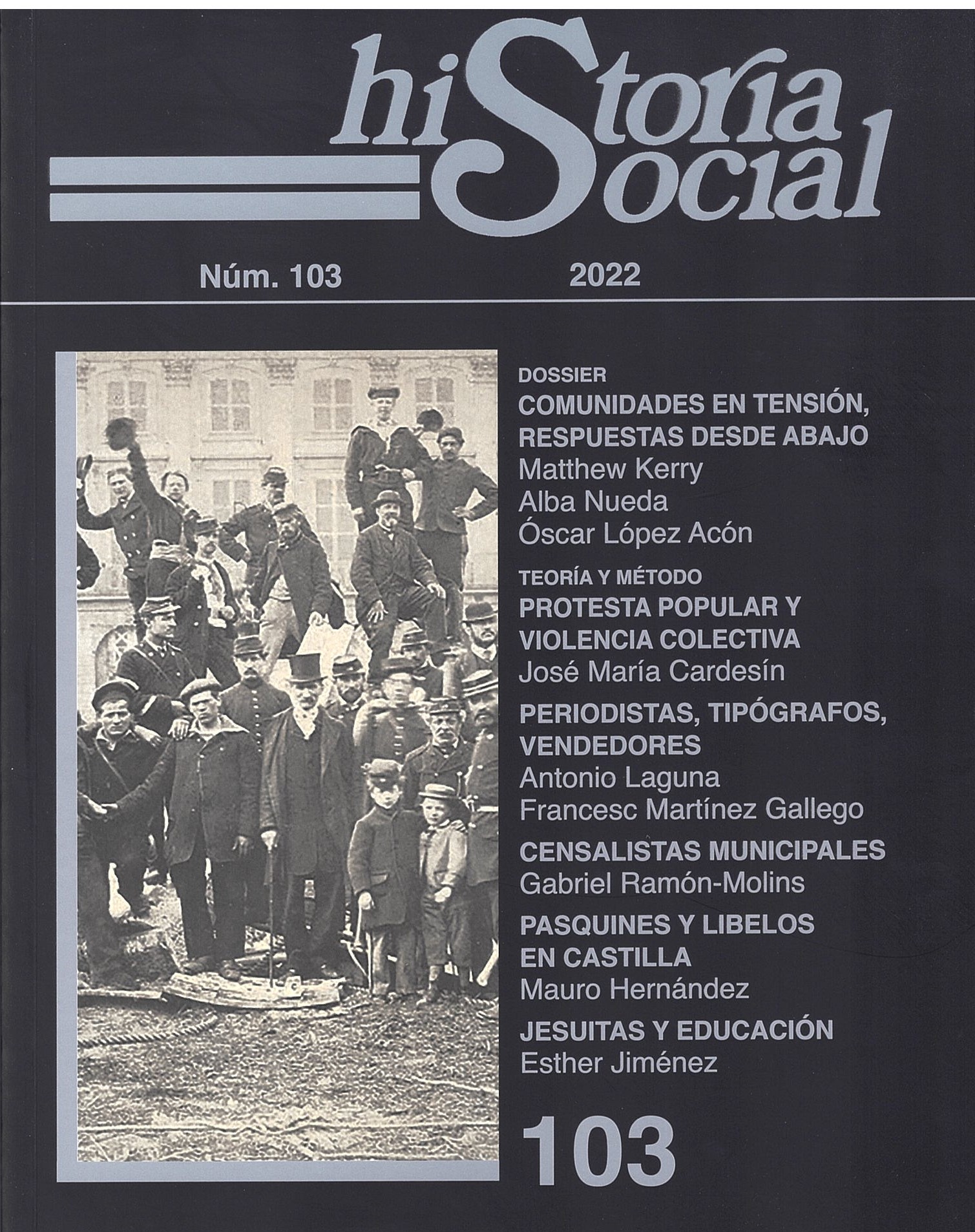
De pasquines y libelos: delitos de anonimato en la Castilla del siglo XVIII
DOI:
https://doi.org/10.70794/hs.113379Palabras clave:
pasquines, cultura política popular, tumultos, Castilla, siglo XVIIIResumen
A la estela del artículo de E.P. Thompson, “El delito de anonimato”, el presente texto explora la materialidad y el contexto de una serie de pasquines amenazantes ligados a tumultos en la Castilla del siglo XVIII. La indagación muestra cómo en su mayoría iban dirigidos contra las autoridades locales, en muchos casos denunciando las políticas de subsistencias y la corrupción municipal. no obstante, el principal hallazgo tiene que ver con la autoría de estos escritos, que a diferencia de lo que sostenía Thompson, y basándonos en indicios fragmentarios pero coincidentes, lleva a cuestionar la autoría “plebeya” de estos pasquines. Para terminar, se analiza la función de estos escritos anónimos en el contexto de la protesta popular, ligándolos aun proceso de “politización” de las clases populares.
Descargas
Publicado
Número
Sección
Datos de los fondos
-
Ministerio de Ciencia e Innovación
Números de la subvención PGC2018-094150-B-C22