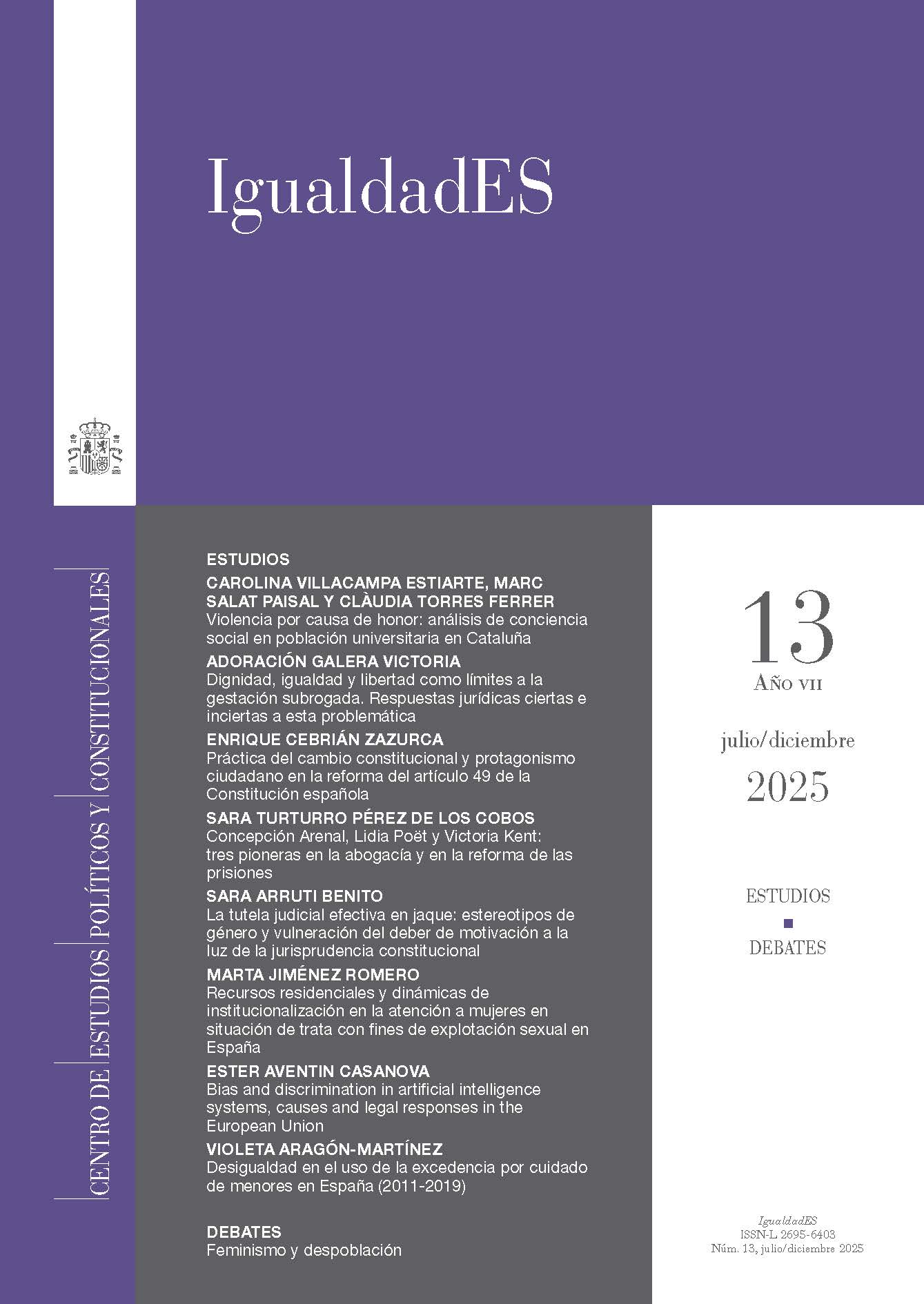
Inequalities in the use of unpaid childcare leave in Spain (2011-2019)
DOI:
https://doi.org/10.18042/cepc/IgdES.13.08Abstract
This article examines the incidence, usage patterns, and social and labor determinants of childcare leave (excedencia por cuidado de hijos/as) in Spain —a non-paid entitlement with job protection and periods credited for social-security contributions— using longitudinal administrative microdata from the MCVL. We follow women with a first birth in 2011-2019 through 2022 and, to estimate incidence, restrict the analysis to eligible mothers (employees at the time of birth). The methodology combines (i) a descriptive component that identifies leave episodes within 36 months postpartum and characterizes frequency, repeat use per child, timing relative to birth, duration, and seasonality; and (ii) birth-level binary logistic models with a stepwise specification (demographic base; +family/context; +employment conditions). Results indicate limited take-up, with starts clustering after paid leaves are exhausted, short durations with summer seasonality, and stratified access by employment stability and quality as well as by country of origin.
Downloads
Published
How to Cite
Issue
Section
License
Copyright (c) 2025 Violeta Aragón-Martínez

This work is licensed under a Creative Commons Attribution-NonCommercial-NoDerivatives 4.0 International License.
Los firmantes conservarán sus derechos de autoría y garantizarán a la revista el derecho de primera publicación de su obra, el cual estará simultáneamente sujeto a la Licencia de reconocimiento de Creative Commons Reconocimiento-No comercial-Sin obra derivada 4.0 España que permite a terceros compartir la obra siempre que se indique su autor y su primera publicación esta revista.
También podrán adoptar otros acuerdos de licencia no exclusiva de distribución de la versión de la obra publicada (p. ej.: depositarla en un archivo telemático institucional o publicarla en un volumen monográfico) siempre que se indique la publicación inicial en esta revista.