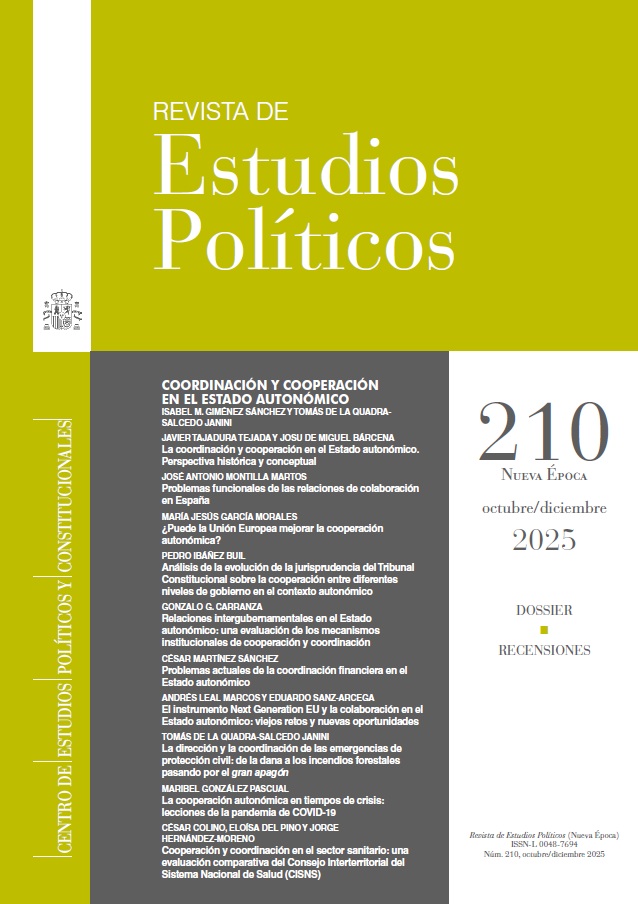
La cooperación autonómica en tiempos de crisis
Lecciones de la pandemia de COVID-19
DOI:
https://doi.org/10.18042/cepc/rep.210.10Resumen
La pandemia de la COVID-19 trajo consigo una crisis sanitaria y socioeconómica sin precedentes. Las Administraciones públicas desplegaron todos sus recursos en un contexto inicial de total incertidumbre. En este marco, los Estados federales y regionales tenían la ventaja de su inherente flexibilidad, si impulsaban la cooperación intergubernamental. España no fue ajena a esta situación. Las carencias conocidas de la cooperación autonómica en España y la incertidumbre de la primera ola llevaron a una centralización inicial que fue paulatinamente reemplazada por una mayor cooperación y heterogeneidad. Finalizada la pandemia, la cooperación sectorial sigue manteniendo una importancia mucho mayor a la que tuvo en los años precedentes. Asimismo, se han llevado a cabo reformas basadas en las buenas prácticas de la cooperación durante la pandemia. Sin embargo, la Conferencia de Presidentes ha perdido gran parte de su protagonismo, siendo en la actualidad principalmente un foro de confrontación política.
Descargas
Publicado
Cómo citar
Número
Sección
Licencia
En el momento en que una obra es aceptada para su publicación, se entiende que el autor cede a la REP en exclusiva los derechos de reproducción, distribución y, en su caso, venta de su manuscrito para su explotación en todos los países del mundo en formato de revista de papel, así como en cualquier otro soporte magnético, óptico y digital.
Los autores cederán también a la REP los derechos de comunicación pública para su difusión y explotación a través de intranets, internet y cualesquiera portales y dispositivos inalámbricos que decida el editor, mediante la puesta a disposición de los usuarios para consulta online de su contenido y su extracto, para su impresión en papel y/o para su descarga y archivo, todo ello en los términos y condiciones que consten en la web donde se halle alojada la obra. A su vez, la REP autoriza a los autores de los trabajos publicados en la revista a que ofrezcan en sus webs personales o en cualquier repositorio de acceso abierto una copia de esos trabajos una vez publicados. Junto con esa copia ha de incluirse una mención específica de la REP, citando el año y el número de la revista en que fue publicado el artículo o nota de investigación y añadiendo, además, el enlace a la web de la REP.
Transcurrido un año desde su publicación, los trabajos pasarán a estar sujetos a la Licencia de reconocimiento de Creative Commons Reconocimiento-No comercial-Sin obra derivada 4.0 España, que permite a terceros compartir la obra siempre que se indique su autor y su primera publicación en esta revista.
Plagio y fraude científico
La publicación de un trabajo que atente contra los derechos de propiedad intelectual será responsabilidad de los autores/as, que serán los que asuman los conflictos que pudieran tener lugar por razones de derechos de autor. Los conflictos más importantes pueden darse por la comisión de plagios y fraudes científicos.
Se entiende por plagio:
1.Presentar el trabajo ajeno como propio.
2.Adoptar palabras o ideas de otros autores sin el debido reconocimiento.
3.No emplear las comillas u otro formato distintivo en una cita literal.
4.Dar información incorrecta sobre la verdadera fuente de una cita.
5.El parafraseo de una fuente sin mencionar la fuente.
6.El parafraseo abusivo, incluso si se menciona la fuente.
Las prácticas constitutivas de fraude científico son las siguientes:
1.Fabricación, falsificación u omisión de datos y plagio.
2.Publicación duplicada.
3.Conflictos de autoría.
En todo caso, el CEPC se sirve de las más avanzadas herramientas informáticas (TurnitIn) a fin de detectar el posible plagio antes de la publicación de cada uno de los números de la revista. Si se detecta un texto susceptible de fraude científico el artículo en cuestión es rechazado y se comunica al autor tal contingencia, a fin de que pueda modificarlo si lo considera conveniente.