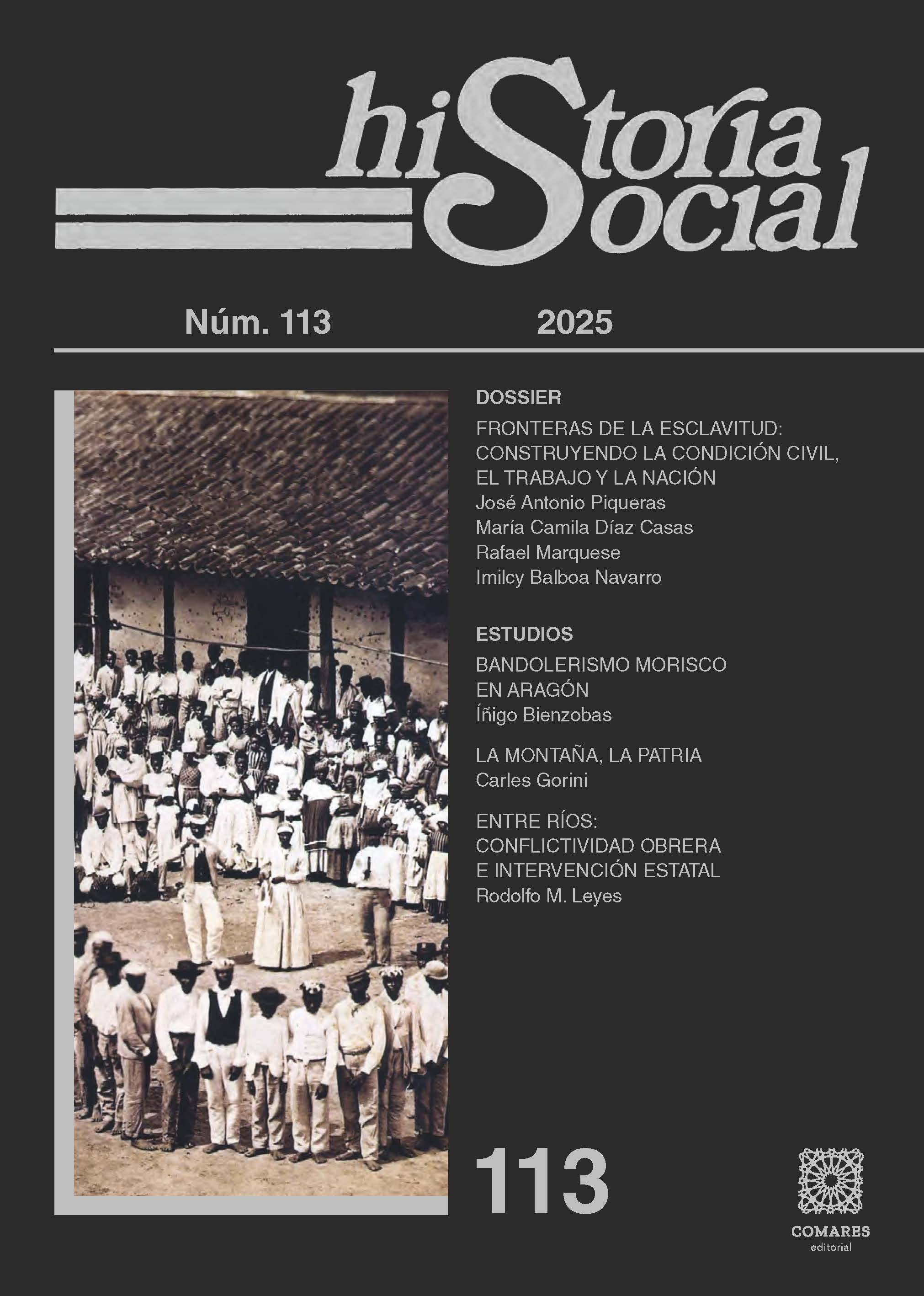
Slavery and Nation in the Second Slavery Era: Brazil, Nineteenth Century
DOI:
https://doi.org/10.70794/hs.117929Keywords:
Brazil, nineteenth-century, slavery, nation, Second SlaveryAbstract
Why did Portuguese America not fragment into multiple Republican political units after Brazil’s independence, as happened in Spanish America, maintaining its colonial territorial unity in the form of a Constitutional Monarchy? The question has long attracted the attention of scholars. One of the answers provided points to the interests linked to the transatlantic slave trade to Brazil. Mobilizing the Second Slavery concept, the article explores how the legacies of colonial slavery were rearticulated from 1808 onwards, crystallizing, with the Imperial Constitution of 1824, into a new national political arrangement.