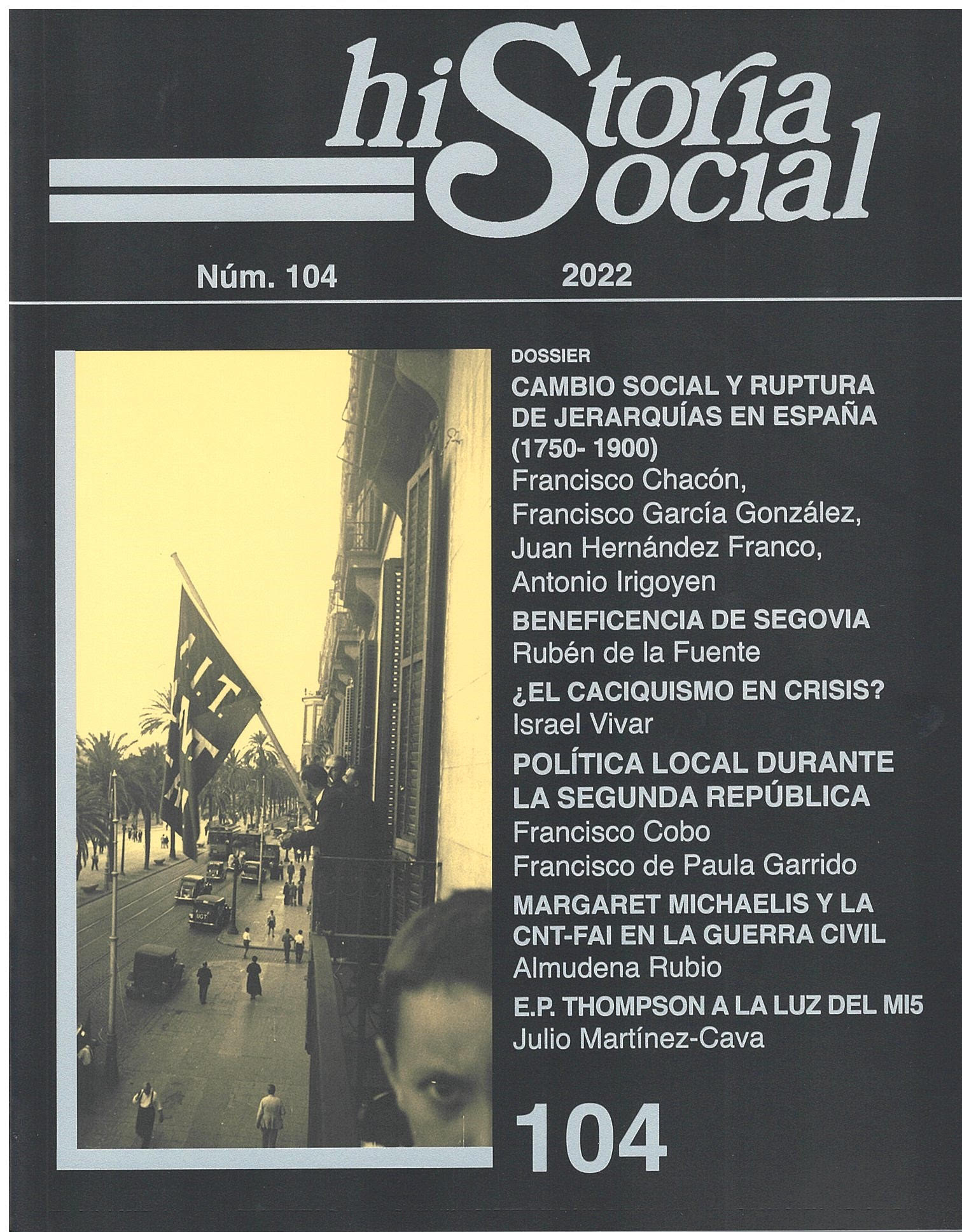
Herencia y prácticas sociales en España, siglos XVIII-XIX. Perpetuar la desigualdad, reproducir las diferencias
DOI:
https://doi.org/10.70794/hs.113832Palabras clave:
Familia, herencia, prácticas sociales, élites de poder, España, Siglos XVIII-XIXResumen
Concebida la herencia como un concepto en movimiento cuando lo contemplamos desde la perspectiva de las prácticas sociales, el objetivo del artículo es poner de manifiesto cómo en el siglo xix, a pesar del triunfo del orden liberal-burgués, se siguieron aplicando mecanismos de reproducción social ya utilizados en el Antiguo Régimen adaptados al nuevo contexto para seguir perpetuando la desigualdad, establecer las diferencias y definir la posición social y personal de familias e individuos. Para ello analizaremos un conjunto de prácticas hereditarias y de estrategias desarrolladas por los grupos de poder en torno a la acumulación, gestión y transmisión de la riqueza y de la propiedad más allá del marco legal de referencia.