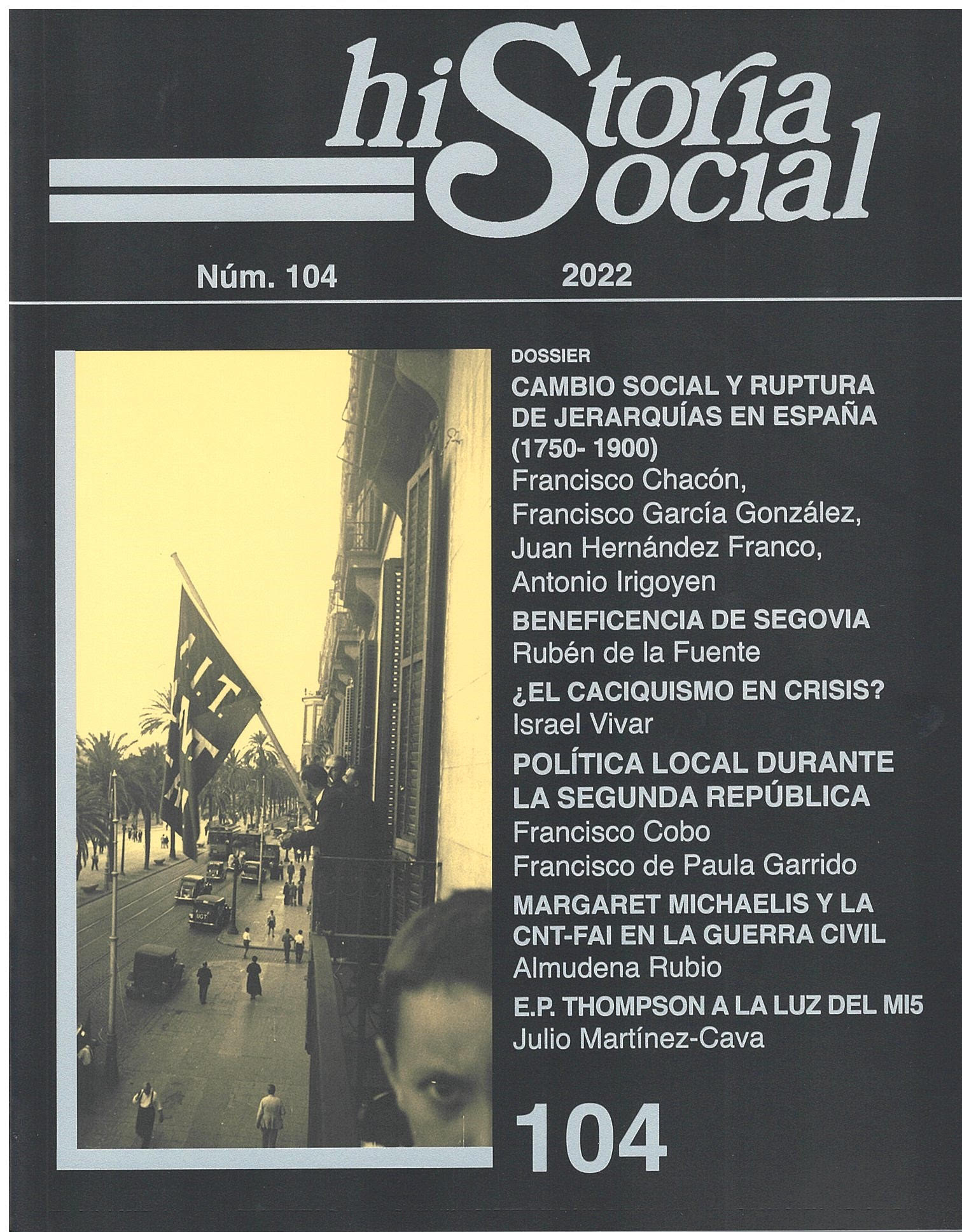
Families, Social Change and Breakdown of Hierarchies in the Spanish Society (c. 1750-1900)
DOI:
https://doi.org/10.70794/hs.113831Keywords:
Families, kinship, power elites, bourgeoisie, liberalism, 18th-19th centuriesAbstract
In the long-term conjuncture, between 1750 and 1900 approximately, family relationships, kinship and patronage were the basis of social organization. Despite changes in the political-legal system, traditional
family-based relationships survived in Spanish society as structures and mechanisms of social reproduction. However, there was a change in meaning. the contradictions between Church and State, lineage and personal merit, and kinship and individualism, provoked consequently the rupture of the hierarchies that had maintained the legal, social and political system of the old Regime. these transformations generated a society based on the crisis of the traditional elites and a weak liberal bourgeoisie.
Downloads
Published
2025-12-18
Issue
Section
Dossier
Funding data
-
Agencia Estatal de Investigación
Grant numbers HAR2017-84226-C6-1-P