Articles / Artículos

DOI: 10.22325/fes/res.2025.277

Conflicts and challenges in the integration of short food supply chains with digital platforms


Conflictos y desafíos en la integración de los circuitos cortos de comercialización agroalimentaria en plataformas digitales


Maria Isabel Ribeiro Dinis ORCID

Polytechnic Institute of Coimbra, Coimbra Agriculture School, Bencanta, Coimbra, Portugal. Research Centre for Natural Resources Environment and Society (CERNAS). Polytechnic Institute of Coimbra, Bencanta, Coimbra, Portugal. idinis@esac.pt. Email

Eber Misael Quiñónez Hernández ORCID

Polytechnic Institute of Coimbra, Coimbra Agriculture School, Bencanta, Coimbra, Portugal. eber.quinonez@esac.pt. Email

Revista Española de Sociología (RES), Vol. 34 Núm. 4 (Octubre - Diciembre, 2025), a277. ISSN: 1578-2824


Recibido / Received: 14/10/2024
Aceptado / Accepted: 21/05/2025


ABSTRACT

Short food supply chains are a global phenomenon that has emerged as a response to the increasing centralization and erosion of social connections within the food system. Simultaneously, the advent of the new digital era is compelling a process of transformation and modernization of the interactions between farmers and consumers, so introducing novel tensions and challenges. While it broadens the influence area and attracts new audiences, it appears to undermine the fundamental principles upon which short food supply chains were founded. This study aims to examine the tensions and challenges that arise from the digitalization of short food supply chains by conducting a content analysis of the outcomes from ten focus groups including producers and consumers, as well as an examination of digital platforms used to sell fresh food. We conclude that the utilization and advancement of digital marketing tools generate commercial channels at more equitable pricing, but encounters conceptual and operational obstacles, such as establishing credibility, disseminating value, and promoting digital literacy. Yet, it is feasible to create digital platforms that leverage digitalization without failing to meet the expectations of producers and consumers engaged in short food supply chains.

Keywords: Portugal, focus-group, family farming, e-commerce.

RESUMEN

Los circuitos cortos de comercialización agroalimentaria son un fenómeno global que ha surgido como respuesta a la creciente centralización y erosión de las conexiones sociales dentro del sistema agroalimentario. Simultáneamente, la llegada de la nueva era digital está impulsando un proceso de transformación y modernización de las interacciones entre agricultores y consumidores, introduciendo así nuevas tensiones y desafíos. Si bien es cierto que permite ampliar el área de influencia y el alcance de los circuitos cortos, también parece socavar los principios fundacionales sobre los que se establecieron. El objetivo de este estudio es examinar las tensiones y desafíos que resultan de la digitalización de los circuitos cortos de comercialización agroalimentaria mediante un análisis de contenido de los resultados de 10 grupos focales en los que participaron productores y consumidores, así como una revisión de plataformas digitales utilizadas para la venta de alimentos frescos. Concluimos que la utilización y el avance de las herramientas de marketing digital generan canales comerciales a precios más equitativos, pero encuentran obstáculos conceptuales y operativos, como el establecimiento de la credibilidad, la difusión del valor y la promoción de habilidades digitales. Con todo, es factible crear plataformas digitales que aprovechen la digitalización sin dejar de satisfacer las expectativas de los productores y consumidores que participan en circuitos cortos agroalimentarios.

Palabras clave: Portugal, grupo focal, agricultura familiar, comercio electrónico.


INTRODUCCIÓN


Short food supply chains have garnered significant attention in Europe in the last two decades due to their perceived sustainability benefits compared to traditional mass food delivery systems (Majewski et al., 2020; Malak-Rawlikowska et al., 2019; Berná Serna et al., 2024; Vittersø et al., 2019). Short food supply chains involve a direct and shortened distribution system from producers to consumers, reducing the number of intermediaries and the physical distance between them. These chains are believed to be more socially and economically sustainable, contributing to rural development and fostering closer relationships between producers and consumers (Galli & Brunori, 2013; Ilbery & Maye, 2006; Jarzebowski et al., 2020; Renting et al., 2003).

Recently, particularly during and after the COVID-19 pandemic, digital platforms have increasingly replaced traditional food delivery systems, such as direct sales in physical marketplaces. These platforms can facilitate direct connections between small-scale farmers and consumers, reducing the number of intermediaries and allowing the food market to operate within the scope of short food supply chains (Cimino et al., 2024). Integrating digital platforms in short food supply chains might offer numerous advantages, including improved information flow between supply and demand-side actors (Ciulli et al., 2020; Tian et al., 2021; Yang et al., 2021). By leveraging digital platforms, short food supply chains can streamline operations, improve supply chain efficiency, and enhance the overall sustainability of the food distribution system (Burgess & Sunmola, 2022; Chauhan, 2020; Suali et al., 2024; Tian et al., 2021; Yang et al., 2021). Additionally, digital platforms enable users and suppliers to participate in product design processes and value co-creation, fostering collaboration and innovation within the supply chain (Hein et al., 2020; Yang et al., 2021).

Although the potential benefits of digitalisation in improving the efficiency and sustainability of food supply chains have been widely described in the literature, with few exceptions (Glaros et al., 2023), little social research has been conducted on the challenges and tensions caused by this transition. However, when digital platforms replace physical short food supply chains, there are several implications and changes to be expected. Reliance on digital platforms alters consumer behaviour, farmers’ decisions, and the dynamics of the entire food supply chain (Butu et al., 2020). As stated by Ciulli et al. (2020), digital platforms are characterised by network effects, with the value of the platform for one group of users depending on the size, objectives, and attitudes of another group. Such dependence creates the potential for divergence and tensions among users. Understanding these tensions and challenges is crucial for developing e-commerce governance systems and digital tools that strike a balance between technological progress and sustainable food systems.

Building on the insights and gaps identified in the literature, this study aims to address the following research question: How do digital platforms integrate the principles of short food supply chains, specifically regarding the tensions between producers and consumers, and how can these tensions be mitigated?

This article’s reminder is organised as follows. The theoretical background provides the study’s context and foundation. We then outline the study’s design, detailing the data collection process and the methodologies employed to explore the research question. The following section highlights the investigation’s key findings and their implications. In the final section, we summarise and discuss the study’s main findings, address its limitations, and suggest future research.


Background


Short food supply chain encompasses a wide array of concepts and principles, all centred around the notion of proximity between producers and consumers across three main dimensions: physical or geographic, organisational, and social (Burgess et al., 2024; Burgess et al., 2023; Galli & Brunori, 2013; Hernández et al., 2021). Physical proximity refers to the distance from the production place to the final consumer, measured with Food Miles. Organisational proximity is expressed by the number of intermediaries in the chain, and social proximity emphasises the relationship between food producers and consumers based on mutual trust and closeness of the transfer of information (Malak-Rawlikowska et al., 2019).

As previously stated, when effectively managed and implemented, digital platforms can leverage the network effect and create a competitive advantage in short food supply chains (Burgess & Sunmola, 2021). Nevertheless, this technological transition also brings about an intricate network of conflicts and tensions, at both the conceptual and operational levels.

The platform capitalism theory, outlined by Srnicek (2017), is a useful framework for examining conceptual conflicts and tensions in the digitalisation of short food supply chains based on the idea that digital platforms operate as economic actors that accumulate power by controlling data, infrastructure, and interactions within their ecosystems rather than as pure neutral facilitators of exchange. By combining Srnicek’s platform capitalism model with the concept of proximity in short food supply chains, it becomes clear that digitalisation does not exactly replicate traditional short food supply chains in an online environment. Instead, it creates a hybrid model whereby data-driven decision-making, algorithmic control, and platform governance gradually mediate social relations.

The principle of geographic proximity is challenged as platform logistics emphasise efficiency and scale rather than strict local integration and embeddedness. While short food supply chains traditionally emphasize place-based relationships, platforms often extend their reach beyond local markets, redefining the meaning of proximity and shifting the balance of power away from small producers toward centralised digital intermediaries.

Similarly, organisational proximity is reshaped because platforms use governance strategies that differ from the decentralised and cooperative nature of traditional short food supply chains. The ability of many platforms to collect extensive information on consumer and producer behaviour, as well as market trends, while neglecting transparency in their decision-making processes, generates information asymmetry between the platforms and their users. In line with Srnicek (2017), Zuboff (2019) describes surveillance capitalism as a system in which digital platforms extract behavioural data to predict and influence user actions, prioritising platform profitability over user interests. Besides, instead of reducing middlemen to guarantee fair value distribution, platforms may become intermediaries themselves, by setting transaction fees, controlling visibility through ranking algorithms, and influencing price structures. Oncini et al. (2020) argue that platforms represent a novel aspect of the capitalist production system, as they can extract value from economic transactions. This phenomenon is described by Srnicek (2017) as rent-seeking behaviour, with platforms extracting value from network effects while presenting themselves as neutral market enablers. In practice, small-scale producers may become increasingly dependent on platform rules and mechanisms, potentially reducing their autonomy and bargaining power, raising the question of how the value is distributed among the platform actors and who captures what share of the value (Hein et al., 2020). This perception contradicts the goal of short food supply chains, which is to foster social and economic sustainability by implementing practices that guarantee equitable distribution of value among all participants (Burgess et al., 2023; Malak-Rawlikowska et al., 2019). The costs and benefits of digital transactions may disproportionately favour larger, technologically proficient companies, leaving smaller traditional farmers and smaller agroecological initiatives at a disadvantage. As highlighted by Zuboff (2019), this shift can also displace or threaten existing, often regulated, local service providers, such as small shops and local markets, reducing farmers’ autonomy and increasing their economic dependence on digital platforms.

Kenney & Zysman (2016), although primarily focused on global platforms like Airbnb and Uber, discuss the impacts of digital platforms on job precarity that can be extended to smaller food platforms. Digital platforms often create fragmented work schedules and increase part-time employment without the benefits associated with traditional full-time jobs. In the context of digital short food supply chains, this trend is particularly evident among part-time workers in logistics and distribution.

Social proximity is perhaps the most defining and challenging characteristic. Short food supply chains may be included in what Forno & Graziano (2014) refer to as Sustainable Community Movement Organisations (SCMO) which emphasise solidarity and the use of ‘alternative’ forms of consumption as a means of re-embedding the economic system into social relationships. It is distinguished, among other things, by transcending the capitalist market setting by encouraging ongoing and direct relationships between producers and consumers, in which the commercial or economic exchange is primarily focused on the social relationship established rather than the commercial one. Within these initiatives, the act of purchasing is not only promoted individually but also socialised among a group of people, whether formally or informally organised. In digital environments, trust and the exchange of rich, context-specific information, which were traditionally built through face-to-face producer-consumer interactions, are increasingly mediated by algorithmic reputation systems such as customer ratings, automated recommendations, and user engagement metrics, rather than strong social relationships and a sense of community. Srnicek (2017) highlights how platforms commodify social interactions, turning trust-based relationships into quantifiable data points that feed platform algorithms. Furthermore, the growing distance between producers and consumers leads to a lack of knowledge on both sides about either cultivation, working conditions, and respective preferences, needs, and requirements (Forno et al., 2024).

While some platforms include features for sharing information about producers and their practices, the depth and authenticity of these interactions are typically less than those in direct, personal exchanges, weakening local community ties and collective action, which are the foundations for community development and local economic stimulation (De Bernardi et al., 2020; Forno et al., 2024; Freeman et al., 2023; Markelova et al., 2009; Reina-Usuga et al., 2022).

In addition to the previously mentioned conceptual tensions and challenges, the process of digitalising also has the potential to create operational tensions and conflicts among participants in short food supply chains (Mahroof et al., 2022; Nosratabadi et al., 2020).

Tensions can arise in both physical and digital short food supply chains due to differing consumer and producer expectations, motivations, and levels of commitment. On the one hand, consumers may not be consistently motivated to permanently shift to short food supply chains, which may frustrate producers and jeopardise the direct relationship’s sustainability (Lin et al., 2021; Raftowicz, 2024). As a result, many small producers may prefer to focus their businesses on specific customer groups, building a network of dedicated clients, which Butu et al. (2020) refer to as a hard-core type of buyer. Furthermore, the seasonality of agricultural production can lead to tensions between consumers and farmers. Consumers accustomed to year-round access to a diverse range of products may struggle to adjust to the seasonal availability of goods in short food supply chains.

Conflicts may also emerge due to divergent interpretations of quality, safety, and value within short food supply chains. Short food supply chains thrive on the transparency of information regarding production methods, ethical practices, and the social values embedded in the food products (Burgess et al., 2024). Consumers may learn additional information on how their food was produced, the methods used, and the specific territorial attributes based on a good and direct relationship with the producer (Malak-Rawlikowska et al., 2019). Because quality is determined by the relationship and confidence between consumers and producers, food quality assessment may rely on trust instead of labels (Burgess et al., 2024). In impersonal systems, such as most digital platforms, the supply chain quality management must adhere to formal standards, ideally based on third-party quality certification systems such as Organic Farming, Protected Designation of Origin (PDO), Protected Geographical Indication (PGI) or other international standards. The implementation of these standards in short food supply chains, particularly in small-to-medium businesses, can be challenging.

Another potential tension arising from the digitalisation of short food supply chains is related to consumer claims, as the richness of communication is reduced. According to Barska & Wojciechowska-Solis (2020), the most significant disadvantages of e-commerce identified by food e-consumers include the risk of incorrectly valuing some products, as well as concerns about the selection and handling of perishables such as vegetables, eggs, and meat. Oncini et al. (2020) point out that, due to the unique characteristics of food and strict packaging and storage regulations, consumers’ options for returning products are limited. This could be one of the reasons why some customers are hesitant to buy perishable food items online (Csordás et al., 2022). The synesthetic nature of visual consumer behaviour (Butu et al., 2020) may be another reason. The cross-sensory experience of attributes such as smell and appearance can only be fully assessed through live experience, making it difficult for a platform to accurately convey these aspects.

One of the most significant challenges that can arise with the digitalisation of short food supply chains stems from the issue of digital literacy, especially when platforms employ more advanced technology. For instance, as emphasised by Burgess et al. (2024), the current utilisation of blockchain technology in food supply chains, while advantageous for traceability, poses obstacles for small and medium producers. Digitalisation can create a disparity between individuals who have access to cutting-edge technologies and those who do not. This may become apparent in various forms, including the distinction between connected and disconnected farms, as well as between small and large agricultural enterprises (European Commission, 2023). Farmers’ lack of digital skills appears to be the primary impediment to the digital transition of short food supply chains (Charatsari et al., 2024), as it affects farmers’ perceptions of the compatibility between technology and their production systems (Lioutas & Charatsari, 2020).


Methodology


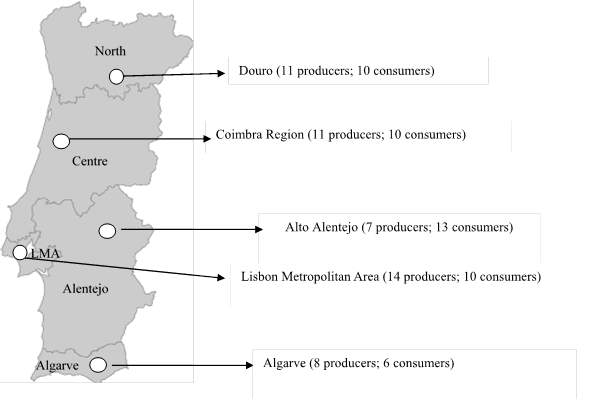
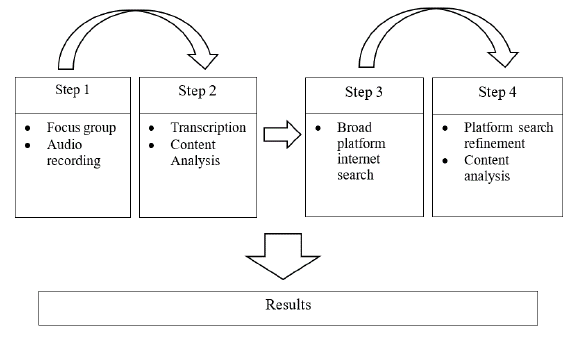
The study was conducted within the broader framework of the PRR Project Agrovila (PRR-C05-i03-I-000166), which aims to establish a sustainable digital platform that operates based on the principles of short food supply chains. Data collection was conducted in four main steps. The first two steps were designed to identify the primary conceptual and operational challenges and conflicts faced by current and potential food sellers and buyers when using short food supply chains supported by Business-to-Consumer (B2C) platforms. Steps 3 and 4 were devised to examine how platforms have tackled the conceptual and operational difficulties identified in steps 1 and 2. The first step occurred from July to December 2023, during which 10 focus group discussions were conducted in five NUT III 1 regions of the Portuguese mainland: Douro, Coimbra Region, Lisbon Metropolitan Area (LMA), Alto Alentejo, and Algarve.

Two focus group discussions took place in each region, one involving producers and another involving consumers. A total of 50 producers and 48 consumers participated in the focus groups. The participants were chosen by the local partners of the Agrovila project, using purposive sampling and considering diversity in gender, age, and educational level. Purposive sampling focusses on individuals who are easily accessible, willing to participate, and possess the necessary knowledge on the topic. Rather than surveying a large population, we concentrated on a diverse, smaller, and more accessible group that could yield valuable insights into our research. Figure 1 displays geographic distribution of the focus groups and the number of participants per focus group.

Each focus group was recorded and saved by an audio device. In step two, the focus group audio records were transcribed and imported into NVivo 12 software for qualitative content analysis.

The analysis followed a thematic coding approach, structured around the two primary types of tensions identified in the literature: conceptual tensions and operational tensions. Within the conceptual tensions, responses were further categorised based on the three dimensions of proximity in short food supply chains: geographic, organisational, and social. The coding process was conducted iteratively, by one of the authors, beginning with a predefined framework informed by existing literature on short food supply chains and platform governance. As the analysis progressed, subcategories were refined inductively to capture emerging patterns and nuances in participant responses. Statements were assigned to specific nodes based on their relevance to these categories, allowing for a systematic comparison between producers’ and consumers’ perspectives. The operational tensions included themes related to: i) expectations, motivations, and commitment; ii) logistics; iii) confidence and trust; iv) certification; v) users’ selection and continuity; vi) price-setting mechanisms; vii) consumers’ synesthetic behaviour; viii) digital literacy and internet accessibility; and ix) rules and policies. To enhance the reliability of the analysis, another author reviewed a subset of the coded data, and discrepancies were discussed to ensure consistency in categorisation.


Figure 1 Location of the focus groups by NUT II

v34n4a3image001.png


All participants were categorised based on their typology, as either producers (P) or consumers (C), and according to the NUT III, which included Douro (D), Coimbra Region (C), Lisbon Metropolitan Area (L), Alto Alentejo (A), and Algarve (G). Furthermore, participants were assigned a number indicating their order of intervention in the discussions. For example, PD1 is the code assigned to the first participant in the producers’ focus group held in Douro.

In step three, a broad internet search using keywords such as ‘short food supply chain and ecommerce’, ‘short food supply chain platform’, and ‘digital platform and short food supply chain’ was performed to get an overview of relevant food digital platforms active at the time (June 2024). We focused only on food platforms that act as "market intermediaries" and use digital technology to mediate transactions of goods and services between supply and demand-side actors, thereby enabling a marketplace (Ciulli et al., 2020). To qualify for selection, these platforms must have been operational for a minimum of two years to exclude experimental or inactive projects, have a specific focus on fresh food products, and express a connection to at least one aspect of short food supply chains, such as locality, territory, or the encouragement of producer-consumer connectivity. A total of 35 platforms were identified and subjected to analysis.

In step four, the initial selection of platforms was refined through additional desk research and the application of more specific criteria: i) the platform should enable consumers to purchase local food; ii) it should offer an online shopfront for producers; iii) it should establish a direct personalised connection between producers and end consumers. Of the 35 platforms selected in step 3, only 17 satisfied the established criteria and underwent comprehensive analysis. The comparative analysis of the 17 selected platforms, was made around 6 main aspects, according to key characteristics relevant to short food supply chains: i) emphasis on local; ii) interaction between producers and consumers; iii) participation of users in platform management; iv) product delivery options; v) price setting and payment mechanisms; and vi) certification and traceability.

Figure 2 schematically illustrates the key stages of this research.


Figure 2 Key stages of the research

v34n4a3image002.png


Results


Challenges of digital platforms in short food supply chains: Focus group insights

The findings derived from the focus group analysis are presented following the structure specified in the theoretical background section. The analysis begins by examining conceptual conflicts related to geographic, organisational, and social proximity. It then moves on to operational conflicts identified by participants in the use of digital platforms in the framework of short food supply chains.

Within the context of physical proximity, many participants in the focus group emphasized the significance of purchasing locally. Table 1 displays the most significant quotations provided by participants outlining the geographic proximity tensions and conflicts in the use of digital platforms in short food supply chains, together with their identification (ID). All quotations in Table 1 and the following tables were translated from the Portuguese language by the authors.


Table 1 Quotations regarding tensions and conflicts in digital short food supply chains related with geographic proximity

Node Quotation ID
Geographic proximity Here we don’t have a great variety of products. The producer is small, and there’s no variety. CA11
I don’t see that the platform has to be for people from here. May be for someone in Lisbon (...) or other cities; here, people have gardens and produce local products. Besides, in this area, there isn’t much variety to put together a basket. PA5
In the case of my product, the chestnut, to whom am I going to sell it around here? Everyone around has chestnuts. PD5
I grew up and live in the countryside, and as such, I benefit from family farming. CC9
I’m from a village where most people have a small vegetable garden, olive oil, and wine, and they exchange with each other. CD7


Agroecological conditions determine the extent to which different regions can reliably offer a diverse range of fresh food throughout the year. To ensure the long-run viability of short food supply chains, it may be necessary to broaden the scope of local in regions with less diverse supply, as highlighted by participants in the focus groups conducted in Alto Alentejo and Douro (CA11, PA5, PD5). Additionally, participants living in predominantly rural areas reported having access to fresh products supplied by their family, friends, and neighbours (CC9, CD7). This presents difficulties for farmers aiming to sell their products within the local area.

Regarding organisational proximity (Table 2), a participant (PC3) has raised the issue of whether the presence of multiple agents (such as distributors) working together within the digital platform could potentially undermine the fundamental concept of short food supply chains.

Several participants expressed apprehension regarding the payment of the agents engaged in the platform and the source of funding for their operating activities (PA1, PL3, PD6, PD9). They are concerned that the benefits of short food supply chains, in terms of the price received by producers and paid by consumers, may be reduced (CC10), while transparency is jeopardised (PC10).


Table 2 Quotations regarding tensions and conflicts in digital short food supply chains related to organisational proximity

Node Quotation ID
Organisational proximity Doesn’t this somewhat distort the notion of a short food supply chains? PC3
The platform’s work must be paid for because establishing a logistics centre, for example, will undoubtedly incur costs. PA1
Careful planning is required for logistics, as having too many intermediaries will not be effective. PL3
But the organisation that manages the platform makes a profit, right? Who will pay for that? PD6
The primary goal of a platform for the producer is the customer, but I also see the collaborator or facilitator, the pickup point, and the logistics centre. The question is, who supports all of this? PD9
Joining the platform will only be appealing if it clearly demonstrates added value for the producer. CC10
Then you start having margin issues, losing transparency, and so on. PC10


With few exceptions, consumers are sensitive to social proximity (Table 3) and have raised doubts about the capacity of a digital platform to foster mutual knowledge and trust (CG6, CC10, CC9, CC5).


Table 3 Quotations regarding tensions and conflicts in digital short food supply chains related to social proximity

Node Quotation ID
Social Proximity I expect the platform to provide me with information about who provided the food (...), so that we can build a stronger relationship. If we want something “cold”, we go to the supermarket. CG6
It is very important to have a trusting relationship with the producers. CC10
For me, it’s essential to know the story, have confidence in the producer, and be able to interact and share our opinions. CC9
I enjoy going to markets and talking to people; I also enjoy visiting small producers and eating their products on the farm. CC5
Personal contact builds trust, connects the producer and the consumer, and, as a result, they (the consumers) value our work. PL13
A platform must ensure that consumers associate a face with the product they are purchasing. PD2
Is it possible to create a collaborative system behind the platform that allows one producer to share information about another colleague’s products? PC10
Even though many fairs aren’t profitable, we enjoy going to see friends and family and people we know. PC11


However less evident, producers also emphasised the significance of social proximity (PL13, PD2) and expressed concerns about the ability of a digital platform to ensure interaction with consumers. In addition, producers highlighted the difficulty of a platform in fostering relationships among producers themselves, as digital platforms often lack a conducive environment for collaborative processes (PC10) or personal connections that are readily strengthened at fairs and physical markets (PC11).

Differences in expectations, motivations, and levels of commitment between consumers and producers can be sources of operational tensions and conflicts (Table 4).


Table 4 Quotations highlighting tensions and conflicts in digital short food supply chains related to expectations, motivations, and commitment

Nodes Quotation ID
Expectations, motivations, and commitment The lack of knowledge from the customer, who is usually unaware that there are seasonal and local products, could be the main issue. PC1
Consumers who are not involved in agriculture are completely disconnected from the land, plant cycles, and agricultural practices. PL9
I enjoy eating in line with seasons, what is in season. CG2
For me, it is critical to be able to purchase what I want in the quantity I desire. CC7
These two factors are important: having what I need when I need it and ensuring quality. CG6
The main challenge, in my opinion, is getting consumers to incorporate new products into their eating habits, and to be consistent in purchasing them. PC9
Consumers only take carrots, lettuce, and potatoes and disregard other products. I realised that 80% of the population has never eaten an aubergine and has no idea what it is. PG7
We grow three types of mushrooms; when I have one, customers want the other, and when I have the other, they want the first.... PC6
We don’t want customers to make one purchase and then lose interest, so the platform must also appeal to the end consumer. We need to try to build customer loyalty so that people will buy every month. PA1
As with baskets, selling on digital platforms is a slow-growing and unstable business: as people join, they also cancel and do not return. PL4
I sell to the people who always buy from me. PA3
I have some friends who buy my almonds because they have tasted and enjoyed them. PD2
People here end up selling the olive oil to their friends. CD3
It is difficult to sell or consume everything without some surplus. We also need channels to be able to sell this extra product. PG5
I wouldn’t mind collaborating with a platform on products I have in excess. PC2
Yes, I would be interested in joining a digital platform to get rid of my surpluses. PC6


An inherent conflict emerges from what producers perceive as a deficiency of information among consumers about food production (PC1) and natural cycles (PL9). Regarding seasonality, consumer preferences varied. While some consumers indicated a preference for seasonal products (CG2), others expressed a preference for having the desired product readily available in the desired quantity and quality (CC7, CG6). Moreover, producers highlighted the challenge of persuading consumers to adapt their consumption patterns to accommodate local and seasonal variations, as consumers allegedly tend to favor a rather limited selection of products (PC9, PG7, PC6).

Producers also expressed concern over the challenge of cultivating customer loyalty and the lack of consistency in their purchases, which are characterised by significant fluctuations in the quantity bought on a weekly or monthly basis (PA1, PL4). This presents challenges in the efficient implementation of production planning. For producers, the platform is frequently viewed as a means of selling surpluses rather than the preferred mode of sale. Several producers report selling their produce to hardcore buyers, often informally (PA3, PD2, CD3), and the potential use of a platform appears to be an opportunity to sell what they haven’t been able to sell through the established channels (PG5, PC2, PC6).

An internal conflict for both producers and consumers relates to the allocation of resources, namely time (Table 5). Consumers do not appear to be willing to spend a significant amount of time selecting products (CC2), paying (PC10), ranking products and suppliers (CG5), or collecting products (CC5, CC9). Furthermore, opting for digital platforms appears to be discouraged by the obligation to strategically plan purchases well in advance (CC3). Consumers acknowledge that the element of time can also serve as a significant constraint on producers’ compliance (CC9). Producers recognise the challenge of balancing their fieldwork with the marketing activities through short food supply chains in general and specifically through digital platforms (PA2, PL9, PC3). They believe that selling through a platform will only contribute a small portion of their sales and that the resulting low turnover does not justify the time invested (PC10).


Table 5 Quotations illustrating tensions and conflicts in digital short food supply chains related to logistics

Nodes Quotation ID
Logistics What I want must be close by, take up little time, and be extremely practical for me. CC2
I don’t want to spend 10 minutes saying ‘this was good, this was worse’ every time I buy something. CG5
Consumers are unwilling to make any effort, so the payment system needs to be simple. If they have to click twice, they will exit. PC10
I can’t see myself going to pick up points because it’s too bothersome. CC5
If I choose several products, and one is delivered today and the other in a week time, it is not interesting. CC9
There has to be to much planning if I have to decide two or three days before what I’m going to cook. CC3
The producer will face a real dilemma having to constantly update the content in the platform. CC9
I cannot work on the field in the time I am delivering goods. PA2
We spend two out of every five days handling sales and logistics, which equates to about 40% of our time. PL9
Managing production and distribution gets quite difficult since I work alone. I am either delivering or producing. PC3
I previously used a platform, but the payout was low, and farmers have chosen to ignore it and leave. I am not interested in joining a platform, as it would require more working time from me. PC10


Additional concerns raised by consumers pertain to trust and the capacity of a digital platform to guarantee that the quality of the product and service offered aligns with their expectations (Table 6). They emphasised that inconsistencies could lead to a decrease in trust towards both the producers and the platform itself (CG1). Specifically, consumers emphasised the need for trust in the system’s ability to meet the scheduled delivery time (CG6, CA5), the product’s features (CL1, CL3), and its production method (CD2, CN8).

Relevant to the assurance of quality is the issue of certification. Many consumers argued that digital food platforms should only sell certified products, as this is the only way to ensure the veracity of the information provided (O20).


Table 6 Quotations illustrating tensions and conflicts in digital short food supply chains related to confidence towards both the producers and the platform

Nodes Quotation ID
Confidence, trust All it takes is for one producer to act in a less-than-correct way for people to start distrusting all producers. CG1
If the producer (or the platform) says he will deliver on a certain day, he must fulfil it. CG6
If we pay and then run out of product, who is to blame? CA5
I prefer a pear that is firmer; how can I be certain that they will not provide me with a soft pear? CL1
We are unsure whether we will receive the products in the desired condition. CL3
I don’t usually shop online for food products because I don’t know how they have been produced or what their carbon footprint is. CD2
To sell in a supermarket, the producer must be audited and go through a stringent quality control system in terms of food safety. There are no guarantees for small, local producers because no one, no official body, goes there to check the conditions. The platform can rate the flavour and appearance of the product, but it will not tell me if it contains too many contaminants. CN8


See Table 7 for an overview of quotations provided by participants about the potential conflicts between consumers and producers over the importance of certification.


Table 7 Quotations illustrating tensions and conflicts in digital short food supply chains related to certification

Nodes Quotation ID
Certification True, some products may not be certified, but we know they are good. Furthermore, producers face high costs associated with certification. The subject of certification is difficult and complex. CA1
It will be extremely difficult for local producers to become certified... CA5
Small producers cannot produce certified organic food. It is not sustainable. They will not have enough money to pay the technician, the certifier, and everything else. CN3
I believe it is critical for consumers to know whether a product comes from a specific area or is organic. CA11
I’m very concerned about my diet and my health, and I scrutinise everything I eat. I always seek quality food, preferably certified organic, because when people tell me, ‘Oh, this doesn’t have any chemicals,’ that doesn’t mean much to me. CC2
On a platform, I doubt I would accept anything that was not organic. CD1
Some producers meet the standards but lack the resources to engage in certification bureaucracy, which is a time-consuming and tedious process. It does not make sense for producers with small areas to seek certification. However, I recognise that certifications ensure consumer protection and food safety; without this certification, some platform users may be sceptical. PG8
Many certified producers are screwing up, and many small producers are doing outstanding farming. PG6


While acknowledging that producers can offer high-quality uncertified products (CA1) and that certification may be difficult for small farmers (CA5, CN3), certification is seen by consumers as critical to ensure trust in the platform (CA11, CC2, CD1). From the perspective of producers, although recognising the benefits of certification, they emphasise the challenges it poses for small-scale producers (PG8) and tend to underestimate its relevance (PG6).

Akin to confidence and trust, the process of selection and maintenance/exclusion of platform users (producers and consumers) can also induce stress (Table 8).


Table 8 Quotations illustrating tensions and conflicts in digital short food supply chains related to users’ selection and continuity

Nodes Quotation ID
Users’ selection, users’ continuity Are there selection criteria for producers on the platform, or does everyone get on? Will anyone get in, even if they’re not qualified? CA5
The platform is responsible for assessing the quality of the farmers. CG2
The question is, how does the platform get to know the producer? How does it approve the producer? CG1
There must be a guarantee that those who sell are producers and that what they sell is the result of their production, not purchased on the supply market. CG2
I don’t think I’d set any major criteria for producers to be able to join the platform, other than the fact that they are a producer. CG4
To be a member, you must demonstrate that you produce. If not, you may purchase potatoes in Spain for €0.20 or €0.30 and then sell them on the platform for €1.00. PD10
There must be proof that you are a producer, not just someone who buys and sells. PD6
People should have the opportunity to share their opinions. (Maintenance/dismiss) can only be decided based on evaluations and feedback. CC2
Evaluation is important, as well as the history of evaluations. CC5
You have to check if any people don’t fulfil certain criteria and may be excluded... could be a producer but also a consumer. CA1


Consumers expressed concerns regarding the selection criteria of producers (CA5, CG2) and the difficulty of a large platform maintaining control over all of its members (CG1).

Specifically, they stated the need for the platform to guarantee that only active producers are registered and that they offer only their products without participating in reselling (CG2, CG4, PD10, PD6).

Concerning the requirement of product quality as a condition for the ongoing presence of producers on the platform, participants suggested that platforms could make decisions to either maintain or exclude producers based on customer feedback (CC2; CC5). A participant proposed that, similar to platforms in other sectors, producers should also possess the capability to evaluate customers (CA1).

Among the majority of the consumers, price seems to be a primary determining element in their decision to join a platform. For producers, pricing is an equally vital concern.

Nevertheless, there is a lack of agreement on the best approach for establishing prices (Table 9).


Table 9 Quotations illustrating price-related tensions and conflicts in digital short food supply chains

Nodes Quotation ID
Price We understand the quality of our product. So, we have to value it and give it a price; we can’t make it easy by selling it for less, because we know what it costs and how good it is. PA1
It’s essential for me to be able to specify my delivery conditions and price. PC1
It is up to the producer to determine the price. PD2
The price should be the same so that there is no competition, and everyone receives a fair price. PA7
I believe reaching a consensus on the price will be simple. Producers will not all earn the same; that is impossible; everyone has their problems, and the situation will never be the same. PG3
The problem (if everyone sets their price) is that we will create competition on the platform. The platform becomes a fairground. PD10
I want the entity (that manages the platform) to set a price. If not, I’ll set a price, and then someone else will set it lower, and I’ll never sell. PD6
What I’ve realised is that when consumers want a product, it doesn’t matter whether it costs €1.00 or €2.00 to produce; they just want it at a low price. PL12
Consumers frequently do not understand the cost of production and why we ask for a specific price. PC3
Prices should be fairer for producers. PC2


While some argue that individual producers ought to establish the price based on their cost structure and product quality (PA1, PC1, PD2), others support establishing a uniform price for the same product (PA7; PG3), irrespective of the producer, to prevent intense competition that would ultimately harm all producers (PD10, PD6). Concerning the pricing, there appears to be a certain degree of disagreement between consumers and producers. The producers argue that consumers have a limited comprehension of the challenges and costs associated with food production and marketing, hence underestimating its value and lacking willingness to pay a fair price (PL12; PC3; PC2).

A further possible cause of conflict in the use of digital platforms is the synesthetic behaviour of consumers, who prefer choosing fresh food based on their sensory experiences, which cannot be replicated on digital platforms (Table 10).


Table 10 Quotations illustrating tensions and conflicts in digital short food supply chains related to synesthetic behaviour

Nodes Quotation ID
Synesthetic behaviour Online shopping is something I enjoy. But only packaged goods (cereals, biscuits), not fresh food; I like to see, touch... CL1
I can’t shop online, especially for fresh produce, because I need to see and hold it in my hand. Appearance is extremely important to me. CL3
I enjoy choosing fresh produce; I like to see it, feel it, but I’m perfectly happy to use a platform as long as the product quality is stated. CC1
I like seeing products rather than purchasing them through a platform. Not for any product, but especially fresh ones. CC6
I need the smell of the market. I like the smell of fruit; I like the smell of fish; I like the smell of bread and cheese... CC8


Therefore, although consumers are becoming more receptive to purchasing a diverse selection of food products online, they still prefer physical markets for buying fresh produce, drawn by the ability to see, touch, and smell the products before making their choice (CL1, CL3, CC1, CC6, CC8).

Insufficient digital literacy and challenges in internet accessibility in certain regions of the country were also recognised as potential stressors in utilising digital platforms (Table 11). While consumers may also experience these challenges (CA11), they are primarily perceived and acknowledged by producers (PC10, PD1). Thus, the importance of simplicity and user-friendliness is often emphasized as a crucial characteristic in a platform (PG1; 96).


Table 11 Quotations illustrating tensions and conflicts in digital short food supply chains related to digital literacy

Nodes Quotation ID
Digital literacy, and internet accessibility I’m wondering to what extent producers have the skills to join these digital platforms. As consumers, we may also lack the time or skills to use digital platforms. Furthermore, not everyone has access to the internet at home; this may be true in urban areas, but it is not true everywhere. CA11
These platforms are not easily grasped by producers, leading to the death of things at birth. PC10
For farmers, particularly the elderly, everything is done on paper. They don’t even use cell phones. PD1
Avoid making the platform too complicated; it must be very practical and user-friendly. PG1
The platform has to be simple. PD6


Another significant cause of tension, which is seldom discussed in the literature, arises from the prevailing informality that characterises small-scale farming in countries like Portugal (Table 12). Small-scale farming is often based on informality and direct exchange, which are incompatible with digital marketplaces that must respect legal regulations. Participants identify food safety legislation, and the bureaucracy associated with food marketing as major barriers to the use of short food supply chains, which is exacerbated when it comes to a platform where logistical operations are inherently more formalised (PA1, PL7, PC11, PC4, PD6, PD5).


Table 12 Quotations illustrating tensions and conflicts in digital short food supply chains related to regulatory issues

Nodes Quotation ID
Rules, policy Then there’s food safety rules, transportation regulations, and fines from the AT (Tax Authority) and the ASAE (Food and Economic Safety Authority); working in the food business can be extremely challenging and demotivating at times. PA1
We want to put things into action, however bureaucracy is extensive; I sell honey, and the delivery process is extremely complicated. PL7
There are legal issues that we cannot resolve, one of which concerns transport documents. PC11
Most chestnut producers in my area work part-time; they do not make a living from farming. They do not have an invoicing system or anything like that. PC4
The competent authorities should simplify this system. To be legal, if I sell a calf to three people, I must provide three invoices, identify the parties, and so on... PD6
Unfortunately, legal requirements limit the desire to do a variety of things. PD5


Platforms’ responses to short food supply chains challenges

Following the application of the criteria outlined in the Methodology section, the list of the 17 selected digital platforms has been arranged in alphabetical order and numbered for convenient reference in the text (Table 13). By examining these platforms, we attempted to understand how digital platforms effectively handle the tensions and conflicts previously identified in both the literature review and the focus groups.


Table 13 List of digital platforms

ID Name (link) Country
DP1 Dona Horta (http://www.donahorta.pt/projecto) Portugal
DP2 Du Goût dans mon panier (https://www.dugoutdansmonpanier.fr) France
DP3 1000 Ecofarms (https://www.1000ecofarms.com/en/promo) USA
DP4 Equal Food (https://www.equalfood.co) Portugal
DP5 Farm Direct Coop (https://farmdirectcoop.org/members/) USA
DP6 Farm Drop https://farmdrop.us USA
DP7 Farm Generation Cooperative https://www.farmgenerations.coop/ USA
DP8 Farm to Home (https://www.farmtohome.info) Netherlands
DP9 Food Roots (https://foodrootsmarketplace.localfoodmarketplace.com/Index) USA
DP10 Katuma (https://app.katuma.org) Spain
DP11 La plataforma (https://laplataformaverde.es) Spain
DP12 Mangio a Km 0 (https://www.mangioakm0.it) Italy
DP13 Marketplace Alto Tâmega- ADRAT (https://altotamega.com/market/) Portugal
DP14 Our Harvest (https://www.ourharvest.coop) USA
DP15 Rago (https://raago.no) Norway
DP16 Union County Farmer Markets - UCFM (https://www.unioncountyfarmersmarket.com) USA
DP17 Zolle (https://zolle.it) Italy


Geographic, relational, and organisational proximity

To communicate the concept of geographic proximity, platforms have adopted the approach of emphasising categories such as ‘local’ and ‘territory’, among others (DP5, DP8, DP17). However, effectively implementing this principle can be challenging, whether it is for the product, which may originate from a considerable distance, or for the consumer, who may be located at a considerable distance from the place of production. While some consumers may have knowledge and awareness of the geographic proximity of producers, this issue nonetheless remains unresolved in the digital domain.

Regarding relational proximity, which refers to the direct interaction between a producer and a consumer, the primary approach of platforms is to create a producer profile that enables them to present themselves and their products (DP2, DP8, DP15). The objective is to establish a relational (empathetic) connection with the customer. Another approach involves consumer assessment, where they rate their platform experience and may write a review (DP10, DP14). While this technique serves as a motivation for other consumers to participate in the platform, its primary contribution is to the establishment of trust between producers and consumers.

In relation to organisational proximity, which primarily pertains to governance models encompassing rules, procedures, and conflict resolution, three platforms (DP11, DP16, DP17) are particularly noteworthy. These platforms exhibited a more participatory, horizontal, and even collective approach to management, although the primary participants are producers, with consumers assuming a secondary role. Nevertheless, most of these platforms also provide an opportunity for anyone to actively participate in enhancing the site. This can be done either by directly contacting the management or by using the comment/suggestion boxes, which are conveniently located on the websites.

Digital Literacy

The design, maintenance, and management of digital platforms demand specialised expertise. The majority of these functions are usually centralised in one or a small number of individuals, typically IT technicians. Nevertheless, some platforms (DP11, DP16) encourage the participation of both producers and consumers in these activities, so transforming it into a collaborative endeavour and, in turn, overcoming the obstacle of digital literacy, so promoting a more horizontal approach to platform management (DP5, DP11). This broader participation also enhances the effectiveness and adaptability of the platform’s design, addresses potential management issues, and enables features such as accountability sharing, direct user participation and involvement, horizontality, and democracy in decision-making. This is in contrast to most other platforms, where IT personnel handle these aspects without a transparent link between producers and consumers.

Logistic operations

Logistic operations, namely product delivery, is a crucial element in digital platforms that can be addressed in several ways. The predominant method, widely adopted by traditional online marketplaces, involves contracts with transportation companies for delivery, with one party assuming the associated costs. An alternative is to utilize pick-up points for delivery (DP1, DP2, DP11), which may be selected by either the producer (predominantly) or the consumer. While producers and consumers may not directly interact in this modality, it is possible to create systems that enhance such interactions, thereby fostering connectivity and reinforcing relational closeness and trust between them. While the efficacy of the analysed platforms in facilitating direct delivery remains ambiguous, certain platforms provide consumers the opportunity to visit the farms (DP2, DP10) and familiarise themselves with the provenance of their food.

Price setting

The pricing mechanism on most platforms remains unclear. In particular cases (DP2, DP13), price ranges are set following the pricing set by large supermarkets, while emphasising the unique attributes of small-scale production and frequently the enhanced quality of the product (DP8, DP16).

Pricing also encompasses differences among products and production methods, resulting in price variations based on product added value, composition, specific features, or certification status (DP5, DP7). In this particular situation, the presence of divergent prices does not necessarily result in heightened competition among producers, as the price is subject to the influence of diverse market dynamics (DP2, D13).

Nonetheless, certain digital platforms (DP2, DP7, DP8) emphasise fair compensation for producers, underscoring the value and quality of the products while often integrating factors such as seasonality, production methods, and variety, among other considerations (DP14, DP17). Another group of platforms specifically promotes the benefits of the local economy and the progress of the territory (DP11, DP13). Furthermore, certain campaigns specifically aim to raise consumer awareness (DP10, DP14) about the health benefits of different products.

Trust

Trust is established and reinforced in digital platforms through various means, the most apparent being the payment processing. When consumers place an order, they are required to pay the price of the product, which acts as a guarantee to both parties. The producer receives confirmation along with the amount of the order paid, which serves as a guarantee of sale. In return, the consumers assure that their order will be processed and received at the specified time and location. Once the transaction is finalised, mutual trust is reinforced. This relationship can be further strengthened as more orders and purchases are processed. An additional method of enhancing trust is to facilitate the presence and participation of producers in the platform (DP8, DP11, DP16). From the perspective of consumers, the comments and feedback section serve as a means of providing confidence to prospective customers (DP10, DP14). However, this approach relies on satisfaction scales that are not only subjective but also focus on particular experiences, which may not accurately represent the actual realities. Documentation confirming compliance with certification systems such as Organic, PDO, or PGI can further enhance trust (DP2, DP4, DP9).

Although the significance of offering financial assistance to producers, particularly in the context of community-supported agriculture, is acknowledged, a full review of the platforms failed to reveal any actual initiatives. However, the platforms promote a sense of commitment and responsibility to meet orders and deliveries. Certain platforms displayed a clear invitation to consumers and producers to join platform membership (DP5, DP14, DP16).



DISCUSSION AND CONCLUSIONS


This study aimed to deepen the understanding of the conflicts and tensions arising from the digital transition in short food supply chains, based on existing literature, focus group discussions, and an exploratory study of operational digital platforms. The results show that this transition is not merely a technical or economic shift since it involves deep changes in food networks regarding social relationships, knowledge and social skills, organisational patterns, power dynamics, and cultural practices.

The digitalisation of short food supply chains challenges traditional notions of geographic proximity because, while digital platforms can bridge physical distances, they may unintentionally undermine the local embeddedness that promotes community cohesion. Many participants in the focus groups expressed concerns about the availability of local products. Some noted that the variety of products is limited in their regions, while others highlighted that in rural areas, where self-production is common, short food supply chains might struggle to find a local consumer base. Within the realm of digital technology, the management of geographic proximity becomes challenging, and despite attempts to enhance it, it continues to be an underlying and unsolved matter in the platforms that we analysed.

Regarding organisational proximity, the introduction of digital platforms raises questions about power dynamics and transparency within short food supply chains. Participants in the focus groups expressed concerns with lack of transparency in pricing, producer visibility, and decision-making, questioning whether digital platforms truly uphold short food supply chains values or simply introduce new intermediaries with unclear financial models, aligning with Srnicek (2017), Zuboff (2019), and Oncini et al. (2020) claims about digital platforms tendency to extract value from user interactions while centralising power in the hands of digital intermediaries. Although it is acknowledged that platforms require a back office to ensure their operation, the management model, if overly centralised, can introduce new forms of hierarchy, where platform owners determine visibility, set transaction fees, and establish algorithmic recommendations that influence consumer choices. The risk is that digital short food supply chains, rather than empowering small farmers, may replicate existing power imbalances in the broader agri-food system, undermining the economic benefits that producers and consumers derive from short food supply chains.

Social proximity, referring to the relational ties and trust between producers and consumers, is perhaps the short food supply chains principle that is most significantly threatened by digitalisation. Focus Group participants expressed doubts about whether digital platforms can foster meaningful relationships between producers and consumers. Producers noted that in traditional short food supply chains, trust is established through direct engagement, which is replaced in digital platforms by reputation systems and customer evaluations. Moreover, some producers felt that digital platforms also weakened social ties among producers, as digital interactions lack the collaborative nature of physical markets. In the digital platforms that we examined, interactions were almost entirely limited to the screen, whether through messaging or chat, and hardly sufficient to establish and strengthen trust bonds. Pick-up points with the simultaneous presence of producers and consumers, as well as farm visits, can facilitate further interaction between producers and consumers. However, engaging in physical meetings entails extended delivery times, coordinated schedules, and mutual availability for travel and time-sharing.

Other key tensions in digital short food supply chains are related to consumer expectations and behaviours. The findings suggest that many consumers appreciate the convenience of digital platforms but remain hesitant about the loss of sensory engagement, spontaneity, and direct interactions with producers. Furthermore, trust in food safety and quality was a recurring concern, with participants expressing scepticism about whether digital platforms could ensure consistent product standards without formal certifications. The commodification of trust, where digital ratings replace personal rapport, creates a paradox where convenience is gained at the expense of deeper social connections (Srnicek, 2017; Zuboff, 2019).

Moreover, logistical obstacles and working conditions were often identified as significant barriers, with numerous participants asserting that the time needed for digital sales and deliveries conflicts with agricultural tasks, potentially deterring small producers, who lack the resources to balance both endeavours, from participating in digital commerce. Several platforms attempt to solve logistical issues by increasing the marketing scale and expanding consumer reach through negotiations with transporters, running the risk of massification and potentially trivialising short food supply chain experiences. Other platforms choose to limit the availability of fresh food, which not only narrows the variety of options and diminishes consumer engagement but also undermines a fundamental aspect of short food supply chains: the provision of local seasonal fresh food (Chiffoleau et al., 2016; Jarzebowski et al., 2020; Marsden et al., 2000; Renting et al., 2003).

Digital literacy appears to be a significant cause of tension in the process of short food supply chains digitalisation. If digital platforms are to gain traction in the short food supply chains, producers and consumers must understand how to use them effectively. Given their significant role in the operation of the platforms (such as posting information, photos, and managing orders and payments), it is crucial to enhance the digital literacy of the actors involved, particularly producers. The absence of internet access in some isolated areas exacerbates digital illiteracy since mere knowledge of how to use digital tools is insufficient; they must be consistently accessible, as suggested by several participants in the fieldwork. As highlighted by Charatsari et al. (2024), the provision of high-quality and dependable technical advice is crucial for effectively capitalising on the possibilities linked to digitalisation. Such an issue ought to be a top concern for national and regional policymakers (European Commission, 2023). Nevertheless, in countries like Greece, Italy, and Portugal (Charatsari et al., 2024; Dinis & Simões, 2021), the public service advisors lack connections with farmers, while private advisory organisations focused on ‘economically appealing’ agricultural businesses give minimal consideration to short food supply chains. Ownership of the platform by users is critical for the long-term sustainability of digital short food supply chains. Designing digital platforms with democratic governance structures that involve both producers and consumers in decision-making can reduce the likelihood of conflict. User-owned cooperative models may ensure fair value distribution by preventing excessive centralised control. Failures in engagement may weaken the management and governance models and make them susceptible to external control, increasing the likelihood of a straightforward replacement of the conventional food chain intermediary by a digital broker.

Achieving sustainable implementation of short food supply chains digitalisation projects also depends on the users’ capacity not only to pursue their own interests but also to commit to other users’ needs and expectations. According to SCMO characteristics (Forno & Graziano, 2014), several participants in the study show concern about horizontality, referring to relationships among producers, as well as solidarity, related to consumers’ willingness to support small local producers and territorial development. However, some producers declared that they would not consider a digital platform as their main market channel, while consumers show reluctance in assuming regular purchasing commitments. For the success of digital platforms, users must possess an understanding of the specific circumstances in which short food supply chains operate, which are shaped by agroecological conditions and small production scales that may lead to seasonality and possible shortages. It is possible that this heightened awareness on both sides will enhance mutual trust and commitment. One aspect that is rarely discussed in the literature is the informality that often characterises the relationship between small farmers and their customers, which is impossible to replicate for digital platforms.

While this exploratory study offers a more comprehensive understanding of the conflicts that emerge when attempting to digitalise short food supply chains, it is crucial to conduct a thorough analysis that considers the existing variety of platforms and environments in which they function. Specifically, the criteria we employed to choose and evaluate digital platforms can render other significant factors imperceptible or even exclude pertinent case studies from the analysis. Moreover, it is crucial to expand the recruitment of participants, both in terms of quantity and geographic range, to develop a more comprehensive understanding of the conflicts that emerge with the digitalisation of short food supply chains.

Future research should delve deeper into some of the issues raised by the current study. This is the case for conflicts resulting from technological barriers, power dynamics, trust, transparency, and formalisation. Its comprehension is critical for policymakers, industry leaders, and technology providers seeking to reconcile tensions between innovation and community value preservation and promote sustainable digital short food supply chains.


Acknowledgments


The authors gratefully acknowledge the collaboration of all the partners of Agrovila throughout the project which provided the foundation for this paper.


NOTAS


[1] NUT III - level 3 regions according to the European Nomenclature of Territorial Units for Statistics.

[2] Suggested citation / Sugerencia de cita: Dinis, I. & Quiñonez, E. (2025). Conflicts and challenges in the integration of short food supply chains with digital platforms. Revista Española de Sociología, 34(4), a277. https://doi.org/10.22325/fes/res.2025.277

[3] Financial disclosure This research was funded by the Agrovila project (PRR-C05-i03-I-000166), under the Portuguese Recovery and Resilience Plan (PRR), within the framework of Measure C5 - Business Capitalization and Innovation, supported by the European Union under the Next Generation EU mechanism.”


REFERENCIAS


Barska, A., & Wojciechowska-Solis, J. (2020). E-consumers and local food products: A perspective for developing online shopping for local goods in Poland. Sustainability, 12(12), 4958. https://doi.org/10.3390/su12124958

Berná Serna, D., Sama Acedo, S., & Homs, P. (2024). Habitar, consumir y cultivar. Procesos e iniciativas para la transición ecosocial en Cataluña y Madrid. Revista Española de Sociología, 33(3), a236. https://doi.org/10.22325/fes/res.2024.236

Burgess, P., & Sunmola, F. (2021). Priritising requirements of informational Short Food Supply Chain platforms using a Fuzzy approach. Procedia Computer Science, 180, 852-861. https://doi.org/10.1016/j.procs.2021.01.335

Burgess, P., & Sunmola, F. (2022). Exploring Attractive Quality Requirements for Short Food Supply Chain Digital Platforms. International Journal of Information Systems and Supply Chain Management, 15(1), 1-24. https://doi.org/10.4018/ijisscm.304372

Burgess, P., Sunmola, F., & Wertheim-Heck, S. (2023). A review of supply chain quality management practices in sustainable food networks. Heliyon, 9(11), e21179. https://doi.org/10.1016/j.heliyon.2023.e21179

Burgess, P., Sunmola, F., & Wertheim-Heck, S. (2024). Information Communication Tools in Alternative Food Networks. Procedia Computer Science, 232, 665-674. https://doi.org/10.1016/j.procs.2024.01.066

Butu, A., Brumă, I. S., Tanasă, L., Rodino, S., Vasiliu, C. D., Doboș, S., & Butu, M. (2020). The impact of COVID-19 crisis upon the consumer buying behavior of fresh vegetables directly from local producers. Case study: The quarantined area of Suceava County, Romania. International Journal of Environmental Research and Public Health, 17(15), 5485. https://doi.org/10.3390/ijerph17155485

Charatsari, C., Michailidis, A., Francescone, M., De Rosa, M., Aidonis, D., Bartoli, L., La Rocca, G., Camanzi, L., & Lioutas, E. D. (2024). Do Agricultural Knowledge and Innovation Systems Have the Dynamic Capabilities to Guide the Digital Transition of Short Food Supply Chains? Information (Switzerland), 15(1). https://doi.org/10.3390/info15010022

Chauhan, Y. (2020). Food waste management with technological platforms: Evidence from indian food supply chains. Sustainability, 12(19), 8162. https://doi.org/10.3390/su12198162

Chiffoleau, Y., Millet Amrani, S., & Canard, A. (2016). From short food supply chains to sustainable agriculture in urban food systems: Food democracy as a vector of transition. Agriculture, 6(4), 57. https://doi.org/10.3390/agriculture6040057

Cimino, A., Longo, F., Solina, V., & Verteramo, S. (2024). A multi-actor ICT platform for increasing sustainability and resilience of small-scale farmers after pandemic crisis. British Food Journal, 126(5), 1870-1886. https://doi.org/10.1108/BFJ-01-2023-0049

Ciulli, F., Kolk, A., & Boe-Lillegraven, S. (2020). Circularity Brokers: Digital Platform Organizations and Waste Recovery in Food Supply Chains. Journal of Business Ethics, 167(2), 299-331. https://doi.org/10.1007/s10551-019-04160-5

Csordás, A., Pancsira, J., Lengyel, P., Füzesi, I., & Felföldi, J. (2022). The Potential of Digital Marketing Tools to Develop the Innovative SFSC Players’ Business Models. Journal of Open Innovation: Technology, Market, and Complexity, 8(3). https://doi.org/10.3390/joitmc8030122

De Bernardi, P., Bertello, A., Venuti, F., & Foscolo, E. (2020). How to avoid the tragedy of alternative food networks (AFNs)? The impact of social capital and transparency on AFN performance. British Food Journal , 122(7), 2171-2186. https://doi.org/10.1108/BFJ-07-2019-0537

Dinis, I., & Simões, O. (2021). Resilience in retrospective: The trajectory of agro-pastoral systems in the centro region of Portugal. Sustainability, 13(9), 5089. https://doi.org/10.3390/su13095089

European Commission. (2023). The Digitalisation of the European Agricultural Sector. Shaping Europe’s Digital Future. https://digital-strategy.ec.europa.eu/en/policies/digitalisation-agriculture

Forno, F., Brettin, S., Moran, C., & Cajic, S. (2024). From Grassroots to Platforms: How Digitalisation Reconfigures Learning and Engagement with Food. In Digital Food Provisioning in Times of Multiple Crisis: How Social and Technological Innovations Shape Everyday Consumption Practices (pp. 139-169). Springer International Publishing. https://doi.org/10.1007/978-3-031-46323-5_7

Forno, F., & Graziano, P. R. (2014). Sustainable community movement organizations. Journal of Consumer Culture, 14(2), 139-157. https://doi.org/10.1177/1469540514526225

Freeman, R., Phillipson, J., Gorton, M., & Tocco, B. (2023). Social capital and short food supply chains: Evidence from Fisheries Local Action Groups. Sociologia Ruralis, 64(3), 510-528. https://doi.org/10.1111/soru.12455

Galli, F., & Brunori, G. (2013). Short Food Supply Chains as drivers of sustainable development. Evidence Document. Document developed in the framework of the FP7 project FOODLINKS (GA No. 265287). Laboratorio di studi rurali Sismondi.

Glaros, A., Thomas, D., Nost, E., Nelson, E., & Schumilas, T. (2023). Digital technologies in local agri-food systems: Opportunities for a more interoperable digital farmgate sector. Frontiers in Sustainability, 4. https://doi.org/10.3389/frsus.2023.1073873

Hein, A., Schreieck, M., Riasanow, T., Setzke, D. S., Wiesche, M., Böhm, M., & Krcmar, H. (2020). Digital platform ecosystems. Electronic Markets, 30(1), 87-98. https://doi.org/10.1007/s12525-019-00377-4

Hernández, P. A., Galli, F., Prosperi, P., Šūmane, S., Duckett, D., & Almaas, H. E. (2021). Do small food businesses enable small farms to connect to regional food systems? Evidence from 9 European regions. Global Food Security, 29, 100505. https://doi.org/10.1016/j.gfs.2021.100505

Ilbery, B., & Maye, D. (2006). Retailing local food in the Scottish-English borders: A supply chain perspective. Geoforum, 37(3), 352-367. https://doi.org/10.1016/j.geoforum.2005.09.003

Jarzebowski, S., Bourlakis, M., & Bezat-Jarzebowska, A. (2020). Short food supply chains (SFSC) as local and sustainable systems. Sustainability, 12(11), 4715. https://doi.org/10.3390/su12114715

Kenney, M., & Zysman, J. (2016). The rise of the platform economy. Issues in Science and Technology, 32(3), 61-69. https://issues.org/rise-platform-economy-big-data-work/

Lin, J., Li, T., & Guo, J. (2021). Factors influencing consumers’ continuous purchase intention on fresh food e-commerce platforms: An organic foods-centric empirical investigation. Electronic Commerce Research and Applications, 50, 101103. https://doi.org/10.1016/j.elerap.2021.101103

Lioutas, E. D., & Charatsari, C. (2020). Smart farming and short food supply chains: Are they compatible? Land Use Policy, 94, 104541. https://doi.org/10.1016/j.landusepol.2020.104541

Mahroof, K., Omar, A., & Kucukaltan, B. (2022). Sustainable food supply chains: overcoming key challenges through digital technologies. International Journal of Productivity and Performance Management, 71(3), 981-1003. https://doi.org/10.1108/IJPPM-12-2020-0687

Majewski, E., Komerska, A., Kwiatkowski, J., Malak-Rawlikowska, A., Was, A., Sulewski, P., Goła, M., Pogodzinska, K., Lecoeur, J. L., Tocco, B., Török, Á., Donati, M., & Vittersø, G. (2020). Are short food supply chains more environmentally sustainable than long chains? a life cycle assessment (LCA) of the eco-efficiency of food chains in selected EU countries. Energies, 13(18), 4853. https://doi.org/10.3390/en13184853

Malak-Rawlikowska, A., Majewski, E., Was, A., Borgen, S. O., Csillag, P., Donati, M., Freeman, R., Hoàng, V., Lecoeur, J. L., Mancini, M. C., Nguyen, A., Saïdi, M., Tocco, B., Török, Á., Veneziani, M., Vittersø, G., & Wavresky, P. (2019). Measuring the economic, environmental, and social sustainability of short food supply chains. Sustainability, 11(15), 4004. https://doi.org/10.3390/su11154004

Markelova, H., Meinzen‐Dick, R., Hellin, J., & Dohrn, S. (2009). Collective action for smallholder market access. Food Policy, 34(1), 1-7. https://doi.org/https://doi.org/10.1016/j.foodpol.2008.10.001

Marsden, T., Banks, J., & Bristow, G. (2000). Food Supply Chain Approaches: Exploring their Role in Rural Development. Sociologia Ruralis, 40(4), 424-438. https://doi.org/10.1111/1467-9523.00158

Nosratabadi, S., Mosavi, A., & Lakner, Z. (2020). Food supply chain and business model innovation. Foods, 9(2). https://doi.org/10.3390/foods9020132

Oncini, F., Bozzini, E., Forno, F., & Magnani, N. (2020). Towards food platforms? An analysis of online food provisioning services in Italy. Geoforum, 114, 172-180. https://doi.org/10.1016/j.geoforum.2020.06.004

Raftowicz, M. (2024). Short food supply chains as a practical implication of sustainable development ideas. Sustainability, 16(7), 2910. https://doi.org/https://doi.org/10.3390/su16072910

Reina-Usuga, L., Parra-López, C., & de Haro-Giménez, T. (2022). Urban food policies and their influence on the development of Territorial Short Food Supply Chains: The case of cities in Colombia and Spain. Land Use Policy, 112. https://doi.org/10.1016/j.landusepol.2021.105825

Renting, H., Marsden, T. K., & Banks, J. (2003). Understanding alternative food networks : exploring the role of short food supply chains in rural development. Environment and Planning, 35(3), 393-411. https://doi.org/10.1068/a3510

Srnicek, N. (2017). Platform Capitalism. Polity Press.

Suali, A. S., Srai, J. S., & Tsolakis, N. (2024). The role of digital platforms in e-commerce food supply chain resilience under exogenous disruptions. Supply Chain Management, 3, 573-601. https://doi.org/10.1108/SCM-02-2023-0064

Tian, S., Wu, L., & Pawar, K. (2021). The role of digital platform in waste recovery in the food supply chain. In A. Lisac (Ed.), XV International Conference on Logistics in Agriculture Conference Proceedings (pp. 105-111). University of Maribor. https://doi.org/https://doi.org/10.18690/978-961-286-538-2.6

Vittersø, G., Torjusen, H., Laitala, K., Tocco, B., Biasini, B., Csillag, P., Labarre, M. D. De, Lecoeur, J., Maj, A., Majewski, E., Malak-Rawlikowska, A., Menozzi, D., Török, Á., & Wavresky, P. (2019). Short Food Supply Chains and Their Contributions to Sustainability: Participants’ Views and Perceptions from 12 European Cases. Sustainability, 11(17), 4800. https://doi.org/10.3390/su11174800

Yang, M., Fui, M., & Zhang, Z. (2021). The adoption of digital technologies in supply chains: Drivers, process and impact. Technological Forecasting and Social Change, 169, 120795. https://doi.org/10.1016/j.techfore.2021.120795

Zuboff, S. (2019). The Age of Surveillance Capitalism: The Fight for a Human Future at the New Frontier of Power. Public Affairs.