Gamification in education: challenges, potentialities and perspectives for implementation
La gamificación en el ámbito educativo: desafíos, potencialidades y perspectivas para su implementación
https://doi.org/10.4438/1988-592X-RE-2024-405-634
Laura Pérez Granados
https://orcid.org/0000-0001-6284-9614
Universidad de Málaga
Laura de la Concepción Muñoz González
https://orcid.org/0000-0003-1073-9098
Universidad de Málaga
Abstract
Gamification, or the concept of employing game design elements such as levels, badges, and others in non-game contexts, has rapidly gained ground in the field of education. In recent years, an intense debate has emerged regarding this concept, coinciding with the growth of research in its application. The majority of studies indicate that it can enhance student motivation, interest, and academic performance, as well as facilitate the acquisition of cognitive skills and learning strategies. However, there is limited examination of the influence and impact of decisions made by educators when selecting gamification elements to design educational activities. In this regard, this article focuses on analyzing gamification as a central element within the educational sphere, identifying contradictory findings between the pedagogical actions promoted by this practice and the theoretical foundations that support them. Furthermore, it aims to provide educators with a framework and perspective that enables them to consider the relevant aspects of gamification for its implementation in their educational practice. Within this context, teacher training is considered essential to fully harness the advantages offered by this methodological strategy in the current educational landscape. Additionally, this work advocates for the need to promote a significant transformation in how educators perceive, think, and act in the educational domain. This entails a shift not only in the conception of education and learning but also in the adoption of new digital skills and competencies for the design of gamified educational activities. Ultimately, it is anticipated that this perspective can benefit both educators and students, offering opportunities for learning and motivation in an evolving educational environment.
Keywords: gamification, teacher education, learning strategy, educational planning, educational innovation.
Resumen
La gamificación o, lo que es lo mismo, la idea de usar elementos de diseños de juegos (como niveles, insignias y otros) en contextos que no son de juegos, ha ganado terreno rápidamente en el campo educativo. En los últimos años, se ha generado un intenso debate en torno a este concepto, al mismo tiempo que han crecido las investigaciones sobre su práctica. La mayoría de los estudios, señalan que puede mejorar la motivación, el interés y el rendimiento académico de los estudiantes, así como favorecer la adquisición de habilidades cognitivas y estrategias de aprendizaje. Sin embargo, poco se cuestiona la influencia y el impacto que pueden tener las decisiones tomadas por el profesorado a la hora de seleccionar los elementos de la gamificación para diseñar actividades educativas. A este respecto, el presente artículo se enfoca en analizar la gamificación como elemento central en el ámbito educativo, identificando los hallazgos contradictorios entre las acciones pedagógicas promovidas por esta práctica y las bases teóricas que las respaldan. Por otro lado, pretende proporcionar a los docentes, un marco y una perspectiva que les permita tener en cuenta los aspectos relevantes de la gamificación para implementarla en su práctica educativa. En este contexto, la formación del profesorado se plantea fundamental para aprovechar al máximo las ventajas que ofrece esta estrategia metodológica en el contexto educativo actual. Asimismo, este trabajo también aboga por la necesidad de promover una transformación significativa en la forma de ver, pensar y actuar del profesorado. Esto implica un cambio no solo en la forma de concebir la educación y el aprendizaje, sino también en la adopción de nuevas habilidades y competencias digitales para el diseño de actividades educativas gamificadas. Finalmente, se espera que esta perspectiva pueda favorecer tanto a docentes como a estudiantes, brindando oportunidades de aprendizaje y motivación en un entorno educativo cambiante.
Palabras clave: gamificación, formación de profesores, estrategia de aprendizaje, planificación educativa, innovación pedagógica.
Introduction
A powerful current of educational design and strategy has emerged in recent years, largely influenced by entertainment technology: gamification. Although still considered in some literature to be an innovative tool that is worth exploring, new perspectives and approaches arising from preliminary studies suggest that gamification is also gaining recognition as an educational technique with significant potential, warranting further analysis beyond its initial novelty (González-Fernández et al., 2022; Parra-González and Segura-Robles, 2020).
Analysis, reflection and debate on its pedagogical use place it at the heart of the transformation in the way teaching and learning processes are conceived. Indeed, recent research (Boller and Kapp, 2017; Pozo-Sánchez et al., 2022; Mattera et al. (2021) highlights its capacity to enhance the educational process, make tasks more attractive for students, promote greater participation, and improve academic outcomes. This research shows that participants experienced changes in their behaviour, attitude and psychological state, resulting in improved academic performance. Studies such as that of De-Marcos et al. (2014) support these findings, concluding that the incorporation of game elements in the educational setting enhances the acquisition of knowledge and facilitates deeper learning. Hernández-Horta et al. (2018) highlight the importance of considering gamification principles in the design of educational activities, given their ability to increase interest in the subject matter. Ortiz-Colón et al. (2018) also state that it reduces dropout rates and improves engagement in the teaching process, favouring competency development.
Contrary to the popular belief that gamification has revolutionised educational methods, certain studies suggest that it has not brought about significant improvements and, in some cases, has merely resulted in a superficial duplication of existing activities (Sailer et al., 2017; Zhang et al., 2020). Furthermore, its impact on academic performance outcomes continues to be debated due to its varying effects among students, raising questions about its benefits and indicating the need for further research.
One of the main criticisms of gamification is the excessive use of external rewards in long-term learning, which can distort and restrict students’ genuine interest. Koivisto and Hamari (2014) note that the appeal of a gamified system may stem from its novelty, with positive effects such as engagement and interest decreasing over time. In the current context, characterised by speed, information overload and the constant presence of technologies, it is becoming increasingly important for teachers to motivate students to cultivate cognitive skills and learning strategies of greater educational depth. Placing learners at the heart of the teaching/learning process and improving their competencies also entails using new educational approaches to help them adapt to potential losses of motivation and interest over time within a gamified setting.
Given the holistic transformation that education has undergone in recent decades (encompassing social, cultural and technological aspects), there is an increasing urgency to promote a change in teaching and harness the benefits these tools provide as a way to improve quality of education (Adell, 2020).
According to Pérez Gómez (2019), the perspectives, cultures and practices currently found in teacher training are in need of a substantial overhaul. The approach to what constitutes quality learning has evolved dramatically, as have educational requirements. More personalised, contextualised learning experiences are now advocated in order to develop relevant competencies in students’ daily and professional lives (Bolivar, 2008). Gamification provides a valuable opportunity to help reflect on this contentious shift in teachers’ pedagogical culture.
It is therefore worth considering which aspects of gamification could be suitable for promoting meaningful learning (Pérez Gómez, 2012), allowing students to autonomously construct their own understanding while facilitating the reflective reconstruction of their knowledge, emotions and behaviours, all without perpetuating a purely technical approach to teaching. This article examines gamification as a core aspect of the educational context, identifying its pedagogical potential in the didactic design and any potential discrepancies between the pedagogical strategies it promotes and the underlying logics that justify them.
Gamification and learning in educational environments
Rapid technological advances have significantly influenced the field of educational technology, resulting in the integration of technological applications into teaching processes, methods and approaches, thereby impacting the educational process as a whole. In particular, the growth of games (both serious and general-purpose) as an industry and field of research is evidence that games and technologies are increasingly transcending the traditional boundaries of their domains (De Gloria et al., 2014). As mentioned above, the most recent phenomenon in this growth field is gamification, a strategy that allows the incorporation of game elements into teaching in order to improve student motivation, engagement and learning (Mohamed-Rosly and Khalid, 2017), which, in education, can be referred to as gamified learning (Sailer and Homer, 2020).
However, it is important to distinguish gamification from other game-related terms. One of the terms that causes most confusion is serious games, defined as “games with an explicit, carefully planned educational purpose that are not intended to be played only as a distraction or mere entertainment” (Abt, 1987, p. 9). Although these terms may appear similar, there are technical distinctions when referring to education (Seaborn et al., 2015). Landers (2014) stresses that the main difference lies in the attributes of the learning process itself. In serious games, learning takes place directly through the game’s content, while in gamification learning occurs indirectly, since the main goal is to enhance engagement and motivation in students during their day-to-day activities.
Another important aspect in a gamified situation is that the learning goals are always visible to students and the context represents real-world situations or problems, whereas serious games keep their goals hidden and focus on developing skills through simulations (Hu, 2020).
It is also necessary to differentiate gamification from game-based learning (GBL), which is a strategy that uses existing games in the classroom as a way to facilitate learning (Oña, 2022). These games can be in both physical and digital formats (board games, video games, apps, etc).
Indeed, gamification has become increasingly popular in the classroom due to its capacity to assist students in developing decision-making skills and applying their knowledge to real-life scenarios. Mitchell and Savill-Smith (2004) state that, by challenging players and helping them overcome problems, games can be an effective way to promote learning and skill acquisition. Griffiths (2002) also stresses that they are “particularly useful when they are designed to address a specific problem or to teach a specific skill” (p. 42).
In this regard, teachers are increasingly embracing gamification approaches based on problem-based learning (PBL) thanks to the educational benefits they offer. Its principles are based on the premise that learning goes beyond academics; learning is not about reducing educational goals down to just content (Gimeno, 2010), but rather involves developing skills and building knowledge relevant to daily life (Pérez Gómez, 2012). Students can feel more motivated and committed to the learning process when they see that what they are learning has use value (Santos Guerra, 2005). The study by Kapp (2012) on understanding and influencing people’s behaviour through gaming strategies demonstrates that the brain works in harmony with gamification, triggering the release of dopamine and enhancing participants’ motivation and enjoyment.
Attributes of Gamification
In this symbiotic relationship between pedagogy and gamification, it is important to understand the most relevant attributes in terms of facilitating learning. Some of these attributes would be as follows:
- It stimulates an emotional connection in learning. Emotions have the ability to facilitate the efficient encoding and retrieval of information, resulting in a more profound and enduring learning experience. Learning involves feeling, getting excited and establishing relationships between content and experiences, making emotions an inseparable part of the educational process (Bisquerra, 2015). Gamification can help build an emotional connection between the content and participants, significantly impacting their engagement with the suggested activities.
- It promotes long-term learning. Authors such as Richter (2010) state that people’s attention span has decreased from 12 to 8 seconds, with such changes being attributed to the digital revolution, excessive use of technology, and constant exposure to online information. Gamification provides an interactive learning method that can enhance the ability to learn and process information. This relates to the manner in which our brain processes and retains new information, which is closely connected to Ausubel’s (2002) theory of meaningful learning. The way content is presented, the way information is structured in fragments, and the short time intervals involved are aspects of gamification that can help to counteract the lack of attention and improve students' ability to remember what they have learned during class.
- It awakens motivation through storytelling. Games often incorporate narrative elements, such as characters and plots, which enrich the learning experience. This approach is what most sparks students’ interest and motivation, since stories are more attractive to the brain than facts, as suggested by Postigo-Fuentes (2021). In well-designed gamification, the narrative gives the activity context by establishing goals, limiting actions, and evoking emotional reactions, while students grapple with intricate, real-world challenges (Squire et al., 2003). Creating a framework and an immersive narrative that offer learners a comprehensive learning context and engaging experiences is therefore key to successfully integrating gamification into education.
- It improves endorphin release and keeps the brain healthy. Thanks to their ability to stimulate the release of endorphins, gamification strategies have a powerful impact on well-being, calmness and concentration. Gamification allows us to create experiences that give students a sense of accomplishment. We should capitalise on this view of learning that goes beyond the acquisition of knowledge or specific skills, and focus on harnessing participants’ enthusiasm in order to generate interest and stimulate neural pathways, helping increase neuroplasticity. Gamification therefore not only generates interest in learning, but also has a positive impact on cognitive development (Gee, 2003).
- It facilitates social interaction. It is worth mentioning that, thanks to the link between learning and social context, gamification illustrates Vygotsky’s sociocultural theory of cognitive development. Gamification creates opportunities for the social dissemination of ideas and behaviours, making actions and decisions that are inherently private visible to peers and colleagues (Aguiar-Castillo et al., 2019). Rohman and Fauziati (2022) explain that students interact with each other during the gamified experience, thereby creating interactive contexts in the process of building their knowledge and also fostering collaboration, teamwork and learning based on the zone of proximal development (ZPD). Taking ZPD (Vygotsky, 2012) into account in gamification allows us to offer challenges and tasks that make full use of participants’ individual skills and abilities, assigning appropriate roles and responsibilities.
- Feedback as an ally. Feedback, according to Castañeda-Cantillo (2013), is essential to the learning process, providing students with an understanding of their progress. A key aspect of most games is the presence of a systemic interaction that offers immediate feedback, which Prensky (2001) believes enhances student motivation and engagement, enables them to recognise their strengths and weaknesses, and fosters a stronger dedication to learning.
In terms of the attributes of gamification, it is clear that emerging pedagogical practices are heavily influenced by deeply routed pedagogical theories, such as social constructivism and project-based learning. Only by understanding how it works can we develop an engaging, motivating didactic design that effectively incorporates game elements into the school and classroom environment. Adell and Castañeda (2012) acknowledge that these strategies present both opportunities and constraints, and it is the duty of teachers to be aware of them. Although it is promoted as an innovative tool, does it actually favour educational innovation? Del Río-Fernández (2023) stresses that educational innovation is a constant process and should not be conceived as an isolated act. According to Sola (2016), there is often an empty discourse that promotes technology and creativity as a source of innovation that in many cases leads to “activism for activism’s sake”, with these new activities lacking a psychopedagogical foundation or clear significance for students. As we shall see below, the key lies in the teacher and his or her role around helping people to learn, which obviously requires having the knowledge and competencies necessary to understand the benefits of this tool and incorporate them appropriately in professional practice.
Intrinsic motivation in planning gamified environments
The concept of “motivation” can vary depending on the context, but, in general, it encompasses internal and external processes that provide an explanation for our actions, both past and future. According to Ainley and Ainley (2011), motivation is the reason behind behaviour, which defines what and why we do something. A lack of motivation is one of the most frustrating obstacles to learning that teachers can encounter. Despite its apparent simplicity, the complexity of this subject has been extensively researched in an attempt to define and understand it. Motivation has proven to be a crucial factor in learning and achieving goals, which has led to ongoing interest in analysing its attributes from various fields of knowledge, including education. In Table I, Becta (2001) presents some characteristics that influence motivation in relation to the attributes or procedural principles of gamified activities:
TABLE I. Characteristics that influence motivation
What does motivation indicate? |
Autonomous work Self-directed problem-solving Persistence Pleasure in learning |
What generates motivation? |
Active participation Intrinsic, quick feedback Challenging but achievable goals A mixture of uncertainty and openness |
What can help motivation in a useful way? |
Collaborative interaction Peer-mediated scaffold learning Creative competition or cooperation Equal opportunities |
What does sustained motivation depend on? |
Link to reality Relevance for the user Recognisable, desirable roles for players |
What are the problems with motivation? |
Motivation can lead to obsession Motivation can cause transference from fantasy to reality Motivation can induce selfishness |
Source: Becta, 2001, p.2.
As can be seen, some of the features that promote motivation are connected to the pedagogical principles mentioned earlier, which stress active, meaningful, relevant learning where students build their own knowledge through experience and interaction with the environment. Gamified learning pursues two primary goals: to identify students’ motivations for engaging in the task, and to manage this information to improve activities and predict how they will work in the specific context. In the educational field, focusing on the first of these goals is key to adapting gamification elements to students’ interests and needs, engaging them in their learning processes. However, planning a gamified environment is a complex task because individuals are motivated by a range of different factors, such as the desire for rewards or simply the enjoyment of taking part.
Two differentiating features that play an important role in player motivation are identified in current approaches: intrinsic and extrinsic motivation (Deci et al., 2001). In intrinsic motivation, a behaviour or action is associated with an internal value, a personal enjoyment, while in extrinsic motivation, external rewards or punishments are given in exchange for continued commitment or behaviour. In learning, intrinsic motivation has proven to be particularly significant due to its numerous educational advantages. Aguilar (2016) identifies it as the interest and satisfaction derived from engaging in an activity for oneself, demonstrating a sense of power, effectiveness and autonomy that is inherent to the value of the task. This results in an increased inclination towards learning, improved information retention, and enhanced ability to apply acquired knowledge in relevant contexts (Pérez Gómez, 2012). However, an unbalanced, inconsistent gamified design that relies excessively on prizes and rewards may primarily encourage extrinsic motivation and short-term engagement. Zichermann (2011) argues that this approach omits the positive potential of gamification beyond awarding prizes. Extrinsic incentives, when used correctly, can send the message that skill rather than effort alone is rewarded. As Kalat (2011) notes, the reward in a gamified environment would be the mere fact of using one’s own skills. However, extrinsic motivation should be used to enhance intrinsic motivation by rewarding students for seeking new challenges, demonstrating curiosity in learning, or completing tasks for the pleasure of learning (Lepper et al., 2005). Teachers can cultivate this motivation in order to enhance the learning process by balancing the internal and external elements that constitute the desire to learn for the pleasure of doing so.
As for the effectiveness of gamification, research has often used Ryan and Deci’s (2017) self-determination theory (SDT) as a framework for analysing students’ motivation and learning engagement. This theory encompasses intrinsic and extrinsic motivations and considers three essential psychosocial needs in these human motivations: Personal attribution, which is satisfied with free choice and alternatives to solve the task, thereby increasing perceived autonomy and, in turn, intrinsic motivation (Ryan and Deci, 2000); Competence, which is encouraged by providing feedback on attractive tasks and challenges, promoting motivation to complete the activity; and Relationship, which is satisfied when feeling connected to others and being part of a community with common interests and goals. Studies into SDT and education have shown that supporting these intrinsic needs facilitates deeper, internalised learning (Rigby and Przybylski, 2009).
Sherry et al. (2006), in addition to Competence and Relationship, point to four motivational factors that make young people want to play video games, namely excitement, challenge, fun, and fantasy. Excitement comes from fast action and high-quality graphics; Challenge involves pushing oneself to a higher level of skill or personal accomplishment; Fun is often used to avoid stress or responsibilities, pass the time, and relax; and Fantasy allows participants to do things that are unattainable in real life.
Knowing these aspects will be crucial in order to understand the what (content) and why (process) of pursuing goals and to provide explanations for motivational behaviour. Understanding the reasons that lead young people to play video games enables us to anticipate which gamification elements should be considered when designing the activity (Keller, 2009). Intrinsic motivation is considered the most beneficial, given its ability to satisfy the three psychological needs of SDT and facilitate long-lasting, high-quality learning (Ryan and Deci, 2017; Deci and Ryan, 2000). Gamification combines these two motivations by using extrinsic rewards such as levels, points and badges to enhance engagement, while also bolstering autonomy and a sense of belonging (Muntean, 2011).
Educational possibilities of gamification: key components for implementation
As noted above, gamification takes game elements and uses them to enhance teaching and learning, fostering student engagement and focus. Its goal is to establish an engaging interactive educational experience that promotes a willingness to learn and encourages positive behavioural changes, both at individual and collective levels (Ibarra, 2022). According to López-Marí et al. (2022), the concept of “civic gamification” is used to describe this strategy’s ability to foster cooperation and engagement among participants. It is also associated with creating a “flow experience” (Oliveira et al., 2020), where students are fully immersed in the task and harmonise goals and emotions, “sustaining effort and performance through a sense of enjoyment derived from the balance between challenge and enjoyment” (Oña, 2022, p. 25).
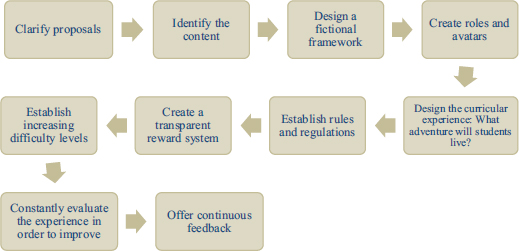
Figure I presents a basic approach to gamification design. Although implementing gamification in the classroom might seem a simple task, it is actually quite complex. Unlike linear educational sessions, this methodology may require storyboards, flowcharts, prototypes, computer code and a cycle of continued experimentation, assessment, feedback and modification. Planning and outlining the different elements of the game is a somewhat complex task.
FIGURE I. Basic proposal in gamification design
Source: drafted internally.
To ensure a better understanding of gamification and apply best educational practices, this text presents the key components that should be included when implementing a gamified experience in the classroom. Although some of these elements have been mentioned in previous sections, here they are connected and focused on the design of didactic activities and their adaptation to the context:
- Fictional framework: this involves developing a broad, consistent story (Raftopoulos, 2014) with a well-developed narrative that actively engages learners and immerses them in an engaging adventure: “Pirate Plunder”, “Time Globetrotters: the adventure of time travel”, are just a few suggestive titles that can frame the plot and enhance a gamification project. This will help generate a stimulating immersive environment for learning, promoting a sense of belonging and emotional connection, as well as participation and engagement.
- Roles and avatars: the gamified experience is enriched when participants embody personalised roles represented through avatars. This gives students an identity and ensures they are the central figures in their own learning adventure. This role should be in line with the type of player identified with. In this sense, Bartle’s (1996) categorisation of the four types of player profile could be taken into account:
‒ Achievers: achievers are focused on achieving the goals of the game with efficiency and integrity. While they do not necessarily seek to beat other players, they strive to outdo themselves and complete tasks properly. Their attitude can make them good leaders who motivate the team in the pursuit of their goals.
‒ Explorers: explorers are passionate about discovering new things and exploring all the possibilities offered in the game. Their main motivation lies in facing uncertainty and surprise, and in solving the challenges they face. They are willing to take risks and are not so concerned with controlling or dominating the game. They enthusiastically share their findings and knowledge, looking for everyone to benefit from their explorations. This type of player can bring a creative, innovative approach to the team, finding novel solutions.
‒ Socialisers: socialisers enjoy the social interactions that the game provides, seeking to establish relationships with other players through participation. For them, the game is an opportunity to share experiences, emotions, ideas and, in short, to make new friends. They are especially attracted to team play, where they can collaborate with others and develop social skills. Their work can be very useful in creating a good working environment and fostering cooperation. They can also help with conflict mediation and with building positive relationships within the team.
‒ Killers: killers like to demonstrate their control, superiority and dominance. Their main goal is to win, and they will have no qualms about doing so at the expense of other players. Competition and recognition are the most important things to them, and they enjoy bragging about their victories. This type of player can bring a competitive and challenging perspective, stimulating the team to improve and surpass themselves. However, it is important to ensure that their approach is not too aggressive or detrimental to the team as a whole (Monzón-Honrubia, 2021).
Each type of player can bring valuable skills and perspectives to a team in a gamified classroom experience, so it is worth identifying them and considering their distribution in order to form balanced groups.
- Challenges, feats or missions: the tasks to be carried out by the students in order to develop the competencies and meet their goals. This involves navigating and resolving challenges or obstacles in accordance with the rules of the activity, varying levels of difficulty, and, in certain cases, chance elements that can either benefit or hinder players throughout their adventure. Developing challenges, feats or missions requires meticulous preparation that strikes a balance between participants’ abilities and the level of challenge posed by the game. Ensuring that tasks are neither too difficult nor too easy will reduce participants’ frustration and allow learners to gain self-confidence (Hammond, 2001). This balance is essential to maintain motivation and to capture attention in the long term. In this sense, we have already mentioned the link to ZPD and the importance of knowing the student’s level of cognitive development.
- Progress measurement standard: rubrics, cumulative experience scoring through achievements, activity logs (Lee and Hammer, 2011), or any other gamified system that can establish and identify the team’s or the participant’s path and current situation (similar to a continuous assessment system) can be used to motivate learners through successful experiences and a sense of achievement. The plot of the fictional framework may also progress based on the success achieved in various activities. In any case, the ethical and pedagogical component will always be fundamental. Monzón-Honrubia (2021) emphasises the importance of the gamified experience resulting from teamwork and from acknowledging joint progress, with students working together to meet goals, fostering attitudes such as altruism and positive communication.
- Continuous feedback through badges and symbolic rewards: according to Ortiz-Colón et al. (2018) and Foncubierta and Rodríguez (2016), constant feedback is one of the biggest advantages of gamification and helps foster tolerance to failure, freedom to make mistakes, awareness of the learning process, and a sense of progress. Systems including experience points, badges, achievements and narratives can be used to provide this feedback. However, their educational value will depend largely on the type of activity in question, such as problem-solving, knowledge tests, open-ended questions, writing or speaking, and their relevance to the pedagogical goals. This is the most controversial element, since its application can intrinsically or extrinsically influence motivation, with the former, as discussed above, being the one that has a real pedagogical significance.
Key considerations for teachers
Implementing gamification in the classroom places significant responsibility on the teaching team. The success of this strategy will depend to a large extent on how the project is designed and planned. However, the most relevant factor will not be what to teach (despite this also being important), but rather how to teach it, i.e. which processes, models and techniques will be used, since “the educational quality of these activities, will determine, to a large extent, the possibilities of student learning” (Alcaraz et al., 2019, p. 125).
Below are five key points that every teacher should take into consideration when carrying out a gamified experience:
- Know the risks of gamification: although successful experiences are well known, it should be noted that inadequate implementation and design are also quite common in gamification (Navarro et al., 2021). For example, the excessive use of extrinsic rewards can detract from and limit real interest in learning. Moreover, focusing excessively on competition within a group may lead students to prioritise outperforming their peers rather than focusing on personal growth, resulting in a decrease in both self-esteem and motivation.
- Minimum training in gamification: designing a gamified educational experience implies knowing its specific characteristics in order to maximise the benefits and reduce the drawbacks. As noted above, we must differentiate gamification from other strategies that it tends to be confused with, such as serious games or GBL. Oña (2022) also distinguishes between superficial gamification and deep gamification. Throughout the article, we have discussed the concept of deep gamification, which entails creating an immersive experience in the classroom through a complex narrative. Superficial gamification, meanwhile, uses online tools for simple activities with game elements (Quizizz, Genialy, Kahoot!, Socrative, Poll, Everywhere, Plickers, Quizlet, Super Teacher, etc.). There is often confusion between these approaches, as stated by Navarro et al. (2021) in their research involving 118 gamified experiences, with 62 being excluded due to non-compliance with the true methodology.
- Count on the latest advances in neuroeducation: neuroscience, and especially neuroeducation, has discovered that meaningful learning is linked to emotions. As already mentioned, positive rather than negative emotions favour the neuronal synapses in charge of learning. Without emotion, there is no motivation; and without motivation, it is difficult to learn anything (Monzón-Honrubia, 2021). Gamification cannot be fully understood without addressing emotions and motivation, as these factors are where its greatest potential lies.
- Know our students: a key element in the design of any gamified project is to know the context of the school and the classroom: the school year in which the experience will take place, participants’ abilities, their interests, and their profile as players. We previously talked about the four types of players; identifying which one our students identify with can make it easier to form teams, thereby enhancing engagement and, consequently, the effectiveness of the gamification.
- Establish consistent goals and procedural principles: a gamified experience must be based around activities arising from the curriculum and be aligned with the competencies and pedagogical processes that facilitate learning, since, as García-Tuleda (2019) points out, “gamification provides motivation and interactivity, but not the actual process of learning”. (p. 3)
In this sense, it will be necessary to establish clear goals and procedural principles that will serve as guidelines to think through, modify or develop activities: Do we want students to be the main players in the process? Do we want the proposal to be inclusive? Do we want it to encourage reflection, cognitive links and metacognition? Do we want the assessment to be formative and continuous?
Each teacher has his or her own conception of what is valuable and possible in the field of education, which is shaped by his or her personal experiences, training, environment and interactions with other professionals in the sector. Consequently, the way in which teachers approach their educational work is influenced by their own visions of the meaning and function of the school and their roles in it.
When designing and developing a gamified experience, it is essential to establish clear procedural principles to ensure that the actions around practice are purposeful and intentional, aligning with the pedagogical values we wish to promote.
Conclusions
Gamification has become an increasingly influential educational trend over recent years, thanks to its potential in terms of integrating playful elements that enhance student motivation, engagement and the learning process. While some studies argue that this approach has not had a significant impact on education, emphasising the negative effects of extrinsic rewards over a prolonged period, other research acknowledges its potential to bring about transformative changes in the teaching-learning process, as well as its capacity to foster student engagement and interest.
In this sense, motivation is the central factor underlying student behaviour, which can be manifested intrinsically or extrinsically. The two dimensions of motivation are therefore closely linked to the characteristic elements of gamification. However, if we prioritise the educational value of the activities, our main focus should be on promoting processes that enhance intrinsic motivation (e.g. autonomy in decision-making, emotional connection through social interactions) and on applying knowledge to practical situations, all of which, as we have seen, are crucial for the cognitive process.
However, when assessing the integration of gamification in the classroom, the first step should be to acknowledge that it is one of many instructional approaches, distinguished by a specific design which should always be guided by a pedagogical purpose that goes beyond just its motivational aspect. Moreover, adaptation to the context and type of students should consider their personal and cognitive characteristics, as well as their age and developmental stage.
Adequate training in the components and particularities of gamification (fictional framework; roles and avatars; challenges, feats or missions; progress measurement method; feedback through badges and symbolic rewards) will help prevent it being confused with other related educational strategies, such as serious games or GBL.
It must not be forgotten that the success or failure of gamified learning cannot be solely attributed to the resources used, but rather depend primarily on the design, planning and meaningfulness of the experience. Indeed, highly motivated students may become tired of poorly structured dynamics, meaningless activities or poorly calibrated challenges (Foncubierta and Rodríguez, 2016). Training around gamification is therefore key in order for teachers to design meaningful experiences that favour student motivation and learning, guaranteeing its success in the classroom.
Information
Research project: “Estudio sobre las interacciones en Redes Sociales de Gamers y Creadores de Contenido Digitales y Fanáticos. Influencia en el rendimiento deportivo y profesional (INTERS-GAMERS)”. Cátedra estratégica eSports. Ref: Redes Gamers 2023/00000201.
Bibliographic references
Abt, C. (1987). Serious Games. University Press of America.
Adell, J. (2020). Cambiar la educación para cambiar el mundo. Ediciones Octaedro.
Adell, J., & Castañeda, L. (2012). Tecnologías emergentes, ¿pedagogías emergentes? En J. Hernández, M. Pennesi, D. Sobrino y A. Vázquez (coord.). Tendencias emergentes en educación con TIC (pp. 13-32). Asociación Espiral, Educación y Tecnología. https://digitum.um.es/digitum/bitstream/10201/29916/1/Adell_Castaneda_emergentes2012.pdf
Aguiar-Castillo, L., Clavijo-Rodriguez, A., Saa-Perez, D., & Perez-Jimenez, R. (2019). Gamification as an approach to promote tourist recycling behavior. Sustainability, 11(8), 2201. https://doi.org/10.3390/su11082201
Aguilar, J. E. (2016). Un modelo estructural de motivación intrínseca. Acta de Investigación Psicológica, 6, 2552-2557. https://doi.org/10.1016/j.aipprr.2016.11.007.
Ainley, M., & Ainley, J. (2011). Student engagement with science in early adolescence: The contribution of enjoyment to students’ continuing interest in learning about science. Contemporary Educational Psychology, 36(1), 4-12. https://doi.org/10.1016/j.cedpsych.2010.08.001
Alcaraz Salarirche, N., Fernández Navas, M., & Pérez Granados, L. (2019). Principios de procedimiento y escenarios reales en la formación inicial de maestros/as. Aula De Encuentro, 21(1), 123–142. https://doi.org/10.17561/ae.v21i1.7
Ausubel, D. (2002). Adquisición y retención de conocimiento. Una perspectiva cognitiva. Ediciones Paidós.
Bartle, R. (1996, 28 de agosto). Hearts, clubs, diamonds, spades: Players who suit muds. https://bit.ly/3r0xOQN
Becta (2001). Computer Games in Education project [Archivo PDF]. https://cibermemo.files.wordpress.com/2015/12/edujoc2004.pdf
Bisquerra, R., Pérez-González, J.C., & García Navarro, E. (2015). Inteligencia emocional en educación. Editorial Síntesis.
Bolívar, A. (2008). Competencias básicas y ciudadanía. Caleidoscopio, revista de contenidos educativos del CEP de Jaén, 1, 1-32.
Boller, S., & Kapp, K. M. (2017). Play to learn: Everything you need to know about designing effective learning games. Association for Talent Development.
Castañeda-Cantillo, A.E. (2013). La evaluación del aprendizaje, una mirada sistémica. Ediciones Usta.
De Gloria A., Bellotti F., & Berta R. (2014). Serious games for education and training. International Journal of Serious Games, 1(1), 1-15. https://doi.org/10.17083/ijsg.v1i1.11
Deci, E. L., Koestner, R., & Ryan, R. M. (2001). Extrinsic rewards and intrinsic motivation in education: Reconsidered once again. Review of Educational Research, 71(1), 1-27. https://doi.org/10.3102/00346543071001001
Deci, E. L., & Ryan, R. M. (2000). The “what” and “why” of goal pursuits: Human needs and the self-determination of behavior. Psychological Inquiry, 11(4), 227–268. https://doi.org/10.1207/S15327965PLI1104_01.
De-Marcos, L., Domínguez, A., Saenz-de-Navarrete, J., & Pagés, C. (2014). An empirical study comparing gamification and Social networking on e-learning. Computers & Education, 75, 82-91. https://doi.ogr/10.1016/j.compedu.2012.12.020.
Del Río-Fernández, J.L. (2023). A vueltas con la llamada innovación educativa. Algunas reflexiones para suscitar el debate. Márgenes, Revista de Educación de la Universidad de Málaga, 4(1), 7-19. https://doi.org/10.24310/mgnmar.v4i1.15923
García-Tuleda, P. A. (2019). Gamificación e inclusión: rutas de aprendizaje en Educación Primaria. En C. Martínez y F.J. Murillo. XIX Congreso Internacional de Investigación Educativa AIDIPE 2019 (pp.78-85). Asociación Interuniversitaria de Investigación Pedagógica.
Gee, J.P. (2003). What Video Games have to Teach Us about Learning and Literacy. Palgrave/Macmillan.
Gimeno Sacristán, J. (2010). ¿Qué significa el currículum? En J. Gimeno Sacristán (Comp.). Saberes e incertidumbres sobre el currículum (pp.19-43). Morata.
González-Fernández, A., Revuelta-Domínguez, F.-I., & Fernández-Sánchez, M.R. (2022). Models of Instructional Design in Gamification: A Systematic Review of the literature. Educ. Sci, 12(1), 44. https://doi.org/10.3390/educsci12010044
Griffiths, M.D. (2002). Playing video games seems to have few serious acute adverse effects on health. British Medical Journal, 324. https://doi.org/10.1136/bmj.324.7346.1159
Foncubierta, J., & Rogríguez, Ch. (2016). Didáctica de la gamificación en la clase de español. Editorial Edinumen. https://bit.ly/3IZjdve
Hammond, J. (2001). Scaffolding Teaching and Learning in Language and Literacy Education. Primary English Teaching Association.
Hernández-Horta, I. A., Monroy-Reza, A., & Jiménez-García, M. (2018). Aprendizaje mediante Juegos basados en Principios de Gamificación en Instituciones de Educación Superior. Formación universitaria, 11(5), 31-40.
Hu, J. (2020). Gamification in Learning and Education: Enjoy Learning Like Gaming. British Journal of Educational Studies, 68(2), 265–267. https://doi.org/10.1080/00071005.2019.1682276
Ibarra Maturin, J. G. (2022). La Gamificación: Una Técnica para Potencializar el Aprendizaje en Primaria. Formación Estratégica, 4(01), 141–155. https://www.formacionestrategica.com/index.php/foes/article/view/61
Kalat, J. W. (2011). Introduction to Psychology. Wadsworth Cengage Learning.
Kapp, K. M. (2012). The gamification of learning and instruction: game-based methods and strategies for training and education. John Wiley & Sons.
Keller, J. M. (2009). Motivational design for learning and performance: The ARCS model approach. Springer.
Koivisto, J., & Hamari. J. (2014). Demographic differences in perceived benefit from gamification. Computers in Human Behavior, 35,179-188. https://doi.org/10.1016/j.chb.2014.03.007
Landers, R. N. (2014). Developing a theory of gamified learning: Linking serious games and gamification of learning. Simulation & Gaming, 45(6), 752–768. https://doi.org/10.1177/1046878114563660
Lee, J., & Hammer, J. (2011). Gamification in Education: What, How, Why Brother? Academic Exchange Quarterly, 115(2), 146.
Lepper, M.R., Iyengar, S.S., & Corpus, J.H. (2005). Intrinsic and extrinsic motivational orientations in the classroom: Age differences and academic correlates. Journal of Educational Psychology, 97(2), 184–196. https://doi.org/10.1037/0022-0663.97.2.184
López-Marí, Peirats-Chacón y Martín-Alonso (2022): Visiones sobre la gamificación como estrategia metodológica inclusiva en educación primaria. Revista: Aloma 40(2), 59-69. https://doi.org/10.51698/aloma.2022.40.2.59-69
Mattera, M., Gava, L., Urena, R., & Ropero, E. (17-19 de marzo de 2021). Backing the Right Horse: Gamification and Mixed Realities in Higher Education. 4th International Conference on Information Science and Systems, Edinburgh, United Kingdom.
Mitchell, A., & Savall-Smith, C. (2004). The use of computer and video games for learning. A review of the literature. The learning and skills development agency.
Mohamed-Rosly, H., & Khalid, F. (2017). The Effectiveness of Gamification in the Learning Process: An Empirical Study. Journal of Education and e-Learning Research, 4(2), 30-38.
Monzón-Honrubia, A. (2021). La gamificación como metodología educativa en un aula de educación primaria [Trabajo Fin de Grado. Universidad Católica de Valencia]. https://n9.cl/ombrc
Muntean, C. I. (28-29 de octubre de 2011). Raising engagement in e-learning through gamification. Proceedings 6th International Conference on Virtual Learning ICVL (pp. 323—329), vol. 1 Cluj-Napoca, Romania, Europe.
Navarro, C., Pérez, I., & Femia, P. (2021). La gamificación en el ámbito educativo español: revisión sistemática. Retos, 42. 507-516. https://doi.org/10.47197/retos.v42i0.87384
Oliveira, W., Toda, A., Toledo, P., Shi, L., Vassileva, J., Bittencourt, I.I., & Isotani, S. (2020). Does tailoring gamified educational systems matter? The impact on students’ flow experience. Hawaii International Conference on System Sciences. 10.24251/HICSS.2020.152
Oña, D. (2022). Gamificación en la Educación Primaria, ventajas y contrapartidas: una revisión sobre el origen, las perspectivas teóricas y el estado de la cuestión [Trabajo Fin de Grado, Universitat de les Illes Balears]. http://hdl.handle.net/11201/159482
Ortiz-Colón, A.-M., Jordán, J., & Agredal, M. (2018). Gamificación en educación: una panorámica sobre el estado de la cuestión. Educação e Pesquisa, 44(1), 1-17. https://doi.org/10.1590/S1678-4634201844173773
Pérez Gómez, A. I. (2019). Ser docente en tiempos de incertidumbre y perplejidad. Márgenes, Revista de Educación de la Universidad de Málaga, 0(0), 3-17. https://doi.org/10.24310/mgnmar.v0i0.6497
Pérez Gómez, A. I. (2012). Educarse en la Era digital. Morata.
Parra-González, M. E., & Segura Robles, A. (2020). Producción científica sobre gamificación en educación: un análisis cienciométrico. Revista de Educación, 390, 169-189. https://doi.org/10.4438/1988-592X-RE-2020-390-4265
Postigo-Fuentes, A.Y. (2021). Aprendizaje de una lengua extranjera en una liga de eSports amateur. Un estudio de caso [Tesis doctoral]. Universidad de Málaga.
Pozo-Sánchez, S., Lampropoulos, G., & López-Belmonte, J. (2022). Comparing Gamification Models in Higher Education Using Face-to-Face and Virtual Escape Rooms. Journal of New Approaches in Educational Research, 11(2), 1–16. https://doi.org/10.7821/naer.2022.7.1025
Prensky, M. (2001). Digital Game-Based Learning. McGraw-Hill.
Raftopoulos, M. (2014). “Towards Gamification Transparency: A Conceptual Framework for the Development of Responsible Gamified Enterprise Systems”. Journal of Gaming & Virtual Worlds 6(2), 159–178.
Richtel, M. (6 de junio de 2010). Attached to technology and paying a price. The New York Times. https://www.nytimes.com/2010/06/07/technology/07brain.html
Rigby, C. S., & Przybylski, A. K. (2009). Virtual worlds and the learner hero: How today’s video games can inform tomorrow’s digital learning environments. Theory and Research in Education, 7(2), 214—223. https://doi.org/10.1177/1477878509104326
Rohman, D., & Fauziati E. (2022). Gamification of Learning in the Perspective of Constructivism Philosophy Lev Vygotsky. Budapest International Research and Critics Institute-Journal, 5(1), 4467-4474. https://doi.org/10.33258/birci.v5i1.4156
Ryan, R. M., & Deci, E. L. (2017). Self-determination theory: Basic psychological needs in motivation, development, and wellness. The Guilford Press.
Ryan, R., & Deci, E. (2000). Self-determination theory and the facilitation of intrinsic motivation, social development, and well-being. American psychologist, 55(1), 68.
Sailer, M., Hense, J. U., Mayr, S. K., & Mandl, H. (2017). How gamification motivates: An experimental study of the effects of specific game design elements on psychological need satisfaction. Computers in Human Behavior, 69, 371-380. https://doi.org/10.1016/j.chb.2016.12.033
Sailer, M., & Homner, L. (2020). The Gamification of Learning: a Meta-analysis. Educational Psychology Review, 32(1), 77–112. https://doi.org/10.1007/s10648019-09498-w
Santos Guerra, M. A. (18 de junio de 2005). Valor de cambio. [Blog El Adarve]. https://mas.laopiniondemalaga.es/blog/eladarve/2005/06/18/valor-de-cambio/
Seaborn, K., & Deborah I. F. (2015). Gamification in Theory and Action: A Survey. International Journal of Human-Computer Studies, 14–31. https://doi.org/10.1016/j.ijhcs.2014.09.006
Sherry, J.L., Greenberg, B. S., Lucas, K., & Lachlan, K. (2006). Video game uses and gratifications as predictors of use and game preference. En J. Bryant. Playing computer games: Motives, responses and consequences (pp.213-224). LEA.
Squire K., Jenkins, H., Holland, W., Miller, H., O’Driscoll, A., Tan, K.P., & Todd, K. (2003). Design principles of next-generation digital gaming for education. Educational Technology, 43(5), 17–23.
Sola, M. (2016). ¿Por qué es necesario innovar? En M. Fernández y N. Alcaraz (coords.). Innovación Educativa. Más allá de la ficción (27-40). Pirámide.
Vygotsky, L. (2012). El desarrollo de los procesos psicológicos superiores. Austral.
Zhang, B., Zheng, Y., Liu, C., & Chen, X. (2020). A critical review of gamification research in educational contexts from 2008 to 2019. Journal of Educational Computing Research, 58(5), 1064-1098. https://doi.org/10.1177/0735633120902887
Zichermann, G. (23 de Agosto de 2011). Gamification is here to stay (and it’s not bullshit) [Blog Kotaku]. https://kotaku.com/5833631/gamification-is-here-to-stay-and-its-not-bullshit
Contact address: Laura Pérez Granados. Universidad de Málaga Universidad de Málaga, Facultad de Ciencias de la Educación, Departamento de Didáctica y Organización Escolar. Boulevard Louis Pasteur, 25, 29010. Campus Teatinos. Málaga. E-mail: lpgranados@uma.es