Healthy lifestyle habits in primary education: a systematic review
Hábitos de vida saludables en educación primaria: revisión sistemática
https://doi.org/10.4438/1988-592X-RE-2024-406-646
Olatz Arce-Larrory
https://orcid.org/0000-0003-1412-332X
Universidad de Deusto
Erlantz Velasco
https://orcid.org/0000-0002-4554-9852
Universidad de Deusto
Iker Sáez
https://orcid.org/0000-0002-6094-2812
Universidad de Deusto
Abstract
The school environment has the potential to influence both the health and well-being of pupils. In this sense, many studies have analysed and evaluated educational interventions for the promotion of healthy lifestyle habits in primary education. However, many were developed outside the curricular areas, without considering their value in the promotion of these habits. Therefore, this article aims to analyse interventions carried out to improve healthy lifestyle habits in primary school pupils within the curricular space between 2015 and 2022. To this end, a systematic review was performed following the PRISMA statement. The article selection process yielded a total of 24 articles for analysis, of which descriptive and content analyses were conducted. The following variables were analysed: population, subject, agent directing the intervention, intervention structure, type of activities, training, family involvement, additional tasks, and resources used. The general results confirm the lack of a declarative framework regarding aspects or dimensions encompassing healthy lifestyle habits in educational interventions of primary education. Nevertheless, the analysis concludes that there are elements specific to aspects related to physical activity, nutrition, emotional well-being, and hygiene.
Keywords: healthy lifestyle habits, primary education, curriculum, educational program, intervention.
Resumen
El entorno escolar tiene el potencial de influir tanto en la salud como en el bienestar del alumnado. En este sentido, han sido numerosos los estudios que analizan y evalúan intervenciones educativas para el fomento de los hábitos de vida saludables en Educación Primaria. Aun así, muchos, se han desarrollado fuera de las áreas curriculares, sin tener en cuenta el valor de estas en el fomento de dichos hábitos. Por tanto, el presente artículo tiene por objetivo analizar intervenciones realizadas para mejorar los hábitos de vida saludables en el alumnado de Educación Primaria en el espacio curricular entre los años 2015-2022. Para ello, se realizó una revisión sistemática siguiendo la declaración PRISMA. El proceso de selección de artículos arrojó un total de 24 artículos a analizar, en los cuales se realizó un análisis descriptivo y un análisis de contenidos. Las siguientes variables fueron analizadas: población, asignatura, agente que dirige la intervención, estructura de la intervención, tipo de actividades, formación, implicación de la familia, tareas adicionales, y recursos utilizados. Los resultados generales permiten confirmar la inexistencia de un marco declarativo sobre los aspectos o dimensiones que abarcan los hábitos de vida saludables en las intervenciones educativas de Educación Primaria. No obstante, del análisis se concluye que se observan elementos propios de aspectos relacionados con la actividad física, la nutrición, el bienestar emocional y la higiene.
Palabras clave: hábitos de vida saludables, educación primaria, currículum, programa educativo, intervención.
Introduction
The WHO-UNICEF-Lancet Commission highlights the existence of a global issue of child health and well-being and advocates placing child well-being at the centre of Sustainable Development Goals (SDGs) policies (Clark et al., 2020). Regarding this global issue, non-communicable or lifestyle diseases (Akseer et al., 2020, WHO, 2022) are key agents. These diseases originate in childhood and are determined by factors such as physical inactivity, an unhealthy diet, or unhealthy or unsafe environments (WHO, 2022). The relationship between the influence of childhood experiences and future health status has been documented (Hahnraths et al., 2021; Whitaker et al., 1997). Therefore, it is essential to promote what the literature defines as healthy lifestyle habits (HLH) during the first years of life to develop and adhere to them during adult life (Gámez-Calvo et al., 2022; Hahnraths et al., 2021; Invernizzi et al., 2019; Langford et al., 2014; Moscoso-Loaiza & Díaz-Heredia, 2018).
HLH are a way of life that reduces the risk of disease or premature death (WHO, 1999). The literature does not have a unified approach as to which habits constitute this way of life, however, it seems that physical activity (PA) and nutrition are two essential elements (de Villier et al., 2016; Jimenez-Parra et al., 2022; López et al., 2021; WHO, 1999), evidencing the need to address this issue. These habits are formed from childhood, require learning and repetition, and can even become unconscious (Moscoso-Loaiza & Díaz-Heredia, 2018; Oberto et al., 2020). The fact that this occurs in the developmental phase of children means that both the family and education become determining axes of its perpetuation (Gámez-Calvo et al., 2022; Hung et al., 2015; WHO, 2021).
Since 1985, WHO, UNESCO, and UNICEF began to structure the Health-Promoting School approach (WHO, 2021), highlighting the importance of the school environment in influencing the health and well-being of pupils (Bonell et al., 2013; Langford et al., 2014). Children spend a large part of the day at school and, as various studies reveal, this school period in the classroom can become a very useful time for educating and acquiring HLH (Hahnraths et al., 2021; Pulido-Gil et al., 2022), for example, through the promotion of school-based programs (Jones et al., 2020; Markov et al., 2020). In this sense, programs promoting HLH should be holistic, in which all educational agents are integrated: management team, teachers, and family (Gámez-Calvo et al., 2022; Harris & Cale, 2018; and Moscoso-Loaiza & Díaz-Heredia, 2018).
For all these reasons, a systematic review is presented to understand the dimensions encompassing HLH within the primary education (PrE) curriculum, and, from a pedagogical point of view, to report on the type of interventions carried out from when the SDGs were adopted (2015) to the date of the study (2022).
Method
This systematic review followed the PRISMA 2020 statement. The research question, search strategy, and inclusion and exclusion criteria were elaborated via the same PRISMA statement (Page et al., 2021).
Eligibility Criteria
Using the PICO strategy (Table I) established by the National Institute for Health and Care Excellence (Schardt et al., 2007), the research question was posed: What interventions (I) have been implemented to improve the healthy lifestyle habits (O) of pupils in PrE (P)? Accordingly, inclusion and exclusion criteria were designed, and articles with qualitative, quantitative, and mixed designs were considered. The term comparison (O) was excluded because a comparison between studies was not sought.
TABLE I. Inclusion and exclusion criteria formulated with the PICO strategy
|
Population |
Intervention |
Results |
Inclusion criteria |
PrE pupils |
HLH interventions in PrE within the curricular setting that detail their procedure and assessment |
They report on findings obtained in an HLH |
Exclusion Criteria |
|
|
|
Source: Compiled by the authors.
Information sources
The Scopus, PubMed, Web of Science (WoS), and ERIC databases were searched on 27 October 2022. English was the predominant language (87.5%), followed by Spanish (12.5%). The search focused on articles published in journals from the year of creation of the SDGs (2015) to the year of the search strategy design (2022). Book chapters, systematic reviews or meta-analyses, and reports and proceedings of scientific conferences were excluded.
Search strategy
Using the PICO strategy, the research question that guided the systematic review was established. The search equation was appropriate to the conditions of each database, using the Boolean operators AND and OR (Table II) (Methley et al., 2014).
TABLE II. Keywords formulated with the PICO strategy
|
[1] Population |
[2] Intervention |
[3] Results |
Keywords |
“primary school*” OR “primary grad*” OR “primary education*” OR “elementary school” OR “elementary education” |
intervention* OR program* OR activit* |
“healthy lifestyle*” OR “healthy habit*” OR “well?being” OR wellness |
Searches |
In Scopus: TITLE/ABS/KEY [1] AND TITLE/ABS/KEY [2] AND TITLE/ABS/KEY [3] In PubMed: TITLE/ABSTRACT [1] AND TITLE/ABSTRACT [2] AND TITLE/ABSTRACT [3] In WoS: TOPIC(TS) [1] AND TOPIC(TS) [2] AND TOPIC(TS) [3] In ERIC: TITLE/DESCRIPTOR [1] AND TITLE/DESCRIPTOR [2] AND TITLE/DESCRIPTOR [3] |
||
Limits |
In Scopus: AND PUBYEAR > 2014 AND (LIMIT-TO (DOCTYPE,“ar”) OR LIMIT-TO (DOCTYPE,“re”) ) In PubMed: AND (2015:2022[pdat]) In WoS: refined by: Publication year (2015-2022) and Document types (Article or Review) In ERIC: pubyearmin:2015 | ||
Source: Compiled by the authors.
Note: [ ]: Indicates the numbering of the keywords used in the search. These are reflected in each database search.
Data collection and selection process
The researchers defined the terms to be used in the PICO strategy. The search was reviewed by the staff of the Resource Centre for Learning and Research (RCLR) of the University of Deusto to reaffirm the suitability of the search. The studies identified were selected based on inclusion and exclusion criteria (Table I). The selection process (Figure I) was carried out by the responsible investigators. Independently, they reviewed the screening of titles, abstracts, and studies in an Excel document. In case of discrepancy, this was resolved by discussion until a simple majority consensus was reached. Thus, of the 1007 studies identified (654 excluding duplicates) in the Scopus, PubMed, WoS, and ERIC databases, 24 studies were selected for analysis. Duplicate documents were removed using Rstudio (R.4.2.0) (n = 318) and independently reviewed and excluded by the study researchers (n = 35). This selection process followed the inclusion and exclusion criteria (Table I).
FIGURE I. Flowchart of the study selection procedure
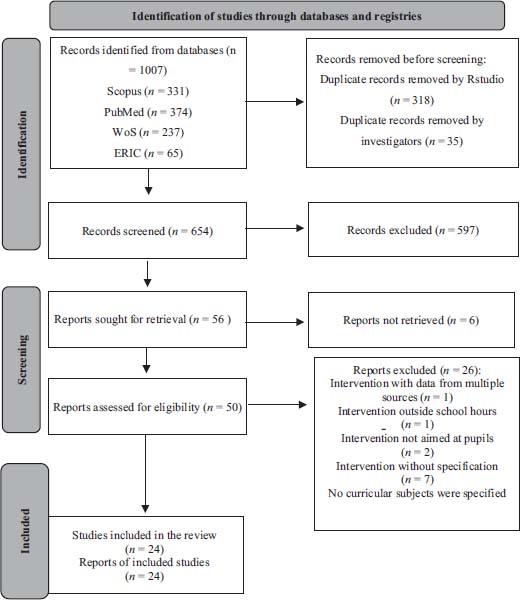
Source: Page, M.J., McKenzie, J.E., Bossuyt, P.M., Boutron, I., Hoffmann, T.C., Mulrow, C.D., Shamseer, L., Tetzlaff, J.M., Akl, E.A., Brennan, S.E., Chou, R., Glanville, J., Grimshaw, J.M., Hróbjartsson, A., Lalu, M.M., Li, T., Loder, E.W., Mayo-Wilson, E., McDonald, S., ... Moher, D. (2021). The PRISMA 2020 statement: an updated guideline for reporting systematic reviews. BMJ British Medical Journal, 372(71), 1-9. http://doi.org/10.1136/bmj.n71.
The principal investigator analysed the studies selected and reviewed by the other two investigators. Content analysis was performed using the ATLAS.ti programme (22.1.5.0) and an Excel spreadsheet.
Data Elements
The variables for which data were searched are detailed below (Table III).
TABLE III. The variables for which data were searched
Variables |
Description of the variables |
1. Type of article |
Quantitative, qualitative, or mixed |
2. Year |
2015-2022 |
3. Journal |
Name of the journal |
4. Country |
The country where the intervention was implemented |
5. Aim |
Description of the aim of the study |
6. Sample |
The study population |
7. Study Intervention: (1) Overview; (2) type of activities; (3) required training or not; (4) required the involvement of families; (5) included additional tasks |
(1) Brief description of the intervention (2) Type of activities carried out (3) Whether agents were trained or not (4) Whether families formed part of the interventions (5) Whether or not the interventions included additional tasks |
8. The subject(s) within which the intervention was carried out |
Curricular integration (various curricular subjects) Curricular subject (a single curricular subject) |
9. Agent |
The person involved in the implementation of the intervention |
10. Resources |
The resources used during the intervention |
11. Results |
Brief description of the main results |
Source: Compiled by the authors.
Data analysis
Data analysis was performed using a descriptive analysis and content analysis of the studies. The variables were grouped into different categories: participant variables (age, course), context variables (publication date, PrE schools, and curricular timetable), methodological variables (study design), extrinsic variables (studies published in JCR impact journals), and intervention variables (description, type of activity, structure, family involvement, training, tasks, resources).
Results and discussion
Descriptive analysis
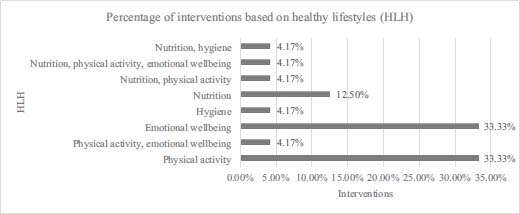
Of the 24 articles, 37.93% included PA as part of their intervention, 34.48% emotional well-being, 20.69% nutrition, and 6.90% hygiene. These HLH were grouped in some interventions working on several variables simultaneously; therefore, there are univariate and multivariate interventions (Figure II).
FIGURE II. Number of interventions based on healthy lifestyle habits (HLH)
Source: Compiled by the authors.
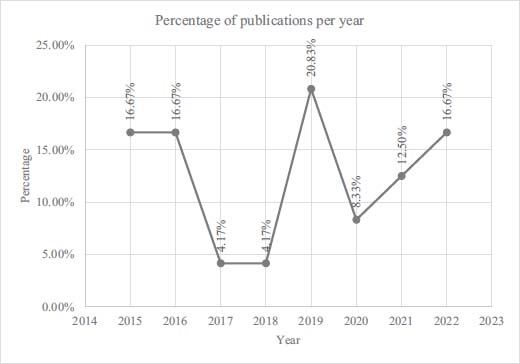
These articles were published in 20 different journals, with the International Journal of Environmental Research and Public Health being the most frequent (16.67%), followed by Trials (8.33%). Regarding the publication date, the number of studies published over the seven years varied from one publication per year to five, four being the most frequent number (Figure III).
FIGURE III. Number of publications per year
Source: Compiled by the authors.
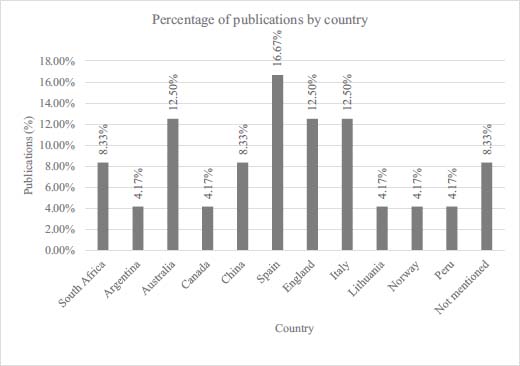
Likewise, interventions were identified across 12 countries, with Spain performing the most interventions (16.67%), followed by England (12.50%), Italy (12.50%), and Australia (12.50%) (Figure IV). In general terms, PA, emotional well-being, and nutrition were the HLH worked on in these interventions. PA was present in 53.85% of the studies, emotional well-being in 46.15%, and nutrition in 23.08%. It is worth mentioning that 15.38% of these studies worked on more than one HLH, all of which were implemented in Spain. This same country, Spain, was the only one that worked on the three aforementioned HLH (8.33% PA, 8.33% emotional well-being, and 12.50% nutrition), whereas England (4.17% PA, 8.33% emotional well-being, and 0% nutrition), Italy (8.33% PA, 4.17% emotional well-being, and 0% nutrition), and Australia (8.33% PA, 4.17% emotional well-being, and 0% nutrition) did not work on nutrition in any of the interventions selected in this study.
FIGURE IV. Number of publications by country
Source: Compiled by the authors.
The overall results from the 24 articles (75% quantitative and 25% mixed) are listed below (Table IV).
TABLE IV. Objective and overall results of the selected studies
HLH |
Item Type |
Article |
Focus |
General results |
Physical activity |
Quantitative |
One group |
Increased children's subjective well-being and confidence in social interactions. |
|
|
|
Quasi-experimental |
Positive impact on physical functions. |
|
|
|
Quasi-experimental |
Reduced body weight and increased muscle and bone mass. |
|
|
|
Quasi-experimental |
Impact on somatic, personality, and social anxieties. Increased PA levels. |
|
|
|
Quasi-experimental |
Improvement in pupils' attitudes towards PA and behavioural cognition. |
|
|
|
Quasi-experimental |
Positive effects: executive function skills, and shifting performance. |
|
|
Mixed |
Quasi-experimental |
Increased confidence level, motor competence, enjoyment, and amount of PA, time spent on a task, and, satisfaction with PE classes and teaching styles. Decreased time wasting in PE. |
|
|
|
Quasi-experimental |
Improvement in key educational outcomes. |
|
Physical activity, emotional well-being |
Mixed |
Quasi-experimental |
Improvement: executive functions, academic performance, and psychosocial aspects. Promoted the improvement of health-related quality of life. |
|
Emotional well-being |
Quantitative |
Quasi-experimental |
Improvement: cognitive, emotional, and social abilities. Positive effects: attentional skills, ADHD symptoms, and emotional functions. |
|
|
|
One group |
Benefits: in levels of peer support and pupil loneliness, and the self-efficacy of parents. |
|
|
|
experimental |
Improvement: executive functions, self-reported measures of well-being, self- and peer-reported prosocial behaviour, and mathematics performance. |
|
|
|
Quasi-experimental |
Improvement; Mental health knowledge. |
|
|
|
One group |
Improvement: resilience and social and emotional functioning. |
|
|
|
One group |
Improvement: positive emotions, overall satisfaction with life, and satisfaction with themselves, their friends, and the environment in which they lived. |
|
|
|
Quasi-experimental |
Improvement: metacognition; Decreased: negative affect. |
|
|
Mixed |
Randomised Controlled Trial |
Improvement: children's social skills; perception of social and peer support; Decreased: exclusions; Significant impact: children's psychological well-being. |
|
Hygiene |
Mixed |
One group |
Improvement: feedback and collective construction of knowledge; creation of an enabling environment to promote healthy behaviours. |
|
Nutrition |
Quantitative |
Quasi-experimental |
Improvement: knowledge of nutrition and children's self-efficacy. |
|
|
|
One group |
Improvement: knowledge and consumption of healthy foods. Reduction: Consumption of unhealthy foods. |
|
|
|
Quasi-experimental |
Improvement: adherence to the Mediterranean diet. |
|
Nutrition, Physical Activity |
Quantitative |
Randomised, placebo-controlled trial |
(1) Understanding the effects of an intervention combining PA and multi-micronutrient supplementation. (2) New insights into training schools to implement PA data. Update on the status of micronutrient deficiencies, inflammatory and cardiovascular risk markers, and communicable diseases in selected communities. |
|
Nutrition, Physical Activity, Emotional Well-Being |
Mixed |
One group |
Increased: KAH scores towards a healthy lifestyle. |
|
Nutrition, hygiene |
Quantitative |
Quasi-experimental |
Improvement: HLH, consumption of water, fruit, and vegetables and washing and dental hygiene practices. Decreased: consumption of soft drinks. |
Source: Compiled by the authors.
Note: ADHD: attention deficit hyperactivity disorder; KAH: Knowledge, Attitudes, and Habits; PA: Physical Activity
Content analysis of the studies
The content analysis was divided into two sections. First, the general contents of the studies were analysed based on three axes (Table V): population, subject, and agent directing the intervention. Secondly, the interventions carried out were analysed in more depth, this time on seven axes (Table VI): description; intervention structure: frequency (F), time (T), intensity (I), type of activities, training, family involvement, additional tasks, and resources.
TABLE V. Summary of the analysis of the general contents of the studies
Article |
Population |
Subject |
Person conducting the intervention |
|
|
Npupils= 28 7 & 8 years old |
CI: CS |
Dancers CT |
|
|
Npupils= 795 6-9 years |
CI: CS (not PE) |
CT |
|
|
Npupils= 31 7-8 years |
CI: CS |
Mindfulness Meditation Instructors |
|
|
Npupils= 998 4th year |
CI: CS |
Educators |
|
|
Npupils= 330 6-12 years |
CI: CS |
CT Instructors |
|
|
Npupils= 917 1-6th year |
CI: CS |
CT |
|
|
Npupils= 5218 7-9 years 3-5th years |
CI: CS |
CT |
|
|
Npupils-quantitative)= 121 Npupils-quantitative)= 28 10-11 years |
CS: PE |
PE Graduate students, CT |
|
|
Npupils= 250 |
CI: CS |
CT |
|
|
Npupils= 37 10 & 12 years |
CI: CS |
CT, Family |
|
|
Npupils= 364 6-9 years |
CS: PE |
PE Faculty |
|
|
Npupils= 108 6-13 years |
CI: CS |
Nursing Student, CT |
|
|
Npupils = 366 8-11 years |
CS: PE |
PE Teachers, Family |
Martinez-Garcia and Trescastro-López (2016)
|
Npupils= 28 8 & 9 years old 3rd year |
CI: CS |
Dietitian-nutritionist, CT, tutor teachers, PE teachers |
|
|
Npupils= 10 schools 4th year |
CS: English |
CT |
|
|
Npupils= 564 4-10 years 1-3rd year |
CS: social sciences |
Researchers |
|
|
Npupils= 38 6-7 years 1st year |
CS: PE |
NS |
|
|
Npupils= 1770 1-6th year |
CI: CS |
NS |
|
|
Npupils= 99 9-12 years 4-5th year |
CI: CS |
NS |
|
|
Npupils= 459 8-12 years |
CI: CS |
Graduates or students of a master's degree in Counselling or Counselling and Clinical Psychology or teachers with previous training |
|
|
Npupils= 43 9-12 years 4-6th year |
CS: single group of subjects that promote coping skills and resilience |
NS |
|
|
Npupils= 12 9-10 years 4th year |
CS: Math, Science |
CT, School Psychologist & Researchers |
|
|
Npupils= 71 7-9 years |
CS: personal and social education |
CT |
|
|
N(schools)= 6 8-10 years 3-4th year |
CI: CS |
CT, Researchers |
Source: Compiled by the authors.
Note:  : physical activity;
  : emotional well-being;
  : nutrition;
  : hygiene; PE, physical education; CS: curricular subject; CI: curricular integration; NS: not specified; CT: Classroom Teachers.
TABLE VI. Summary of the analysis of the contents of the study interventions
Article |
Structure |
Content Type |
Type of activities |
Training |
Family Involvement |
Additional Tasks |
Resources |
|
|
F: No T: No D: 3 months I: No |
Procedural Attitudinal Conceptual |
Body Movement (BL, MH) Awareness Values and Emotions Knowledge Acquisition |
✗ |
✓ |
✗ |
Audiovisual |
|
|
F: 3 times a week T: 15 min D: 3 months I: No |
Procedural |
Body Movement (MS) |
✓ |
✗ |
✗ |
NS |
|
|
F: 3 times a week T: 1-2 weeks (30 min); 3-4 weeks (45-55 min); 7-8 weeks (1 h 30 min) D: 8 weeks I: No |
Procedural Attitudinal |
Relaxation & Mindfulness Awareness |
✗ |
✗ |
✗ |
Audiovisual |
|
|
F: No T: No D: 3 years I: No |
Procedural Attitudinal Conceptual |
Knowledge Acquisition Awareness Experimental-Manipulative |
✓ |
✓ |
✗ |
Printed matter |
|
|
F: No T: No D: No I: No |
Procedural |
Body Movement (AR, PE, BL) |
✓ |
✓ |
✗ |
NS |
|
|
F: No T: 135 min D: No I: moderate-vigorous |
Procedural |
Body Movement (MS) |
✗ |
✗ |
✗ |
NS |
|
|
F: 2 times per week T: 30-40 min D: 1 academic year I: No |
Conceptual Attitudinal |
Knowledge Acquisition Awareness |
✓ |
✓ |
✓ |
Printed matter |
|
|
F: 2 h per week T: 2 h D: 12 weeks I: No |
Procedural |
Values and emotions |
✓ |
✗ |
✗ |
NS |
|
|
F: 2-4 times a day (10-16 sessions a week) T: 1 h D: 1 academic year I: Vigorous |
Attitudinal Procedural |
Values & Emotions Awareness Body Movement (AR) |
✓ |
✗ |
✓ |
Audiovisual |
|
|
F: No T: 40-60 min D: 12 months I: No |
Attitudinal |
Values and emotions |
✗ |
✓ |
✗ |
NS |
|
|
F: 3 times a week T: 30-45 min D: 8 months I: No |
Procedural |
Body Movement (MS) Relaxation & Mindfulness |
✗ |
✗ |
✗ |
Printed matter |
|
|
F: No T: 1 h D: 6 months I: No |
Attitudinal Procedural |
Awareness Experimental-manipulative |
✓ |
✗ |
✗ |
NS |
|
|
F: Once a week (EMWKG sheets); 3 times a week (PE homework) T: No D: 15 weeks I: No |
Procedural Attitudinal Conceptual |
Knowledge Acquisition Body Mobility (MS) Experimental-Manipulative |
✗ |
✓ |
✓ |
Printed matter, illustrations; audiovisual |
Martinez-Garcia and Trescastro-López (2016)
|
F: No T: 60-90 min D: 1 month (5 sessions) I: No |
Conceptual Procedural |
Knowledge acquisition Experimental-manipulative |
✗ |
✓ |
✗ |
NS |
|
|
F: 3 times a week T: 40 min D: 6 weeks I: No |
Procedural |
Body Movement (MS) |
✓ |
✗ |
✗ |
NS |
|
|
F: No T: No D: 3 years (17 workshops) I: No |
Attitudinal Procedural |
Experimental-Manipulative Awareness |
✗ |
✗ |
✗ |
Book |
|
|
F: Once a week T: No D: 5 weeks I: No |
Procedural Attitudinal Conceptual |
Experimental-Manipulative Awareness |
✓ |
✗ |
✗ |
NS |
|
|
F: No T: No D: No I: No |
Procedural Attitudinal Conceptual |
Knowledge Acquisition Awareness Values and Emotions |
✓ |
✓ |
✓ |
Audiovisual, manipulative |
|
|
F: Once a week (lesson) / 3 times a day (basic mindfulness practices) T: 40-50 min D: 4 months (12 sessions) I: No |
Procedural |
Values and emotions |
✗ |
✗ |
✗ |
Audiovisual |
|
|
F: No T: 20 min D: 11 game-based digital lessons, and, 8 in-class teachings. I: No |
✗ |
Values and emotions |
✓ |
✗ |
✗ |
Digital |
|
|
F: Once a week T: 60 min D: 14 weeks I: No |
Procedural conceptual |
Knowledge Acquisition Relaxation and Mindfulness Values and Emotions (Mindfulness) Experimental-Manipulative Awareness |
✗ |
✗ |
✗ |
Printed matter illustrations |
|
|
F: No T: 30-50 min D: 11 sessions I: No |
Procedural Conceptual |
Values & Emotions Knowledge Acquisition |
✗ |
✗ |
✗ |
NS |
|
|
F: 1 topic per week (except 2 topics that took 2 weeks) T: 30-60 min D: 12 half-hour lessons in total I: No |
Procedural |
Relaxation and mindfulness |
✓ |
✓ |
✓ |
NS |
|
|
F: 3 times a day T: 5 min D: 6 weeks I: Moderate |
Procedural |
Body Movement (AR, BL, MS) |
✓ |
✓ |
✗ |
Audiovisual |
Source: Compiled by the authors.
Note: : physical activity; : emotional well-being; : nutrition; : hygiene; ✓: Yes; ✗: no; F: frequency; T: Time; D: duration; I: intensity; MS: motor skill; AR: active rest; BL: body language; NS: Not specified.
Population
Of the 24 studies, 98.84% indicated the course or age of the pupils. Interventions reporting on the course were classified according to age: first (6-7 years), second (7-8 years), third (8-9 years), fourth (9-10 years), fifth (10-11 years), and sixth (11-12 years).
Age is relevant for educating pupils in HLH (García-Muñoz et al., 2022; Langford et al., 2014). In this study, the ages of nine (22%), ten (18%), and eight (17%) years present a greater congregation of HLH interventions in the curriculum, and, although previous reviews did not report an impact of age on interventions (Hung et al., 2015), there is evidence that older pupils show a better understanding of the concepts of the intervention (Stice et al., 2006).
Subject
All studies mentioned the subjects in which the interventions were carried out.
They were all part of the curriculum, as school time is a useful period for educating and acquiring HLH (Hahnraths et al., 2021; Pulido-Gil et al., 2022). A total of 62.53% were carried out in curricular integrations (inclusion of more than one curricular subject in the study), and the rest in a single curricular subject. All curricular integrations were directed at unspecified curricular subjects (58.33%), and, in one case, physical education (PE) was excluded from the integration (4.17%). In terms of curricular subjects, PE (16.67%) was the subject where most interventions were directed. PE can achieve HLH and generate a relevant impact on them (Invernizzi et al., 2019; Kliziene et al., 2021). Nonetheless, it is important to intervene in the other subjects as many are taught largely in a sedentary manner (Daly-Smith et al., 2021), which can become a strategy to promote and acquire HLH through curricular plans. In Spain, for example, HLH are closely related to the area of Knowledge of the Natural, Social and Cultural Environment (Royal Decree 157/2022). In this study, the remaining subjects each accounted for 4.17% of the interventions.
Agent
Of the 24 studies, 94.59% provided information about the agent. Some interventions were developed with the assistance of several members.
Teachers are the agents charged with imparting the classroom programme and the learning process of pupils (Royal Decree 157/2022). Thus, the review indicated that school teachers were mainly in charge of the development of the interventions (51.35%). Specifically, classroom teachers were those who carried out most interventions (43.24%), while the rest were led by PE teachers (5.41%) or by teachers trained ad hoc (2.70%). This is of interest, as interventions carried out by school teachers are more likely to be integrated into curricula and sustained over time (de Bourdeaudhuij et al., 2010; Fairclough et al., 2013). In addition, it is worth noting the low incidence of PE teachers as previous studies have shown that they play a fundamental role in health-related experiences (Invernizzi et al., 2019; López-Gil, et al. 2020). Finally, and in contrast to previous studies (Hung et al., 2015; Stice et al., 2006), interventions aimed at promoting HLH seem to reserve a high training space (44%) for external agents.
Table VI provides an in-depth analysis of the interventions, namely: structure, type of content, type of activity, family involvement, additional tasks, and resources.
Structure
The structure of the interventions was classified according to frequency (F), time (T), duration (D), and intensity (I). Frequency refers to the number of times the intervention was performed. A higher weighting of interventions performed once and three times per week (20%) was observed. This could be because habits require repetition and learning (Mosocoso-Loaiza & Días-Heredia, 2018; Oberto et al., 2020). In terms of the duration of the intervention activities, 30-60 minutes (44%) were the most common durations. The period of the interventions indicated the duration of the intervention (sessions, weeks, or years). Duration is an important determinant of efficacy; however, its suitability is unknown, highlighting the need for further research (Amini et al., 2015). In this case, 16% of the studies reported 8 and 12 sessions, without indicating the exact period of the interventions. Interventions of 5-8 weeks were the most frequent (16%), followed by those of 9-12 and 13-16 weeks, both at 12%. Finally, few interventions referred to the intensity of the activities (8%), with moderate (4%) and vigorous (4%) activities being the most common. This may be because the WHO suggests incorporating moderate- and vigorous-intensity activities for the child and adolescent population (5-17 years) (WHO, 2020).
Type of Content and Activity
A total of 98.84% of the studies indicated the type of content, with procedural content being the commonest (49%), followed by attitudinal (26%) and conceptual (23%). Activities that required awareness were the most used (22%), followed by body movement (20%), knowledge acquisition, and values and emotions, (17% each). Within body movement activities, higher frequencies of motor skills (46%), body language (23%), and active rest (23%) were revealed. Some interventions indicated more than one type of content or activity, reporting a higher frequency.
Training, family involvement, and additional tasks
Half of the studies offered pre-intervention training, highlighting the importance of training the different agents involved (Mcloughlin et al., 2020).
Family involvement is fundamental (Hung et al., 2015; Oberto et al., 2020). Thus, it is not surprising that almost 42% of the studies involved the family. In addition, previous research on PA and nutrition indicated the efficacy of school-based interventions by reinforcing them with a family intervention component (Hung et al., 2015; Oberto et al., 2020).
Finally, few interventions added optional tasks, 20.83%, although authors suggested the importance of adding tasks at home to reinforce family participation (McCullog et al., 2019).
Resources
In this review, 54.17% of the studies indicated the use of some resources. Specifically, 25% were audiovisual resources, 17.86% were printed, and 7.14% were illustrations. The scant influence of the use of technology was striking, as recent studies, such as that of Langarizadeh et al. (2021), showed that technology is a fundamental tool for improving health promotion interventions.
Conclusions
The objective of this systematic review was to analyse interventions carried out in a PrE curricular setting to improve HLH in pupils.
This literature review confirms that there is no declarative framework regarding HLH dimensions in PrE. Therefore, this work offers an indicative view of the conceptual and theoretical situation of this concept, shedding light on the different dimensions through which it is being structured: PA, nutrition, emotional well-being, and hygiene. These results, on the one hand, highlight the dimensions most commonly used in the PrE curricular setting to improve pupils' HLH. It seems that both PA and emotional well-being were the pillar dimensions in PrE curricular interventions. On the other hand, these results demonstrated the lack of HLH categorisation, which is essential for the present and future health and well-being of the population.
The studies analysed showed the preponderance of PE to improve HLH in the curricular setting. PE has always been linked in some way to health, basically, by the promotion of movement attributed to it. Even so, this review showed that HLH can also be developed and promoted in other curricular areas, such as social sciences, English, or mathematics. It is of great importance to highlight this contribution, taking into account the relationship between health and well-being and education. Pupils spend a large part of their day at school in curricular spaces, so it would be enriching to use these and others (natural sciences, artistic areas, etc.) to promote HLH.
Regarding the contents used in the interventions, despite the consideration awarded to conceptual contents, since they offer the possibility of learning more about certain concepts related to the aforementioned HLH, these were scarce; and procedural (giving importance to both the execution of actions as well as the achievement of goals) and attitudinal contents (evaluating the existing awareness of healthy behaviours) were highlighted. This study highlights the importance of awareness-raising activities; HLH require sensitisation by the student body to routinely integrate such basic functions. Pupils should be aware of the benefits and consequences that HLH can generate in the future.
Regarding the implementation of the interventions and the people participating in them, it should be noted that most of the interventions analysed included prior training and the presence of the family. It seems evident that the improvement of HLH through interventions required prior training, highlighting the importance and responsibility of the agent tasked with implementation, as well as that of the family.
Finally, based on the results, it was possible to obtain an overview of the development and implementation of HLH in the educational field. Thus, it would be of great interest that future lines of research consider the limitations of this study to advance HLH research in the PrE curriculum. On the one hand, attending to other education agents, in particular, teachers and families, would help achieve a more global vision of the interventions that should be implemented in the classroom. On the other hand, a specific content analysis of the types of activities and contents, resources used, measurement instruments, type of training, and additional tasks, would enrich the aforementioned line of research. A more detailed view of the interventions that help improve and acquire HLH in the curricular setting would be obtained. Therefore, for future lines of research, it would be worth considering an in-depth analysis of the interventions, the elaboration of the degree of achievement of the objective, and the comparison of the variables analysed for each HLH.
Acknowledgements and funding
This study was funded by the University of Deusto (Ref: FPI UD_2022_10).
Bibliographic references
Akseer, N., Mehta, S., Wigle, J., Chera, R., Brickman, Z. J., Al-Gashm, S., Sorichetti, B., Vandermorris, A., Hipgrave, D. B., Schwalbe, N., & Bhutta, Z. A. (2020). Non-communicable diseases among adolescents: current status, determinants, interventions and policies. BMC Public Health 20(1908), 1-20. https://doi.org/10.1186/s12889-020-09988-5
Amini M., Djazayery A., Majdzadeh R., Taghdisi M-H., & Jazayeri S. (2015). Effect of School-based Interventions to Control Childhood Obesity: A Review of Reviews. International Journal of Preventive Medicine, 6(68), 1-15. doi: https://doi.org/10.4103/2008-7802.162059
Atkinson, S., & Scott, K. (2015). Stable and destabilised states of subjective well-being: dance and movement as catalysts of transition. Social & Cultural Geography, 16(1), 75-94. https://doi.org/10.1080/14649365.2014.950689.
Bonell, C., Parry, W., Wells, H., Jamal, F., Fletcher, A., Harden, A., Thomas, J., Campbell, R., Petticrew, M., Murphy, S., Whitehead, M., & Moore, L. (2013). The effects of the school environment on student health: A systematic review of multi-level studies. Health & Place, 21, 180-191. https://doi.org/10.1016/j.healthplace.2012.12.001
Brustio, P. R., Mulasso, A., Marasso, D., Ruffa., Ballatore, A., Moisè, P., Lupo, C., Rainoldi, A., & Boccia, G. (2019). The Daily Mile: 15 Minutes Running Improves the Physical Fitness of Italian Primary School Children. International Journal of Environmental Research and Public Health, 16(3921), 1-10. https://doi.org/10.3390/ijerph16203921
Clark, H., Coll-Seck, A. M., Banerjee, A., Peterson, S., Dalglish, S. L., Ameratunga, S., Balabanova, D., Bhan, M. K., Bhutta, Z. A., Borrazzo, J., Claeson, M., Doherty, T., El-Jardali, F., George, A. S., Gichaga, A., Gram, L., Hipgrave, D. B., Kwamie, A., Meng, Q., … Costello, A. (2020). A future for the world's children? A WHO–UNICEF–Lancet Commission. The Lancet, 395, 605-658. https://doi.org/10.1016/S0140-6736(19)32540-1
Crescentini, C., Capurso, V., Furlan, S., & Fabbro, F. (2016). Mindfulness-Oriented Meditation for Primary School Children: Effects on Attention and Psychological Well-Being. Frontiers Psychology, 7(805), 1-12. https://doi.org/10.3389/fpsyg.2016.00805
Daly-Smith, A., Hobbs, M., Morris, J. L., Defeyter, M. A., Resaland, G. K., & McKenna, J. (2021). Moderate-to-Vigorous Physical Activity in Primary School Children: Inactive Lessons Are Dominated by Maths and English. International Journal of Environmental Research and Public Health, 18(990), 1-14. https://doi.org/10.3390/ijerph
de Bourdeaudhuij, I., Cauwenberghe, E. V., Spittaels, H., Oppert, J. M., Rostami, C., Brug, J., Lenthe, F. V., Lobstein, D., & Maes, L. (2010). School-based interventions promoting both physical activity and healthy eating in Europe: a systematic review within the HOPE project. Obesity Reviews, 12, 205-2016. doi: https://doi.org/10.1111/j.1467-789X.2009.00711.x
de Villiers, A., Steyn, N. P., Draper, C. E., Hill, J., Gwebushe, N., Lambert, E. V., & Lombard, C. (2016). Primary School Children’s Nutrition Knowledge, Self-Efficacy, and Behavior, after a Three-Year Healthy Lifestyle Intervention (HealthKick). Ethnicity & Disease, 26(2), 171-180. https://doi.org/10.18865/ed.26.2.171
Fairclough, S. J., Hackett, A. F., Davies, I. G., Gobbi, R., Mackintosh, K. A., Warburton, G. L., Stratton, G., van Sluijs, E., & Boddy, L. (2013). Promoting healthy weight in primary school children through physical activity and nutrition education: a pragmatic evaluation of the CHANGE! randomised intervention study. BMC Public Health, 13(626), 1-14. http://www.biomedcentral.com/1471-2458/13/626
Gámez-Calvo, L., Hernández-Beltrán, V., Pimienta-Sánchez, L. P., Delgado-Gil, S., & Gamonales, J. M. (2022). Revisión sistemática de programas de intervención para promover hábitos saludables de actividad física y nutrición en escolares españoles. Revista de la Sociedad Latinoamericana de Nutrición, 72(4), 294-305. https://doi.org/10.37527/2022.72.4.007
García, E., & Fernández, G. (2022). Intervención educativa mediante una propuesta de gamificación para mejorar la adhesión a la dieta mediterránea en estudiantes gallegos de primaria. Retos, 44, 128-135. https://doi.org/10.47197/retos.v44i0.90142
García-Muñoz, S., Barlińska, J., Wojtkowska, K., Da Quinta, N., Baranda, A., Alfaro, B., & Santa Cruz, E. (2022). Is it possible to improve healthy food habits in schoolchildren? A cross cultural study among Spain and Poland. Food Quality and Preference, 99, 104534. https://doi.org/10.1016/j.foodqual.2022.104534
Gerber1, M., Ayekoé, S.A., Beckmann1, J., Bonfoh, B., Coulibaly, J.T., Daouda, D., du Randt, R., Finda, L., Gall, S., Mollel, G.J., Langl, C., Long1, K.Z., Ludygal, S., Masanja, H., Müllerl, I., Nqweniso, S., Okumu, F., Probst-Hensch, N., Pühsel, U., … Utzinger, J. (2020). Effects of school-based physical activity and multi-micronutrient supplementation intervention on growth, health and wellbeing of schoolchildren in three African countries: the KaziAfya cluster randomised controlled trial protocol with a 2 × 2 factorial design. Trials 21(22), 1-17. https://doi.org/10.1186/s13063-019-3883-5
Goswami, N., Trozic, I., Valand, M., & Morten, P. (2021). The effect of physical activity intervention and nutritional habits on anthropometric measures in elementary school children: the health oriented pedagogical project (HOPP). International Journal of Obesity, 45, 1677-1686. https://doi.org/10.1038/s41366-021-00830-5
Hahnraths, M. T. H., Willeboordse, M., Jungbauer, A. D. H. M., de Gier, C., Schouten, C., & van Schayck, C. P. (2021). Mummy, Can I Join a Sports Club? A Qualitative Study on the Impact of Health-Promoting Schools on Health Behaviours in the Home Setting. International Journal of Environmental Research and Public Health, 18(22), 12219. https://doi.org/10.3390/ijerph182212219
Harris, J., & Cale, L. (2018). Promoting active lifestyles in schools. Champaign, IL: Human Kinetics.
Humphrey, N., Hennessey, A., Lendrum, A., Wigelsworth, M., Turner, A., Panayiotou, M., Joyce, C., Pert, K., Stephens, E., Wo, L., Squires, G., Woods, K., Harrison, M., & Calam, R. (2018). The PATHS curriculum for promoting social and emotional well-being among children aged 7–9 years: a cluster RCT. Journal of Public Health Research, 6(10), 1-142. https://doi.org/10.3310/phr06100
Hung, L. S., Tidwell, D., Hall, M. E., Lee, M., Briley, C. A., & Hunt, B. P. (2015). A meta-analysis of school-based obesity prevention programs demonstrates limited efficacy of decreasing childhood obesity. Nutrition Research, 35, 229-240. http://dx.doi.org/10.1016/j.nutres.2015.01.002
Invernizzi, P., Crotti, M., Bosio, A., Cavaggioni, L., Alberti, G., & Scurati, R. (2019). Multi-Teaching Styles Approach and Active Reflection: Effectiveness in Improving Fitness Level, Motor Competence, Enjoyment, Amount of Physical Activity, and Effects on the Perception of Physical Education Lessons in Primary School Children. Sustainability, 11(405), 1-20. https://doi.org/10.3390/su11020405
Jiménez-Parra, J. F., Belando-Pedreño, N., López-Fernández, J., García-Vélez, A. J., & Valero-Valenzuela, A. (2022). “ACTIVE VALUES”: An Interdisciplinary Educational Programme to Promote Healthy Lifestyles and Encourage Education in Values—A Rationale and Protocol Study. Applied Science, 12(8073), 1-20. https://doi.org/10.3390/app12168073
Jones, M., Defever, E., Letsinger, A., Steele, J., & Mackintosh, K. A. (2020). A mixed-studies systematic review and meta-analysis of school-based interventions to promote physical activity and/or reduce sedentary time in children. Journal of Sport and Health Science, 9(1), 3-17. https://doi.org/10.1016/j.jshs.2019.06.009
Kishida, Y., Brennan-Jones, C. G., Runions, K., Vithiatharan, R., Hancock, K., Brown, M., Eikelboom, R. H., Coffin, J., Kickett-Tucker, C., Li, I. W., Epstein, M., Falconer, S. E., & Cross, D. (2022). Supporting the Social–Emotional Well-Being of Elementary School Students Who Are Deaf and Hard of Hearing: A Pilot Study. American Speech-Language-Hearing Association, 1-14. https://doi.org/10.1044/2022_LSHSS-21-00178
Kliziene, I., Cizauskas, G., Sipaviciene, S., Aleksandraviciene, R., & Zaicenkoviene, K. (2021). Effects of a Physical Education Program on Physical Activity and Emotional Well-Being among Primary School Children. International Journal of Environmental Research and Public Health, 18(14), 7536. https://doi.org/10.3390/ijerph18147536
Langarizadeh, M., Sadeghi, M., As’habi, A., Rahmati, P., & Sheikhtaheri, A. (2021). Mobile apps for weight management in children and adolescents; An updated systematic review. Patient Education and Counseling, 104(9), 2181-2188. https://doi.org/10.1016/j.pec.2021.01.035
Langford, R., Bonell, C. P., Jones, H. E., Pouliou, T., Murphy, S. M., Waters, E., Komro, K. A., Gibbs, L. F., Magnus, D., Campbell, R., & Langford, R. (2014). The WHO Health Promoting School framework for improving the health and well‐being of students and their academic achievement. Cochrane Database of Systematic Reviews, 2014(4), CD008958. https://doi.org/10.1002/14651858.CD008958.pub2
López, M., Alcoceba, I., Castro, M. J., Cao, M. J., García, S., Frutos, M., & Jiménez, J. M. (2021). Assessment of an Educational Intervention to Improve Healthy Life Habits in Children Living in Vulnerable Socioeconomic Conditions. International Journal of Environmental Research and Public Health, 18(4495), 1-11. https://doi.org/10.3390/ijerph18094495
López-Gil, J. F., Renato, F., & Yuste, J. L. (2020). RETOS. Nuevas tendencias en Educación Física, Deporte y Recreación Número 37, 2020 (1º semestre)- 786 -Programas de intervención para la promoción de hábitos alimenticios saludables en escolaresespañoles practicantes de Educación Física: una revisión sistemática. Retos, 37, 786-792. https://doi.org/10.47197/retos.v37i37.69931
Lu, Y., Yu, K., Jin, J., & Gan, X. (2022). The Effects of a Multicomponent Social Support Intervention on Physical Fitness and Exercise Attitude in Children: A 12-Week Randomized Controlled Trial. International Journal of Environmental Research and Public Health, 19(9922)1-19. https://doi.org/10.3390/ijerph19169922
Markov, K. K., Kudryavtsev, M. D., & Lmpetova, T. D. (2020). Healthy lifestyle cultivation and psychomotor progress model for elementary school. Health Protecting Physical Education Technologies, 5, 9-11. http://www.teoriya.ru/en/node/12231
Martinez-García, A., & Trescastro-López, E.M. (2016). Actividades de educación alimentaria y nutricional en escolares de 3º de primaria en el Colegio Público “La Serranica” de Aspe (Alicante): Experiencia piloto. Revista Española de Nutrición Humana y Dietética 20(2), 97-103. http://dx.doi.org/10.14306/renhyd.20.2.192
Mavilidi, M., Lubans, D., Morgan, P. J., Miller, A., Eather, N., Karayanidis, F., Lonsdale, C., Noetel, M., Shaw, K., & Riley, N. (2019). Integrating physical activity into the primary school curriculum: rationale and study protocol for the “Thinking while Moving in English” cluster randomized controlled trial. BMC Public Health, 19(379), 1-12. https://doi.org/10.1186/s12889-019-6635-2
McCullogh, N., Boyle, S. E., Fothergill, M., & Defeyter, M. A. (2019). ‘A really good balance’: Thematic analysis of stakeholders’ views on classroom- and games-based positive choices interventions for primary school children. PLoS ONE, 14(7), 1-15. https://doi.org/10.1371/journal.pone.0219503
Mcloughlin, G. M., Candal, P., Vazou, S., Lee, J. A., Dzewaltowski, D. A., Rosenkranz, R. R., Lanningham-Foster, L., Gentile, D. A., Liechty, L., Chen, S., & Welk, G. J. (2020). Evaluating the implementation of the SWITCH® school wellness intervention and capacity-building process through multiple methods. Springer Science and Business Media LLC. https://doi.org/10.1186/s12966-020-01070-y
Methley, A. M., Campbell, S., Chew-Graham, C., McNally, R., & Cheraghi-Sohi, S. (2014). PICO, PICOS and SPIDER: a comparison study of specificity and sensitivity in three search tools for qualitative systematic reviews. Springer Science and Business Media LLC. https://doi.org/10.1186/s12913-014-0579-0
Moscoso-Loaiza, L. F., & Díaz-Heredia, L. P. (2018). Adopción de comportamientos saludables en la niñez: análisis del concepto. Aquichan, 18(2), 171-185. https://doi.org/10.5294/aqui.2018.18.2.5
Oberto, M. G., Mamondi, V., Ferrero, M., & Sánchez, R. J. (2020). Relato de una experiencia de promoción de la salud en escuelas: fomentando el lavado de manos. Educación (Universidad De Costa Rica), 44(2), 32. https://doi.org/10.15517/revedu.v44i2.37581
Organización Mundial de la Salud (OMS). (1999). Healthy living: what is a healthy lifestyle? Organización Mundial de la Salud. Recuperado 13.12.2022, de https://apps.who.int/iris/handle/10665/108180
Organización Mundial de la Salud (OMS). (2020). Directrices de la OMS sobre actividad física y hábitos sedentarios: de un vistazo. Organización Mundial de la Salud. Recuperado 13.12.2022, de https://apps.who.int/iris/bitstream/handle/10665/337004/9789240014817-spa.pdf
Organización Mundial de la Salud (OMS). (2021). La UNESCO y la OMS instan a los paises a que conviertan cada escuela en una escuela promotora de salud. Organización Mundial de la Salud. Recuperado 13.12.2022, de https://www.who.int/es/news/item/22-06-2021-unesco-and-who-urge-countries-to-make-every-school-a-health-promoting-school
Organización Mundial de la Salud (OMS). (2022). Noncommunicable diseases. Organización Mundial de la Salud. Recuperado 15.12.2022, de https://www.who.int/news-room/fact-sheets/detail/noncommunicable-diseases
Page, M. J., Moher, D., Bossuyt, P. M., Boutron, I., Hoffmann, T. C., Mulrow, C. D., Shamseer, L., Tetzlaff, J. M., Akl, E. A., Brennan, S. E., Chou, R., Glanville, J., Grimshaw, J. M., Hróbjartsson, A., Lalu, M. M., Li, T., Loder, E. W., Mayo-Wilson, E., McDonald, S., &. . . McKenzie, J. E. (2021). PRISMA 2020 explanation and elaboration. Updated guidance and exemplars for reporting systematic reviews. The British Medical Journal, 372(160), 1-35. https://doi.org/10.1136/bmj.n160
Pulido-Gil, J. M., Sánchez-Oliva, D., López-Gajardo, M. Á, Ponce-Bordón, J. C., & García-Calvo, T. (2022). Effectiveness of a physically active learning program on indicators of physical activity, well-being and academic performance in students. Cultura, Ciencia Y Deporte, 17(52), 199-207. https://doi.org/10.12800/ccd.v17i52.1792
Real Decreto 157/2022, de 1 de marzo, por el que se establecen la ordenación y las enseñanzas mínimas de la Educación Primaria. Boletín Oficial del Estado, 52, 2 de marzo de 2022. https://www.boe.es/eli/es/rd/2022/03/01/157/con
Santos-Beneit, G., Bodega, P., de Miguel, M., Rodríguez, C., Carral, V., Orrit, X., Haro, D., Carvajal, I., de Cos-Gandoy, A., Peñalvo, J.L., Gómez-Pardo, E., Oliva, B., Ibañez, B., Fernández-Alvira, J.M., Fernández-Jiménez, R., & Fuster, V. (2019). Rationale and design of the SI! Program for health promotion in elementary students aged 6 to 11 years: A cluster randomized trial American Heart Journal, 210, 9-17. https://doi.org/10.1016/j.ahj.2018.12.011
Schardt, C., Adams, M. B., Owens, T., Keitz, S., & Fontelo, P. (2007). Utilization of the PICO framework to improve searching PubMed for clinical questions. BMC Medical Informatics and Decision Making, 7(16), 1-6. https://doi.org/10.1186/1472-6947-7-16
Schonert-Reichl, K. A., Oberle, E., Lawlor, M. S., Abbott, D., Thomson, K., Oberlander, T. F., & Diamond, A. (2015). Enhancing Cognitive and Social–Emotional Development Through a Simple-to-Administer Mindfulness-Based School Program for Elementary School Children: A Randomized Controlled Trial. Developmental Psychology, 51(1), 52-66. https://doi.org/10.1037/a0038454
Shum, A., Lai, E., Leung, W. G., Cheng, M., Wong, H. K., So, S., Law, Y. W., & Yip, P. (2019). A Digital Game and School-Based Intervention for Students in Hong Kong: Quasi-Experimental Design. Journal of Medical Internet Research, 21(4), 1-13. https://doi.org/10.2196/12003
Sitzer, D. L., & Stockwell, A. B. (2015). The art of wellness: A 14-week art therapy program for at-risk youth. The Arts in Psychotherapy, 45, 69–81 http://dx.doi.org/10.1016/j.aip.2015.05.007
Stice, E., Shaw, H., & Marti, C. N. (2006). A meta-analytic review of obesity prevention programs for children and adolescents: The skinny on interventions that work. Psychol Bull, 132(5), 667–91. https://doi.org/10.1037/0033-2909.132.5.667
Suldo, S. M., Heaon, B. V., Bander, B., McCullough, M., Garofano, J., Roth, R. A., & Yin, S. (2015). Increasing Elementary School Students’ Subjective Well-Being Through a Classwide Positive Psychology Intervention: Results of a Pilot Study. Contemporary School Psychology, 19, 300-311. https://doi.org/10.1007/s40688-015-0061-y
Vickery, C. E., & Dorjee, D. (2016). Mindfulness Training in Primary Schools Decreases Negative Affect and Increases Meta-Cognition in Children. Frontiers in Psychology, 6, 1-13. https://doi.org/10.3389/fpsyg.2015.02025
Watson, A., Timperio, A., Brown, H., & Hesketh, K. D. (2017). A primary school active break programme (ACTI-BREAK): study protocol for a pilot cluster randomised controlled trial. Trials, 18(433), 1-11. https://doi.org/10.1186/s13063-017-2163-5
Whitaker, R. C., Wright, J. A., Pepe, M. S., Seidel, K. D., & Dietz, W. H. (1997). Predicting obesity in young adulthood from childhood and parental obesity. The New England Journal of Medicine, 337(13), 869-873. https://doi.org/10.1056/NEJM199709253371301
Información de contacto: Olatz Arce-Larrory. Universidad de Deusto, Facultad de Educación y Deporte, Departamento de Educación. 48007 Bilbao, España. E-mail: olatz.arce.larrory@deusto.es