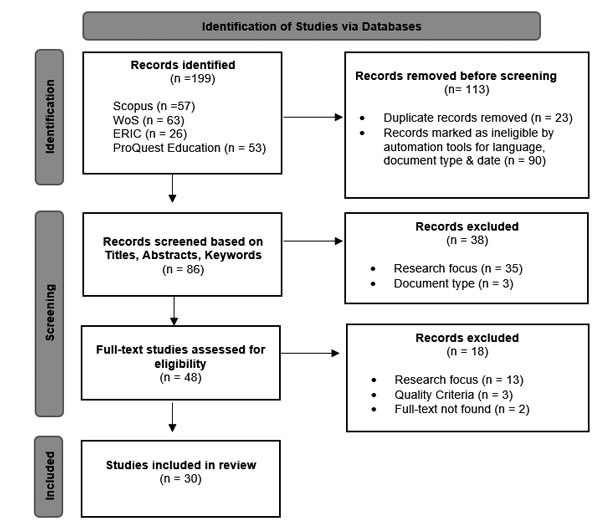
Figure 1. PRISMA 2020 flow diagram for the selection process of the studies
VASILIKI ANAGNOSTOPOULOU, ANA GARCÍA-VALCÁRCEL MUÑOZ-REPISO Y SONIA CASILLAS-MARTÍN
Universidad de Salamanca (España)
DOI: 10.13042/Bordon.2025.110138
Fecha de recepción: 21/9/2024 • Fecha de aceptación: 1/9/2025
Autora de contacto / Corresponding author: Vasiliki Anagnostopoulou E-mail: vasilikianagn@usal.es
Cómo citar este artículo: Anagnostopoulou, V., García-Valcárcel Muñoz-Repiso, A. y Casillas-Martín, S. (2025). A systematic review of the effectiveness of the station rotation model in blended learning. Bordón, Revista de Pedagogía, 77(4), 11-33. https://doi.org/10.13042/Bordon.2025.110138
INTRODUCTION. Teachers need to prepare students for 21st century skills using emerging technologies and innovative teaching methodologies. Station Rotation Model (SRM) as an innovative Blended Learning model, combines teacher’s instruction, group work and online learning in a classroom setting where learners can rotate in groups at the stations prepared by the teacher. It has several benefits and challenges for the learners and the teacher. METHOD. To date, only a few reviews have been found related to the effectiveness of the Station Rotation Model. Therefore, this systematic review, following PRISMA guidelines to ensure transparency and quality, addresses this gap of research through a comprehensive examination of different studies. Specific research questions, inclusion and exclusion criteria, and a list of quality criteria were established. RESULTS. This review analysed 30 studies that showed the importance of consistent implementation of the model. Students consistently reported positive experiences, particularly in collaboration, satisfaction, and motivation, due to its dynamic learning environment. The data underlined that it is a stimulating way of learning based on a personalised experience with a high degree of autonomy enriched by the use of technology. It also highlighted SRM’s ability to develop critical and higher-order thinking skills through team-based and collaborative online learning. Additionally, the review demonstrated the model’s adaptability across various designs and modalities, including virtual station rotation, showcasing its potential to address diverse learning needs. DISCUSSION. SRM shows strong potential for enhancing learning outcomes, transferable skills, and student satisfaction. However, its implementation, activity sequence, and effects on various subjects require further study. Educators could explore different SRM designs to maximize its benefits in blended learning settings, highlighting the need for ongoing research. This study provides insights for future research and education by adopting mix methodologies in the basic education.
Keywords:Station Rotation Model, Blended learning, Effectiveness, Systematic review, Personalised learning.
The quick development of digital technology today will continue to change how knowledge is created, understood, and communicated, creating potential for new educational approaches and materials. Digital innovation has shown the ability to transform education and can alter the ways in which universal access to education is provided (UNESCO, 2023UNESCO (2023). What you need to know about digital learning and transformation of education. https://www.unesco.org/en/digital-education/need-know ). At the same time, emerging models and pedagogies are rapidly appearing in the education landscape, as teachers need to use innovative technologies and teaching approaches to prepare students for the 21st century skills and careers (Kim, 2021Kim, J. H. (2021). Music teachers’ understanding of blended learning in Korean elementary music classes. Music Education Research, 23(3), 311–320. https://doi.org/10.1080/14613808.2020.1862776 ; Yang & Newman, 2019Yang, S., & Newman, R. (2019). Rotational Blended Learning in Computer System Engineering Courses. IEEE Transactions on Education, 62(4), 264–269. https://doi.org/10.1109/TE.2019.2899095 ).
Following the pandemic of COVID-19, online and blended learning caught the attention of many educators and researchers all over the world (Lonigro, 2021Lonigro, M. (2021). Rotation stations for a blended approach. CEUR Workshop Proceedings, 2817. https://ceur-ws.org/Vol-2817/paper33.pdf ). By utilising the power of technology to create more interesting, effective, and goal-oriented learning environments, blended learning models place the student at the centre of the learning process (Powell et al., 2015Powell, A., Watson, J., Staley, P., Patrick, S., Horn, M., Fetzer, L., Hibbard, L., Oglesby, J., & Verma, S. (2015). Blended Learning: The Evolution of Online and Face-to-Face Education from 2008-2015. The International Association for K–12 Online Learning, 1–20. https://eric.ed.gov/?id=ED560788 ). Station Rotation is a model of Blended Learning which combines teacher’s instruction, group work and online learning in a classroom setting (Novak & Tucker, 2021Novak, K. & Tucker, C. R. (2021). UDL and Blended Learning: Thriving in Flexible Learning Landscapes. IMpress. ). As an instructional model and innovative approach, Station Rotation has several benefits and challenges for the learners and the teacher (Walne, 2012Walne, M. B. (2012). Emerging Blended-Learning Models and School Profiles, 1–26. https://www.edustart.org/wp-content/uploads/2012/10/Emerging+BL+Models+and+School+Profiles+FINAL+09.21.12.pdf ).
Several educators and researchers have conducted investigations related to blended learning contributing to the current literature. However, not much research has been conducted on the effectiveness of the Station Rotation Model and its implementation in education settings, especially in primary education (Fulbeck et al., 2020Fulbeck, E., Atchison, D., Giffin, J., Seidel, D., & Eccleston, M. (2020). Personalizing Student Learning With Station Rotation: A Descriptive Study. American Institutes for Research. https://www.air.org/resource/report/personalized-student-learning-station-rotation-descriptive-study ). More systematic studies are needed (Fazal & Bryant, 2019Fazal, M., & Bryant, M. (2019). Blended Learning in Middle School Math: The Question of Effectiveness. Journal of Online Learning Research, 5(1), 49–64. https://files.eric.ed.gov/fulltext/EJ1208816.pdf ) and this review comes to fill in this gap in literature.
Station Rotation Model
Blended learning is an innovative approach that combines the advantages of traditional classroom teaching and digital tools, including offline and online learning (Hadiprayitno et al., 2021Hadiprayitno, G., Kusmiyati, K., Lestari, A., Lukitasari, M., & Sukri, A. (2021). Blended Learning Station-Rotation Model: Does it Impact on Preservice Teachers’ Scientific Literacy? Jurnal Penelitian Pendidikan IPA, 7(3), 317–324. https://doi.org/10.29303/jppipa.v7i3.676). According to Horn & Staker (2015Horn, M. B. & Staker, H. (2015). Blended: Using Disruptive Innovation to Improve Schools. Jossey- Bass. , p.34), “blended learning is any formal education program in which a student learns at least in part through online learning, with some element of student control over time, place, path, and/ or pace”.
In a blended learning model, teachers may engage, motivate and empower their students to experience learning when students work in small groups. A key of this strategy is that teachers just not simply impart knowledge, but they guide students based on their skills and needs (Ayob et al., 2020Ayob, N. F. S., Halim, N. D. A., Zulkifli, N. N., Zaid, N. M., & Mokhtar, M. (2020). Overview of blended learning: The effect of station rotation model on students’ achievement. Journal of Critical Reviews, 7(6), 320–326. https://doi.org/10.31838/jcr.07.06.56 ). The most common mistake is to confuse blended learning with technology-enhanced learning. Integrating technology into the school environment does not necessarily equate to blended learning (Horn & Staker, 2015Horn, M. B. & Staker, H. (2015). Blended: Using Disruptive Innovation to Improve Schools. Jossey- Bass. ).
Blended learning is an umbrella term within which there are many different models that teachers can use to blend online and offline learning, and these models can coexist in recent classrooms (Novak & Tucker, 2021Novak, K. & Tucker, C. R. (2021). UDL and Blended Learning: Thriving in Flexible Learning Landscapes. IMpress. ; Truitt & Ku, 2018Truitt, A. A., & Ku, H.-Y. (2018). A case study of third grade students’ perceptions of the station rotation blended learning model in the United States. Educational Media International, 55(2), 153–169. https://doi.org/10.1080/09523987.2018.1484042 Truitt, A. A., & Ku, H.-Y. (2018). A case study of third grade students’ perceptions of the station rotation blended learning model in the United States. Educational Media International, 55(2), 153–169. https://doi.org/10.1080/09523987.2018.1484042 ). According to Horn & Staker (2015Horn, M. B. & Staker, H. (2015). Blended: Using Disruptive Innovation to Improve Schools. Jossey- Bass. ), there are four main modes of blended learning: Rotation, Flex, A La Carte, and Enriched Virtual. Within the Rotation model, there are four different types: the so-called Station Rotation Model, Lab Rotation, Flipped Classroom, a model which is lately gaining a lot of attention, and the Individual Rotation (Staker & Horn, 2012Staker, H., & Horn, M. B. (2012). Classifying K – 12 Blended Learning. INNOSIGHT Institute, 1–22. https://www.christenseninstitute.org/wp-content/uploads/2013/04/Classifying-K-12-blended-learning.pdf ).
The idea of rotation is not a new concept in education, especially at the primary school level. What is new is that online learning is now part of the cycle. Some also name the Station Rotation as an in-class flip model, in accordance to the popular flipped classroom, because there is a flip of modalities but inside the class (McCollum, 2019McCollum, T. (2019). A Comparison of a Station Rotation Blended Learning Classroom to a Traditional Classroom Using NWEA MAP (Publication No. 13878915) [Doctoral Thesis, McKendree University]. ProQuest Dissertations and Theses Global.).
The Station Rotation Model (SRM) is composed of a series of learning activities (stations) that the students rotate in the classroom within a subject or a course. It can take place within a classroom or different classrooms and the learners can rotate in groups at the stations prepared by the teacher (Horn & Staker, 2015Horn, M. B. & Staker, H. (2015). Blended: Using Disruptive Innovation to Improve Schools. Jossey- Bass. ). It can also be used to review a unit, introduce a new one, or connect a previous topic to a new one (Hite et al., 2022Hite, R., Greenhalgh-Spencer, H., & Childers, G. (2022). Differentiation in the Life Science Classroom Using Station Rotations. Science Scope, 45(5), 52–59. https://doi.org/10.1080/08872376.2022.12291479 ). It typically includes a teacher-led station, small group collaboration, and at least one station for online learning. There might be other stations like individual tutoring, pencil-and-paper assignments, small group instruction, manipulatives, group projects, and pair work (Hover & Wise, 2020Hover, A., & Wise, T. (2020). Exploring ways to create 21st century digital learning experiences. Education 3-13, 50(1), 40–53. https://doi.org/10.1080/03004279.2020.1826993 ; Novak & Tucker, 2021Novak, K. & Tucker, C. R. (2021). UDL and Blended Learning: Thriving in Flexible Learning Landscapes. IMpress. ; Rembach et al., 2019Rembach, O., Liubych, O., Antonenko, M., Kovalenko, V., & Valieiev, R. (2019). University Students` Satisfaction: The Impact of Computer-mediated Blended Learning. Revista Romaneasca Pentru Educatie Multidimensionala, 221–241. https://doi.org/10.18662/rrem/186 ; Staker & Horn, 2012Staker, H., & Horn, M. B. (2012). Classifying K – 12 Blended Learning. INNOSIGHT Institute, 1–22. https://www.christenseninstitute.org/wp-content/uploads/2013/04/Classifying-K-12-blended-learning.pdf ; Walne, 2012Walne, M. B. (2012). Emerging Blended-Learning Models and School Profiles, 1–26. https://www.edustart.org/wp-content/uploads/2012/10/Emerging+BL+Models+and+School+Profiles+FINAL+09.21.12.pdf ; Seitova & Khalmatova, 2025Seitova, M., & Khalmatova, Z. (2025). The blended learning station rotation model in EFL teaching: opinions of the implementer. Turkish Online Journal of Distance Education, 26(1), 204-219. https://doi.org/10.17718/tojde.1438392 ).
It is a model that can be used not only for a short period of implementation, but also for a longer period of time (Ayob et al., 2020Ayob, N. F. S., Halim, N. D. A., Zulkifli, N. N., Zaid, N. M., & Mokhtar, M. (2020). Overview of blended learning: The effect of station rotation model on students’ achievement. Journal of Critical Reviews, 7(6), 320–326. https://doi.org/10.31838/jcr.07.06.56). Additionally, the activities at the different stations can be independent and do not need to be sequential (Dos Santos et al., 2021Dos Santos, L. S. B., Benevides, R. G., Amorim, C. R. N., Santos, R. M. F., de Oliveira, S. S., & Granjeiro, É. M. (2021). Innovation in the teaching of human physiology at university and school: pedagogical process based on interdisciplinarity and learning station rotation. Advances in Physiology Education, 45(3), 541–546. https://doi.org/10.1152/advan.00154.2020 ). It is imperative to highlight that in order for the Rotation Model to be called blended learning, students must use technology to comprehend content and not just a station to play games on a computer (Truitt & Ku, 2018Truitt, A. A., & Ku, H.-Y. (2018). A case study of third grade students’ perceptions of the station rotation blended learning model in the United States. Educational Media International, 55(2), 153–169. https://doi.org/10.1080/09523987.2018.1484042 Truitt, A. A., & Ku, H.-Y. (2018). A case study of third grade students’ perceptions of the station rotation blended learning model in the United States. Educational Media International, 55(2), 153–169. https://doi.org/10.1080/09523987.2018.1484042 ).
The Station Rotation Model seems to be a promising approach which has several benefits for the learners and for the teachers. First, Ayob et al. (2020Ayob, N. F. S., Halim, N. D. A., Zulkifli, N. N., Zaid, N. M., & Mokhtar, M. (2020). Overview of blended learning: The effect of station rotation model on students’ achievement. Journal of Critical Reviews, 7(6), 320–326. https://doi.org/10.31838/jcr.07.06.56 ) highlighted in their overview that SRM has a positive effect on students’ academic achievement. Moreover, according to Lonigro (2021Lonigro, M. (2021). Rotation stations for a blended approach. CEUR Workshop Proceedings, 2817. https://ceur-ws.org/Vol-2817/paper33.pdf ), SRM could be used as a model to address some of the problems generated from the Emergency Remote Teaching during the pandemic, like for example students’ low engagement, the need for more collaborative and inclusive practices and thereafter the need for the teacher to work with smaller groups of students. It is imperative to mention that teachers using SRM can work with smaller groups of students, especially if the student-teacher ratio is high (Walne, 2012Walne, M. B. (2012). Emerging Blended-Learning Models and School Profiles, 1–26. https://www.edustart.org/wp-content/uploads/2012/10/Emerging+BL+Models+and+School+Profiles+FINAL+09.21.12.pdf ).
This model can also support the use of project-based learning as a station to complement the online-learning station. Active learning is possible in an SRM because learners can independently construct knowledge through problem analysis (Saifuddin et al., 2018Saifuddin, Setyosari, P., Kamdi, W., Dwiyogo, W. D., & Nugroho, H. S. W. (2018). The effect of blended learning and self-efficacy on learning outcome of problem solving (Learning strategy improvement for health students). Indian Journal of Public Health Research and Development, 9(11), 365–369. https://doi.org/10.5958/0976-5506.2018.01481.X ) and collaborate by sharing ideas, listening to others’ opinions, and building their understanding together (Othman et al., 2016Othman, S.Z., Zaid, N.M., Abdullah, Z., Mohammed, H., & Aris, B. (2016). Enhancing meaningful learning in MRSP120 rotational model. Man in India, 96, 525-536.; Prasetya, 2016Prasetya, S. P. (2016). The Differences in Learning Outcomes of Geography Students Using Rotation Models. Proceedings of the 1st International Conference on Geography and Education (ICGE 2016), 357-361. https://doi.org/10.2991/icge-16.2017.69 ). In addition to collaborative learning, literature also highlights personalising learning and providing differentiated learning opportunities as strategies that can be promoted and integrated into Blended Learning (Akinoso et al., 2020Akinoso, S. O., Agoro, A. A., & Alabi, O. M. (2020). Effect of Station Rotation Mode of Instructional Delivery for Mathematics in the Era of Advancing Technology. Journal of the International Society for Teacher Education, 24(2), 60–72. https://files.eric.ed.gov/fulltext/EJ1304479.pdf ; Fazal & Bryant, 2019Fazal, M., & Bryant, M. (2019). Blended Learning in Middle School Math: The Question of Effectiveness. Journal of Online Learning Research, 5(1), 49–64. https://files.eric.ed.gov/fulltext/EJ1208816.pdf ; Hite et al., 2022Hite, R., Greenhalgh-Spencer, H., & Childers, G. (2022). Differentiation in the Life Science Classroom Using Station Rotations. Science Scope, 45(5), 52–59. https://doi.org/10.1080/08872376.2022.12291479 ; Hover & Wise, 2020Hover, A., & Wise, T. (2020). Exploring ways to create 21st century digital learning experiences. Education 3-13, 50(1), 40–53. https://doi.org/10.1080/03004279.2020.1826993 ).
Like any other model, SRM appears to have some challenges, particularly for teachers. Planning and preparing the activities requires more time, and teachers also need to have strong skills in planning and grouping students (Saifuddin et al., 2018Saifuddin, Setyosari, P., Kamdi, W., Dwiyogo, W. D., & Nugroho, H. S. W. (2018). The effect of blended learning and self-efficacy on learning outcome of problem solving (Learning strategy improvement for health students). Indian Journal of Public Health Research and Development, 9(11), 365–369. https://doi.org/10.5958/0976-5506.2018.01481.X ; Wong et al., 2022Wong, S. F., Mahmud, M. M., & Wong, S. S. (2022). Blackboard and Virtual Station Rotation Model: Effectiveness of Learning Calculus. Proceedings of the 7th International Conference on Information and Education Innovations (ICIEI 2022), 1(1). https://doi.org/10.1145/3535735.3535741 ; Yang & Newman, 2019Yang, S., & Newman, R. (2019). Rotational Blended Learning in Computer System Engineering Courses. IEEE Transactions on Education, 62(4), 264–269. https://doi.org/10.1109/TE.2019.2899095 ). However, as Kim (2021Kim, J. H. (2021). Music teachers’ understanding of blended learning in Korean elementary music classes. Music Education Research, 23(3), 311–320. https://doi.org/10.1080/14613808.2020.1862776 ) highlighted, preparing all the activities for the different stations might be time-consuming, but it is beneficial for classroom management and tracking students’ individual progress. This can be successful with the use of a learning management system and the creation of online learning activities that are suitable for students to complete autonomously with minimal teacher intervention (Walne, 2012Walne, M. B. (2012). Emerging Blended-Learning Models and School Profiles, 1–26. https://www.edustart.org/wp-content/uploads/2012/10/Emerging+BL+Models+and+School+Profiles+FINAL+09.21.12.pdf ).
Rationale of the Study
Most research on Blended Learning focuses on the approach of flipped classroom within the framework of blended learning (Lonigro, 2021Lonigro, M. (2021). Rotation stations for a blended approach. CEUR Workshop Proceedings, 2817. https://ceur-ws.org/Vol-2817/paper33.pdf ; Truitt & Ku, 2018Truitt, A. A., & Ku, H.-Y. (2018). A case study of third grade students’ perceptions of the station rotation blended learning model in the United States. Educational Media International, 55(2), 153–169. https://doi.org/10.1080/09523987.2018.1484042 Truitt, A. A., & Ku, H.-Y. (2018). A case study of third grade students’ perceptions of the station rotation blended learning model in the United States. Educational Media International, 55(2), 153–169. https://doi.org/10.1080/09523987.2018.1484042 ). However, not much research has been conducted on the Station Rotation Model (Fulbeck et al., 2020Fulbeck, E., Atchison, D., Giffin, J., Seidel, D., & Eccleston, M. (2020). Personalizing Student Learning With Station Rotation: A Descriptive Study. American Institutes for Research. https://www.air.org/resource/report/personalized-student-learning-station-rotation-descriptive-study ; Yang & Newman, 2019Yang, S., & Newman, R. (2019). Rotational Blended Learning in Computer System Engineering Courses. IEEE Transactions on Education, 62(4), 264–269. https://doi.org/10.1109/TE.2019.2899095 ). SRM gives the possibility to use Blended Learning inside the classroom in comparison to the flipped classroom that requires the use of technology at home and could suit better to the upper classes of secondary education (Jorajuria & Usart, 2025Jorajuria, I. & Usart, M. (2025). Modelo Rotación por Estaciones para la mejora del rendimiento en ciencias en secundaria: una revisión sistemática. Revista de Investigación Educativa, 43. https://doi.org/10.6018/rie.599901 ). In addition to that, to date only Ayob et al. (2020Ayob, N. F. S., Halim, N. D. A., Zulkifli, N. N., Zaid, N. M., & Mokhtar, M. (2020). Overview of blended learning: The effect of station rotation model on students’ achievement. Journal of Critical Reviews, 7(6), 320–326. https://doi.org/10.31838/jcr.07.06.56 ) review have been found related to this topic. Therefore, it would be interesting to review the research conducted on this model and investigate its implementation across disciplines, providing insights for future research. As Fazal & Bryant (2019Fazal, M., & Bryant, M. (2019). Blended Learning in Middle School Math: The Question of Effectiveness. Journal of Online Learning Research, 5(1), 49–64. https://files.eric.ed.gov/fulltext/EJ1208816.pdf ) mentioned, additional systematic studies are needed in this area as over time online digital content gets more sophisticated.
According to Petticrew & Roberts (2006Petticrew, M., & Roberts, H. (2006). Systematic Reviews in the Social Sciences: A Practical Guide. https://doi.org/10.1002/9780470754887 ), when a general overview of the evidence in a topic area is needed, or in the early stages of developing a method when evidence is required, a systematic review is the preferred option. Therefore, a systematic review has been chosen as the adequate method for this research. The Preferred Reporting Items for Systematic Reviews and Meta-Analysis (PRISMA) 2020 statement (Page et al., 2021Page, M. J., McKenzie, J. E., Bossuyt, P. M., Boutron, I., Hoffmann, T. C., Mulrow, C. D., Shamseer, L., Tetzlaff, J. M., Akl, E. A., Brennan, S. E., Chou, R., Glanville, J., Grimshaw, J. M., Hróbjartsson, A., Lalu, M. M., Li, T., Loder, E. W., Mayo-Wilson, E., McDonald, S., … Moher, D. (2021). The PRISMA 2020 statement: An updated guideline for reporting systematic reviews. The BMJ, 372. https://doi.org/10.1136/bmj.n71 ) with the updated guideline for reporting systematic literature reviews was followed to ensure transparency and quality.
Research Questions
The purpose of the current systematic review is to examine the state of research on Station Rotation Model and its use and effectiveness as an educational design approach across disciplines. First, some research questions to identify bibliometric characteristics were posed and then, the main research questions with the pedagogical dimension were addressed.
Mapping
Systematic Literature Review
Inclusion and Exclusion Criteria
To select the most relevant studies that allow us to answer the research questions, seven Inclusion Criteria (IC) were established:
The exclusion criteria correspond to all the documents that do not match the above inclusion criteria. Regarding the research that is not strongly related to Station Rotation Model, like for example to papers that merely focus on Lab Rotation or Flipped Classroom are excluded.
Moreover, a list of Quality Criteria was created in the form of five questions based on Dixon-Woods et al. (2006Dixon-Woods, M., Bonas, S., Booth, A., Jones, D. R., Miller, T., Sutton, A. J., Shaw, R. L., Smith, J. A., & Young, B. (2006). How can systematic reviews incorporate qualitative research? A critical perspective. Qualitative Research, 6(1), 27–44. https://doi.org/10.1177/1468794106058867 ) (see Table 1 ). A 3-point score was established (Yes / No / Partially) for each of the questions to determine the degree that the paper complied with these criteria. It was given 1 point if the answer to the question was YES, 0 point if the answer was NO and 0,5 if the answer was PARTIALLY complied with. A total score of 3,5 points is needed for each document in order to be included in the final phase of selection.
| Table 1. Quality criteria for inclusion and exclusion | |||||||||||||||||||||||||||
|
|||||||||||||||||||||||||||
Search Strategies
Four electronic databases were selected to search the information: Scopus, Web of Science (WoS), ERIC and ProQuest Education. These databases are relevant in the field of study and have similar characteristics when using search strings.
Exploratory searches based on the established PICOC methodology and the research questions were conducted in December 2022 to evaluate keywords and determine their relationship to the study area. The keywords and its synonyms and related terms in literature that have been used were: (“station rotation model” OR “station rotation” OR “station-rotation” OR “rotation model” AND education). The final search, analysed below, was conducted between January 2023 and February 2023.
Selection and Analysis Process
The authors of this review acted in the different phases of the selection process according to the criteria prior established for inclusion. A flow diagram was followed. The process included three steps: (a) identification, (b) screening, and (c) inclusion. In the first step, a total of 199 papers were identified in the electronic databases. Based on the language, document-type and date criteria 90 were eliminated with the automation tools and 23 were deleted as duplicate records. MS Excel and Mendeley software were used to record and manage the identified studies. In the second step, by screening titles, abstracts, and keywords of the studies 38 were excluded as irrelevant papers. Then, a total number of 48 full-text versions were assessed for eligibility bearing in mind the inclusion criteria and the quality criteria. Last, 30 studies were finally included in the review as shown in Figure 1
|
Figure 1. PRISMA 2020 flow diagram for the selection process of the studies
|
After the identification of the eligible full-text papers that were included in the review, an in-depth analysis of the content was carried out and a qualitative content analysis was conducted (Miles & Huberman, 1994Miles, M.B., & Huberman, A.M. (1994). Qualitative Data Analysis: An Expanded Sourcebook (2nd ed.). Sage Publications Inc.). The identified codes were structured around three themes: (a) general characteristics of the reviewed studies (publication vehicle, publication year, country, research methodology, education level, subject/ discipline), (b) the effectiveness and the research focus of Station Rotation Model, and (c) the different designs and modalities used for this rotation model. Four of the included papers were randomly selected and cross-checked by an external intercoder with experience in qualitative content analysis and familiarity with the blended learning research field in order to increase the consistency and transparency of the coding process (Connor & Joffe, 2020Connor, C. O., & Joffe, H. (2020). Intercoder Reliability in Qualitative Research: Debates and Practical Guidelines. 19, 1–13. https://doi.org/10.1177/1609406919899220).
Although the most recent PRISMA guidelines were followed to strengthen the quality and transparency of the review (Page et al., 2021Page, M. J., McKenzie, J. E., Bossuyt, P. M., Boutron, I., Hoffmann, T. C., Mulrow, C. D., Shamseer, L., Tetzlaff, J. M., Akl, E. A., Brennan, S. E., Chou, R., Glanville, J., Grimshaw, J. M., Hróbjartsson, A., Lalu, M. M., Li, T., Loder, E. W., Mayo-Wilson, E., McDonald, S., … Moher, D. (2021). The PRISMA 2020 statement: An updated guideline for reporting systematic reviews. The BMJ, 372. https://doi.org/10.1136/bmj.n71 ), some interesting research studies may have been excluded due to the study selection criteria, e.g., language, and the selected databases.
For this review, the results have been organised into three main sections: (a) overview of the results, where the mapping questions are being answered, (b) the effectiveness of Station Rotation Model, and (c) the kind of designs and modalities that have been used to implement the Station Rotation Model.
Overview of the Reviewed Publications (mapping)
In this systematic review, 30 studies were analysed: 18 journal articles, 7 conference papers, 2 reports and 3 doctoral theses. These studies were published between 2014 and 2022. Figure 2 shows that the publication trend has been marked by steady progress, with a slight regress in the years of 2021-2022, maybe because of the appearance of COVID-19 and the change of teaching instruction the two years followed. Although there was a remarkable increase in the number of publications in 2019 and 2020, the total number of published papers on SRM is far from satisfactory.
|
Figure 2. Number of papers on SRM published per year 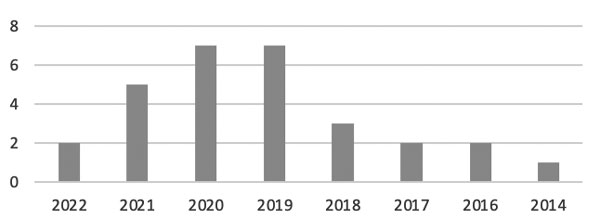
|
To highlight international researchers’ interest in the topic, the country where the study was conducted was considered. If this was not mentioned, the authors’ affiliation was taken into account. The analysis revealed that most of the studies were conducted in the U.S.A. (33.3%, n=10), following by Indonesia (23.3%, n=7), Malaysia (13.3%, n=4), Brazil (6.7%, n=2), Ukraine (6.7% n=2), Italy (3.3% n=1), Cyprus (3.3% n=1), Nigeria (3.3%, n=1), South Korea (3.3%, n=1) and the U.K. (3.3%, n=1) (see Figure 3). The distribution of the continental origin indicated that most studies were conducted in Asia (40%, n=12), followed by North America (33.3%, n=10), Europe (16.7%, n=5), South America (6.7%, n=2) and Africa (3.3%, n=1).
|
Figure 3. Country of research implementation or author’s affiliation 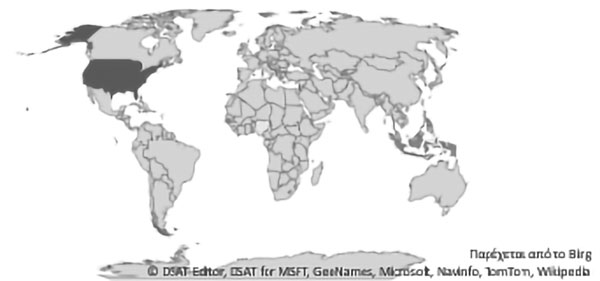
|
Regarding research methodology, quantitative research methods were the most frequently used (50%, n=15), followed by mixed methods (20%, n=6) and qualitative approaches (20%, n=6). Half of the studies appeared to adopt a quantitative quasi-experimental design, with or without a control group.
Three studies (10%) simply presented the design of the SRM. They were included in the review as they were relevant to the second research question, which explored the different designs used or proposed for this model.
The majority of the studies focused on Secondary (43.3%, n=13), Higher Education and Vocational Training (26.7%, n=8), and surprisingly fewer focused on Primary Education (23.3%, n = 7), whilst a number of 2 studies (6.7%) had a focus on both Primary and Secondary Education. The lack of research on a primary school setting is peculiar as according to literature (Fulbeck et al., 2020Fulbeck, E., Atchison, D., Giffin, J., Seidel, D., & Eccleston, M. (2020). Personalizing Student Learning With Station Rotation: A Descriptive Study. American Institutes for Research. https://www.air.org/resource/report/personalized-student-learning-station-rotation-descriptive-study ; Lonigro, 2021Lonigro, M. (2021). Rotation stations for a blended approach. CEUR Workshop Proceedings, 2817. https://ceur-ws.org/Vol-2817/paper33.pdf ; Truitt & Ku, 2018Truitt, A. A., & Ku, H.-Y. (2018). A case study of third grade students’ perceptions of the station rotation blended learning model in the United States. Educational Media International, 55(2), 153–169. https://doi.org/10.1080/09523987.2018.1484042 Truitt, A. A., & Ku, H.-Y. (2018). A case study of third grade students’ perceptions of the station rotation blended learning model in the United States. Educational Media International, 55(2), 153–169. https://doi.org/10.1080/09523987.2018.1484042 ), it is a method more commonly used in Primary Education (see Figure 4).
|
Figure 4. Education level that the SRM was implemented 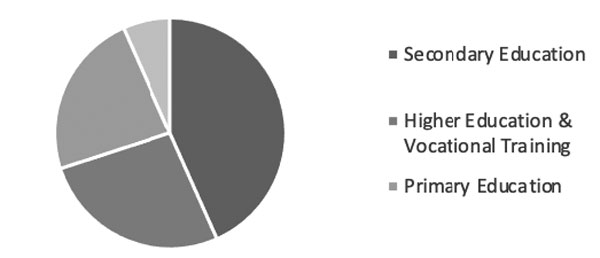
|
Last, an analysis of the scientific discipline of the reviewed studies indicated that most of them implemented the SRM on Maths (30%, n=9), followed by those with a Natural and Life Science focus (Biology, Physics, Geography, Life Sciences, Ecology, Physiology and Biochemistry) (20%, n=6), different subjects not specified (13.3%, n=4), Literacy (6.7%, n=2), English as a Foreign Language (EFL) (6.7%, n=2), Engineering (6.7%, n=2), Police Training (6.7%, n=2), and Music (3.3%, n=1). At the same time, it is interesting that 2 studies (6.7%) had a focus on both Maths and Reading.
The Effectiveness of Station Rotation Model
The first research question of this systematic review focused on the evidence base for the effectiveness of the Station Rotation Model and, consequently, the research focus of the studies identified. As shown on Table 2, different categories emerged from the review with some studies having more than one focus at the same time. Some of the most relevant issues addressed are the academic results and knowledge achieved, teachers’ perceptions based on their experiences, students’ perceptions, and the impact of this model on students’ satisfaction, motivation and engagement, as well as on higher-order thinking skills.
Academic Achievement and Learning Outcomes
Several studies have investigated the impact of the Station Rotation Model on academic achievement and learning outcomes of the students across different subjects and levels with a total number of 15 out of 30 papers. The majority of these papers (n=11, 78.6%) reported a significant difference in academic achievement or learning outcomes between students who were taught within the SRM and those with the traditional method. In particular, the studies of Akinoso et al. (2020Akinoso, S. O., Agoro, A. A., & Alabi, O. M. (2020). Effect of Station Rotation Mode of Instructional Delivery for Mathematics in the Era of Advancing Technology. Journal of the International Society for Teacher Education, 24(2), 60–72. https://files.eric.ed.gov/fulltext/EJ1304479.pdf ), Fazal & Bryant (2019Fazal, M., & Bryant, M. (2019). Blended Learning in Middle School Math: The Question of Effectiveness. Journal of Online Learning Research, 5(1), 49–64. https://files.eric.ed.gov/fulltext/EJ1208816.pdf ), Fitri et al. (2019Fitri, S., Syahputra, E., & Syahputra, H. (2019). Blended learning rotation model of cognitive conflict strategy to improve mathematical resilience in high school students. International Journal of Scientific and Technology Research, 8(12), 80–87. ), McCollum (2019McCollum, T. (2019). A Comparison of a Station Rotation Blended Learning Classroom to a Traditional Classroom Using NWEA MAP (Publication No. 13878915) [Doctoral Thesis, McKendree University]. ProQuest Dissertations and Theses Global.), Othman et al. (2018Othman, S. Z., Zaid, N. M., Harun, J., & Abdullah, Z. (2018). Developing Higher Order Thinking Skill with the 120-Minute Instructional Station Rotation (MRSP120) Approach: Students’ Perceptions. Proceedings of 2018 IEEE International Conference on Teaching, Assessment, and Learning for Engineering, TALE 2018, December, 1039–1043. https://doi.org/10.1109/TALE.2018.8615170) and Wong et al. (2022Wong, S. F., Mahmud, M. M., & Wong, S. S. (2022). Blackboard and Virtual Station Rotation Model: Effectiveness of Learning Calculus. Proceedings of the 7th International Conference on Information and Education Innovations (ICIEI 2022), 1(1). https://doi.org/10.1145/3535735.3535741 ) found a statistical difference on the academic achievement of those taught mathematics on a blended learning environment by using the SRM.
However, it is worth noting that, according to Akinoso et al. (2020Akinoso, S. O., Agoro, A. A., & Alabi, O. M. (2020). Effect of Station Rotation Mode of Instructional Delivery for Mathematics in the Era of Advancing Technology. Journal of the International Society for Teacher Education, 24(2), 60–72. https://files.eric.ed.gov/fulltext/EJ1304479.pdf ), while academic achievement improved, students’ attitudes towards mathematics remained unchanged, similar to those in traditional instruction. At the same time, Nida et al. (2020Nida, N. K., Usodo, B., & Sari Saputro, D. R. (2020). The blended learning with Whatsapp media on Mathematics creative thinking skills and math anxiety. Journal of Education and Learning (EduLearn), 14(2), 307–314. https://doi.org/10.11591/edulearn.v14i2.16233 ) highlighted that while SRM was as effective as the flipped classroom, direct learning appeared to be more beneficial in reducing maths anxiety. Therefore, there is a research gap regarding how SRM may influence, or fail to influence, maths anxiety and students’ attitudes towards the subject.
Other studies reported an increase of the reading levels (Jacobs, 2014Jacobs, J. (2014). Beyond the Factory Model: Oakland teachers learn how to blend. Education Next, 14(4), 34-41. https://www.educationnext.org/beyond-factory-model/ ; McCollum, 2019McCollum, T. (2019). A Comparison of a Station Rotation Blended Learning Classroom to a Traditional Classroom Using NWEA MAP (Publication No. 13878915) [Doctoral Thesis, McKendree University]. ProQuest Dissertations and Theses Global.), whereas others (Euphrasio et al., 2020Euphrasio, P. C. S., Faria, L. A., Germano, J. S. E., & Hirata, D. (2020). Improving Teaching-Learning Process in MIL-STD-1553B Bus Classes Using a New Hybrid Web-Lab Methodology. IEEE Transactions on Education, 63(4), 291–298. https://doi.org/10.1109/TE.2020.2984882 ; Yang & Newman, 2019Yang, S., & Newman, R. (2019). Rotational Blended Learning in Computer System Engineering Courses. IEEE Transactions on Education, 62(4), 264–269. https://doi.org/10.1109/TE.2019.2899095 ) demonstrated a learning improvement of the students using SRM on an engineering university course. The above results go along with the findings of Ayob et al. (2020Ayob, N. F. S., Halim, N. D. A., Zulkifli, N. N., Zaid, N. M., & Mokhtar, M. (2020). Overview of blended learning: The effect of station rotation model on students’ achievement. Journal of Critical Reviews, 7(6), 320–326. https://doi.org/10.31838/jcr.07.06.56 ) that highlighted on their overview that SRM has a positive effect on students’ academic achievement.
Moreover, Saifuddin et al. (2018Saifuddin, Setyosari, P., Kamdi, W., Dwiyogo, W. D., & Nugroho, H. S. W. (2018). The effect of blended learning and self-efficacy on learning outcome of problem solving (Learning strategy improvement for health students). Indian Journal of Public Health Research and Development, 9(11), 365–369. https://doi.org/10.5958/0976-5506.2018.01481.X ) found a difference in learning outcomes between Midwifery department students in an Islamic studies course who were taught using SRM and those who followed the Individual Rotation Model of blended learning. On the other hand, Prasetya (2016Prasetya, S. P. (2016). The Differences in Learning Outcomes of Geography Students Using Rotation Models. Proceedings of the 1st International Conference on Geography and Education (ICGE 2016), 357-361. https://doi.org/10.2991/icge-16.2017.69 ) highlighted a difference in the sequence of the starting activity in the rotation. All groups have increased the average score on the post-test, but the group of students that started the rotation with group work showed significant difference in the learning outcomes compared to those with the online activities and lecture. Beginning with group problem-solving allows learners to experience the delight of acquiring new knowledge. As a result, the knowledge had a bigger impact and could thus be retained for a longer period of time.
However, there were four studies that could not find a significant difference in students’ academic achievement. Fulbeck et al. (2020Fulbeck, E., Atchison, D., Giffin, J., Seidel, D., & Eccleston, M. (2020). Personalizing Student Learning With Station Rotation: A Descriptive Study. American Institutes for Research. https://www.air.org/resource/report/personalized-student-learning-station-rotation-descriptive-study ) reported that the Station Rotation was not associated with significantly higher student achievement on standardised assessments, whilst Roach (2020Roach, H. A. (2020). Effects of Blended Learning Using the Rotation Model on Fourth and Fifth Grade Students’ Mathematics Scores (Publication No. 28150635) [Doctoral Thesis, Walden University]. ProQuest Dissertations and Theses Global. ) stated that there were no statistically significant differences in terms of NWEA Map Growth Mathematics assessment scores of the students of the Station Rotation compared to the traditional classroom. It is worth noting though that these studies relied on self-report survey data, and there might be a variation in how teachers implemented the Station Rotation. Last, Sinta Dewi Sekarwati et al. (2019Sinta Dewi Sekarwati, R., Made Putrawan, I., & Neolaka, A. (2019). The effect of blended learning strategy and students’ personality on the students’ knowledge about the basic concepts of ecology. Journal of Advanced Research in Dynamical and Control Systems, 11(9 Special Issue), 377–383. https://doi.org/10.5373/JARDCS/V11/20192582 ) found that there was no significant effect of the instructional blended learning strategies of Rotation and Flex Model on students’ knowledge on ecology. At the same time, Hadiprayitno et al. (2021Hadiprayitno, G., Kusmiyati, K., Lestari, A., Lukitasari, M., & Sukri, A. (2021). Blended Learning Station-Rotation Model: Does it Impact on Preservice Teachers’ Scientific Literacy? Jurnal Penelitian Pendidikan IPA, 7(3), 317–324. https://doi.org/10.29303/jppipa.v7i3.676) stated that there was no effect of SRM on pre-service teachers’ scientific literacy skills, suggesting it might be better to be combined with other models such as problem-solving as it seems effective in science learning.
Teachers’ Perceptions
Other studies explored the effectiveness of SRM by investigating teachers’ experiences and perceptions while using this model of blended learning. To begin with, teachers who used this method reported higher levels of differentiated instruction and opportunities for personalised learning (Fulbeck et al., 2020Fulbeck, E., Atchison, D., Giffin, J., Seidel, D., & Eccleston, M. (2020). Personalizing Student Learning With Station Rotation: A Descriptive Study. American Institutes for Research. https://www.air.org/resource/report/personalized-student-learning-station-rotation-descriptive-study ; Hover & Wise, 2020Hover, A., & Wise, T. (2020). Exploring ways to create 21st century digital learning experiences. Education 3-13, 50(1), 40–53. https://doi.org/10.1080/03004279.2020.1826993 ; Maxwell & White, 2017Maxwell, C., & White, J. (2017). Blended (R)evolution: How 5 teachers are modifying Station Rotation. Christensen Institute. https://www.christenseninstitute.org/publications/stationrotation/ ; Vega-Bajana, 2019Vega-Bajana, Y. (2019). An exploratory case study of the blended learning station rotation model as a catalyst for technology integration by novice teachers (Publication No. 28150843) [Doctoral Thesis, New Jersey City University]. ProQuest Dissertations and Theses Global.). Specifically, according to Jacobs (2014Jacobs, J. (2014). Beyond the Factory Model: Oakland teachers learn how to blend. Education Next, 14(4), 34-41. https://www.educationnext.org/beyond-factory-model/ ) study, teachers have the time to reteach concepts to individual students or small groups, and that students can coach their classmates as there were no other teaching assistants in the class. In addition, in the study of Vega-Bajana (2019Vega-Bajana, Y. (2019). An exploratory case study of the blended learning station rotation model as a catalyst for technology integration by novice teachers (Publication No. 28150843) [Doctoral Thesis, New Jersey City University]. ProQuest Dissertations and Theses Global.) teachers stated that their students could take control of their own learning and become more independent at their individual pace. Whilst, Maxwell & White (2017) reported that according to the teachers, the use of choice in learning activities also empowered students to take ownership of their learning experience.
At the same time, all the above is feasible as students work in small groups and teachers highlighted to have more time for individual and group monitoring (Kim, 2021Kim, J. H. (2021). Music teachers’ understanding of blended learning in Korean elementary music classes. Music Education Research, 23(3), 311–320. https://doi.org/10.1080/14613808.2020.1862776 ) and gather data of students’ performance more quickly (Jacobs, 2014Jacobs, J. (2014). Beyond the Factory Model: Oakland teachers learn how to blend. Education Next, 14(4), 34-41. https://www.educationnext.org/beyond-factory-model/ ). Their role is to scaffold the learning activities by assisting students when needed (Ioannou et al., 2020Ioannou, M., Ioannou, A., Georgiou, Y., & Boloudakis, M. (2020). Orchestrating the technology-enhanced embodied learning classroom via learning stations rotation: A case study. CEUR Workshop Proceedings, 2712, 25–28. https://ceur-ws.org/Vol-2712/paper03.pdf ). Moreover, the use of teacher-selected digital tools allowed for deeper learning and individualised feedback opportunities for students (Hover & Wise, 2020Hover, A., & Wise, T. (2020). Exploring ways to create 21st century digital learning experiences. Education 3-13, 50(1), 40–53. https://doi.org/10.1080/03004279.2020.1826993 ). Thus, this instructional method helps students learn actively and are motivated to work together (Ioannou et al., 2020Ioannou, M., Ioannou, A., Georgiou, Y., & Boloudakis, M. (2020). Orchestrating the technology-enhanced embodied learning classroom via learning stations rotation: A case study. CEUR Workshop Proceedings, 2712, 25–28. https://ceur-ws.org/Vol-2712/paper03.pdf ; Kim, 2021Kim, J. H. (2021). Music teachers’ understanding of blended learning in Korean elementary music classes. Music Education Research, 23(3), 311–320. https://doi.org/10.1080/14613808.2020.1862776 ; Vega-Bajana, 2019Vega-Bajana, Y. (2019). An exploratory case study of the blended learning station rotation model as a catalyst for technology integration by novice teachers (Publication No. 28150843) [Doctoral Thesis, New Jersey City University]. ProQuest Dissertations and Theses Global.). According to Jacobs (2014Jacobs, J. (2014). Beyond the Factory Model: Oakland teachers learn how to blend. Education Next, 14(4), 34-41. https://www.educationnext.org/beyond-factory-model/ ), technology can help teachers make the best of their time and encourage students’ collaboration.
However, some challenges were noted, including finding and making the most appropriate online resources and tools (Hover & Wise, 2020Hover, A., & Wise, T. (2020). Exploring ways to create 21st century digital learning experiences. Education 3-13, 50(1), 40–53. https://doi.org/10.1080/03004279.2020.1826993 ; Kim, 2021Kim, J. H. (2021). Music teachers’ understanding of blended learning in Korean elementary music classes. Music Education Research, 23(3), 311–320. https://doi.org/10.1080/14613808.2020.1862776 ), lack of training experiences on blended learning (Kim, 2021Kim, J. H. (2021). Music teachers’ understanding of blended learning in Korean elementary music classes. Music Education Research, 23(3), 311–320. https://doi.org/10.1080/14613808.2020.1862776 ), and access to technology devices since they had to be shared with the other grade levels (Vega-Bajana, 2019Vega-Bajana, Y. (2019). An exploratory case study of the blended learning station rotation model as a catalyst for technology integration by novice teachers (Publication No. 28150843) [Doctoral Thesis, New Jersey City University]. ProQuest Dissertations and Theses Global.). Despite these challenges and the time-consuming preparation, it is good for classroom management (Kim, 2021Kim, J. H. (2021). Music teachers’ understanding of blended learning in Korean elementary music classes. Music Education Research, 23(3), 311–320. https://doi.org/10.1080/14613808.2020.1862776 ) and novice teachers reported increased confidence and motivation to integrate technology into their classrooms (Vega-Bajana, 2019Vega-Bajana, Y. (2019). An exploratory case study of the blended learning station rotation model as a catalyst for technology integration by novice teachers (Publication No. 28150843) [Doctoral Thesis, New Jersey City University]. ProQuest Dissertations and Theses Global.).
Students’ Perceptions
On the other hand, there were 6 studies that also explored the experiences and views of students (Akinoso et al., 2020Akinoso, S. O., Agoro, A. A., & Alabi, O. M. (2020). Effect of Station Rotation Mode of Instructional Delivery for Mathematics in the Era of Advancing Technology. Journal of the International Society for Teacher Education, 24(2), 60–72. https://files.eric.ed.gov/fulltext/EJ1304479.pdf ; Govindaraj & Silverajah, 2017Govindaraj, A., & Silverajah, V. S. G. (2017). Blending flipped classroom and station rotation models in enhancing students’ learning of physics. ICETC ‘17: Proceedings of the 9th International Conference on Education Technology and Computers. 73–78. https://doi.org/10.1145/3175536.3175543; Mahalli et al., 2019Mahalli, Nurkamto, J., Mujiyanto, J., & Yuliasri, I. (2019). The Implementation of Station Rotation and Flipped Classroom Models of Blended Learning in EFL Learning. English Language Teaching, 12(12), 23. https://doi.org/10.5539/elt.v12n12p23 ; Othman, et al. 2018Othman, S. Z., Zaid, N. M., Harun, J., & Abdullah, Z. (2018). Developing Higher Order Thinking Skill with the 120-Minute Instructional Station Rotation (MRSP120) Approach: Students’ Perceptions. Proceedings of 2018 IEEE International Conference on Teaching, Assessment, and Learning for Engineering, TALE 2018, December, 1039–1043. https://doi.org/10.1109/TALE.2018.8615170; Truitt & Ku, 2018Truitt, A. A., & Ku, H.-Y. (2018). A case study of third grade students’ perceptions of the station rotation blended learning model in the United States. Educational Media International, 55(2), 153–169. https://doi.org/10.1080/09523987.2018.1484042 ; Vega-Bajana, 2019Vega-Bajana, Y. (2019). An exploratory case study of the blended learning station rotation model as a catalyst for technology integration by novice teachers (Publication No. 28150843) [Doctoral Thesis, New Jersey City University]. ProQuest Dissertations and Theses Global.). In general, students showed a positive view about the implementation of the blended learning approach of SRM as they liked the different types of interaction. To begin with, all aforementioned studies explored the positive views of students about peer interaction and collaborative learning. Mahalli et al. (2019Mahalli, Nurkamto, J., Mujiyanto, J., & Yuliasri, I. (2019). The Implementation of Station Rotation and Flipped Classroom Models of Blended Learning in EFL Learning. English Language Teaching, 12(12), 23. https://doi.org/10.5539/elt.v12n12p23 ) highlighted that students had the chance for deeper discussions with their peers, whilst Govindaraj & Silverajah (2017Govindaraj, A., & Silverajah, V. S. G. (2017). Blending flipped classroom and station rotation models in enhancing students’ learning of physics. ICETC ‘17: Proceedings of the 9th International Conference on Education Technology and Computers. 73–78. https://doi.org/10.1145/3175536.3175543) stated that the work on small groups fostered collaborative learning. At the same time, according to Othman et al. (2018Othman, S. Z., Zaid, N. M., Harun, J., & Abdullah, Z. (2018). Developing Higher Order Thinking Skill with the 120-Minute Instructional Station Rotation (MRSP120) Approach: Students’ Perceptions. Proceedings of 2018 IEEE International Conference on Teaching, Assessment, and Learning for Engineering, TALE 2018, December, 1039–1043. https://doi.org/10.1109/TALE.2018.8615170) students found that sharing ideas within the group is important for continuous improvement, whilst according to Vega-Bajana (2019Vega-Bajana, Y. (2019). An exploratory case study of the blended learning station rotation model as a catalyst for technology integration by novice teachers (Publication No. 28150843) [Doctoral Thesis, New Jersey City University]. ProQuest Dissertations and Theses Global.) students enjoyed having someone to share their excitement.
Furthermore, students’ positive view was influenced by two types of interaction: with the teacher, and with the material and technology. According to Govindaraj & Silverajah (2017Govindaraj, A., & Silverajah, V. S. G. (2017). Blending flipped classroom and station rotation models in enhancing students’ learning of physics. ICETC ‘17: Proceedings of the 9th International Conference on Education Technology and Computers. 73–78. https://doi.org/10.1145/3175536.3175543) and Truitt & Ku (2018Truitt, A. A., & Ku, H.-Y. (2018). A case study of third grade students’ perceptions of the station rotation blended learning model in the United States. Educational Media International, 55(2), 153–169. https://doi.org/10.1080/09523987.2018.1484042 ), students felt they received more attention from the teacher, improving interaction and meeting their needs. Specifically, Truitt & Ku (2018Truitt, A. A., & Ku, H.-Y. (2018). A case study of third grade students’ perceptions of the station rotation blended learning model in the United States. Educational Media International, 55(2), 153–169. https://doi.org/10.1080/09523987.2018.1484042 ) found that students enjoyed the variety of engaging learning activities, especially those involving technology, and felt they learned more with SRM than in traditional classes. Additionally, Akinoso et al. (2020Akinoso, S. O., Agoro, A. A., & Alabi, O. M. (2020). Effect of Station Rotation Mode of Instructional Delivery for Mathematics in the Era of Advancing Technology. Journal of the International Society for Teacher Education, 24(2), 60–72. https://files.eric.ed.gov/fulltext/EJ1304479.pdf ) reported changes in how students engaged with materials and technology. However, Vega-Bajana (2019Vega-Bajana, Y. (2019). An exploratory case study of the blended learning station rotation model as a catalyst for technology integration by novice teachers (Publication No. 28150843) [Doctoral Thesis, New Jersey City University]. ProQuest Dissertations and Theses Global.) noted that technical issues with devices sometimes caused distractions and prevented students from completing tasks on time.
Students’ Satisfaction, Motivation & Engagement
Some studies have specifically investigated the motivation, engagement and satisfaction of students regarding the new instructional design and they reported increased levels of students’ satisfaction and motivation (Dos Santos et al., 2021Dos Santos, L. S. B., Benevides, R. G., Amorim, C. R. N., Santos, R. M. F., de Oliveira, S. S., & Granjeiro, É. M. (2021). Innovation in the teaching of human physiology at university and school: pedagogical process based on interdisciplinarity and learning station rotation. Advances in Physiology Education, 45(3), 541–546. https://doi.org/10.1152/advan.00154.2020 ; Euphrasio et al., 2020Euphrasio, P. C. S., Faria, L. A., Germano, J. S. E., & Hirata, D. (2020). Improving Teaching-Learning Process in MIL-STD-1553B Bus Classes Using a New Hybrid Web-Lab Methodology. IEEE Transactions on Education, 63(4), 291–298. https://doi.org/10.1109/TE.2020.2984882 ; Rembach et al., 2019Rembach, O., Liubych, O., Antonenko, M., Kovalenko, V., & Valieiev, R. (2019). University Students` Satisfaction: The Impact of Computer-mediated Blended Learning. Revista Romaneasca Pentru Educatie Multidimensionala, 221–241. https://doi.org/10.18662/rrem/186 ; Truitt & Ku, 2018Truitt, A. A., & Ku, H.-Y. (2018). A case study of third grade students’ perceptions of the station rotation blended learning model in the United States. Educational Media International, 55(2), 153–169. https://doi.org/10.1080/09523987.2018.1484042 ; Valieiev et al., 2021Valieiev, R., Pokaichuk, Y., Zhbanchyk, A., Polyvaniuk, V., Nykyforova, O., & Nedria, K. (2021). In the Search for the Golden Mean: Students` Satisfaction with Face-to-Face, Blended and Distance Learning. Revista Romaneasca Pentru Educatie Multidimensionala, 13(1), 20–40. https://doi.org/10.18662/rrem/13.1/357 ; Yang & Newman, 2019Yang, S., & Newman, R. (2019). Rotational Blended Learning in Computer System Engineering Courses. IEEE Transactions on Education, 62(4), 264–269. https://doi.org/10.1109/TE.2019.2899095 ).
Firstly, Euphrasio et al. (2020Euphrasio, P. C. S., Faria, L. A., Germano, J. S. E., & Hirata, D. (2020). Improving Teaching-Learning Process in MIL-STD-1553B Bus Classes Using a New Hybrid Web-Lab Methodology. IEEE Transactions on Education, 63(4), 291–298. https://doi.org/10.1109/TE.2020.2984882 ) reported an increase in students’ satisfaction with the model, as it made the class more dynamic and less tiresome, ultimately enhancing their motivation. According to Yang & Newman’s (2019Yang, S., & Newman, R. (2019). Rotational Blended Learning in Computer System Engineering Courses. IEEE Transactions on Education, 62(4), 264–269. https://doi.org/10.1109/TE.2019.2899095 ) research, a rotational mixed learning environment was well-received by 95% of students for a variety of reasons, including more opportunities for revision, the ability to learn at their own pace, and enhanced in-depth thinking. Moreover, Dos Santos et al. (2021Dos Santos, L. S. B., Benevides, R. G., Amorim, C. R. N., Santos, R. M. F., de Oliveira, S. S., & Granjeiro, É. M. (2021). Innovation in the teaching of human physiology at university and school: pedagogical process based on interdisciplinarity and learning station rotation. Advances in Physiology Education, 45(3), 541–546. https://doi.org/10.1152/advan.00154.2020 ) reported that students were highly satisfied with SRM which increased their receptivity to content, facilitated dialogue between students and teachers, and supported interdisciplinary elements.
On the other hand, Rembach et al. (2019Rembach, O., Liubych, O., Antonenko, M., Kovalenko, V., & Valieiev, R. (2019). University Students` Satisfaction: The Impact of Computer-mediated Blended Learning. Revista Romaneasca Pentru Educatie Multidimensionala, 221–241. https://doi.org/10.18662/rrem/186 ) concluded that the SRM successfully boosted students’ motivation and satisfaction, whilst Valieiev et al. (2021Valieiev, R., Pokaichuk, Y., Zhbanchyk, A., Polyvaniuk, V., Nykyforova, O., & Nedria, K. (2021). In the Search for the Golden Mean: Students` Satisfaction with Face-to-Face, Blended and Distance Learning. Revista Romaneasca Pentru Educatie Multidimensionala, 13(1), 20–40. https://doi.org/10.18662/rrem/13.1/357 ) discovered that students expressed higher satisfaction with blended learning compared to face-to-face or distance learning. Finally, Truitt & Ku (2018Truitt, A. A., & Ku, H.-Y. (2018). A case study of third grade students’ perceptions of the station rotation blended learning model in the United States. Educational Media International, 55(2), 153–169. https://doi.org/10.1080/09523987.2018.1484042 ) noticed that students were more enthusiastic and engaged when completing and taking part in activities.
Transferable Skills & Higher Order Thinking Skills
Four studies explored the effectiveness of SRM on the Transferable Skills or Higher Order Thinking Skills (HOTs) (Nida et al., 2020Nida, N. K., Usodo, B., & Sari Saputro, D. R. (2020). The blended learning with Whatsapp media on Mathematics creative thinking skills and math anxiety. Journal of Education and Learning (EduLearn), 14(2), 307–314. https://doi.org/10.11591/edulearn.v14i2.16233 ; Othman, et al. 2018Othman, S. Z., Zaid, N. M., Harun, J., & Abdullah, Z. (2018). Developing Higher Order Thinking Skill with the 120-Minute Instructional Station Rotation (MRSP120) Approach: Students’ Perceptions. Proceedings of 2018 IEEE International Conference on Teaching, Assessment, and Learning for Engineering, TALE 2018, December, 1039–1043. https://doi.org/10.1109/TALE.2018.8615170; Othman et al., 2016Othman, S.Z., Zaid, N.M., Abdullah, Z., Mohammed, H., & Aris, B. (2016). Enhancing meaningful learning in MRSP120 rotational model. Man in India, 96, 525-536.; Yang & Newman, 2019Yang, S., & Newman, R. (2019). Rotational Blended Learning in Computer System Engineering Courses. IEEE Transactions on Education, 62(4), 264–269. https://doi.org/10.1109/TE.2019.2899095 ). Research supports the Station Rotation Model as a successful way for developing transferable abilities and higher-order thinking skills, with a focus on critical thinking, cooperation, and real-world application.
To begin with, Yang & Newman (2019Yang, S., & Newman, R. (2019). Rotational Blended Learning in Computer System Engineering Courses. IEEE Transactions on Education, 62(4), 264–269. https://doi.org/10.1109/TE.2019.2899095 ) used a rotational blended learning framework that included e-learning, mini-projects and seminars to facilitate the acquisition and application of transferable skills tailored to each stage. Their results demonstrated the effectiveness of blended learning in promoting critical transferable skills such as critical thinking and analytical skills, which are assessed through peer assessment and quizzes.
At the same time, Othman et al. (2016Othman, S.Z., Zaid, N.M., Abdullah, Z., Mohammed, H., & Aris, B. (2016). Enhancing meaningful learning in MRSP120 rotational model. Man in India, 96, 525-536.) proposed a rotating model that included whole-class teacher instruction, online collaborative learning (OCL), and team-based learning (TBL), with a focus on strengthening higher-order thinking skills (HOTs) during the OCL and TBL stations. Subsequent observations and assessments demonstrated a statistically significant increase in HOT ability, notably in the OCL section, indicating that HOTs were successfully integrated into the pedagogical environment. Further research by Othman et al. (2018Othman, S. Z., Zaid, N. M., Harun, J., & Abdullah, Z. (2018). Developing Higher Order Thinking Skill with the 120-Minute Instructional Station Rotation (MRSP120) Approach: Students’ Perceptions. Proceedings of 2018 IEEE International Conference on Teaching, Assessment, and Learning for Engineering, TALE 2018, December, 1039–1043. https://doi.org/10.1109/TALE.2018.8615170) confirmed these findings, demonstrating a significant improvement in HOTs ability among students following six weeks of implementation, notably in producing, evaluating, and implementing abilities related to TBL, teacher instruction, and OCL.
Last, Nida et al. (2020Nida, N. K., Usodo, B., & Sari Saputro, D. R. (2020). The blended learning with Whatsapp media on Mathematics creative thinking skills and math anxiety. Journal of Education and Learning (EduLearn), 14(2), 307–314. https://doi.org/10.11591/edulearn.v14i2.16233 ) examined the impact of blended learning strategies, such as station rotation, flipped classroom, and direct learning on mathematics creative thinking skills. They discovered that station rotation and flipped models considerably increased mathematics creative thinking skills when compared to direct learning.
Designs and Modalities of SRM
The second research question of this Systematic Review was about the different kinds of designs that have been elaborated and the different modalities or combination of teaching and learning methods that the Station Rotation Model was implemented.
Elaboration of a SRM design
To begin with, there were three studies (10%) that presented and elaborated their own design of the Station Rotation Model as shown in Table 3.
| Table 3. Studies that elaborated their own SRM design | ||||||||
|
Hite et al. (2022Hite, R., Greenhalgh-Spencer, H., & Childers, G. (2022). Differentiation in the Life Science Classroom Using Station Rotations. Science Scope, 45(5), 52–59. https://doi.org/10.1080/08872376.2022.12291479 ) proposed a structured methodology for designing a model for station rotation based on food chain and food web standards at the secondary school. Their method consisted of five steps: collecting and analysing student data; designing and planning station rotation activities that align with student data, standards, and grade-level goals; implementing the rotation in the classroom; collecting and analysing student data for curriculum evaluation; reflecting on student mastery, and facilitating the rotation. The rotation included five stations: online instruction with videos and adaptive software; group work; individual work; teacher-led targeted instruction in small groups and additional enrichment activities for the student group.
On the other hand, Othman et al. (2016Othman, S.Z., Zaid, N.M., Abdullah, Z., Mohammed, H., & Aris, B. (2016). Enhancing meaningful learning in MRSP120 rotational model. Man in India, 96, 525-536.) provided a 120-minute rotating model divided into three segments that can be delivered over the course of a week. The segments were classroom instruction to acquire fundamental knowledge (lower-order thinking skills), online collaborative learning (OCL) with blogs for self-reflection and sharing, and team-based learning (TBL) with project creation and discovery learning to develop higher-order thinking skills (HOTs). The focus is on HOT development, particularly in the OCL and TBL segments.
Last, Lonigro (2021Lonigro, M. (2021). Rotation stations for a blended approach. CEUR Workshop Proceedings, 2817. https://ceur-ws.org/Vol-2817/paper33.pdf ) proposed a rotational model in which each station is part of a 10–15-minute instructional unit. Units are made up of multiple stations, usually 4-5, that are aimed to teach language skills such as listening, speaking, writing, reading, vocabulary and grammar. Textbooks are utilised for both thematic content and exercises.
Different modalities or Combination with other Teaching and Learning Methods
While reviewing the studies included in this Systematic Review, it was noted down that some studies explored different ways of implementation of the Station Rotation Model. A Virtual Station Rotation Model by Wong et al. (2022Wong, S. F., Mahmud, M. M., & Wong, S. S. (2022). Blackboard and Virtual Station Rotation Model: Effectiveness of Learning Calculus. Proceedings of the 7th International Conference on Information and Education Innovations (ICIEI 2022), 1(1). https://doi.org/10.1145/3535735.3535741 ) and a Remote access web laboratory combined with the Station Rotation Model by Euphrasio et al. (2020Euphrasio, P. C. S., Faria, L. A., Germano, J. S. E., & Hirata, D. (2020). Improving Teaching-Learning Process in MIL-STD-1553B Bus Classes Using a New Hybrid Web-Lab Methodology. IEEE Transactions on Education, 63(4), 291–298. https://doi.org/10.1109/TE.2020.2984882 ).
In the first case, Wong et al., 2022Wong, S. F., Mahmud, M. M., & Wong, S. S. (2022). Blackboard and Virtual Station Rotation Model: Effectiveness of Learning Calculus. Proceedings of the 7th International Conference on Information and Education Innovations (ICIEI 2022), 1(1). https://doi.org/10.1145/3535735.3535741 utilized a virtual station rotation model, dividing students into groups of 4-5, learning content through three virtual stations (peer discussion, problem-solving learning with interactive videos, live teaching). With the implementation of a virtual station rotation through online platforms like Zoom, Google Meets, and Blackboard, teachers could group students and allocate them to appropriate stations for online collaborative activities and discussions allowing remote access to everyone through screen sharing and chat tools. The study suggested the potential of virtual station rotation models in teaching and learning, providing a new pedagogy centred on students’ needs enhancing their learning experience in an enjoyable online environment.
In the second study, a hybrid web-lab methodology with the Station Rotation Model was implemented. Euphrasio et al. (2020Euphrasio, P. C. S., Faria, L. A., Germano, J. S. E., & Hirata, D. (2020). Improving Teaching-Learning Process in MIL-STD-1553B Bus Classes Using a New Hybrid Web-Lab Methodology. IEEE Transactions on Education, 63(4), 291–298. https://doi.org/10.1109/TE.2020.2984882 ) used a Web-lab 1553B to shorten the time between theory and practical classes. They demonstrated how students can access the system remotely, switch stations, and simultaneously lecture demonstration practices. The station rotation occurred during the execution of the students’ experimental activities. Their remote experimental model also incorporated a Learning Management System like Moodle for a combined learning experience.
By introducing a range of modalities into the Station Rotation Model, instructors may adapt to students’ different learning styles, interests, and requirements, enabling deeper engagement and knowledge. At the same time, there were studies using the Station Rotation Model implemented with diverse teaching and learning methods as shown in Table 4. SRM could help in this implementation of multi pedagogical approaches in order to cover all students’ needs and guarantee the same opportunities to success (Othman et al., 2018Othman, S. Z., Zaid, N. M., Harun, J., & Abdullah, Z. (2018). Developing Higher Order Thinking Skill with the 120-Minute Instructional Station Rotation (MRSP120) Approach: Students’ Perceptions. Proceedings of 2018 IEEE International Conference on Teaching, Assessment, and Learning for Engineering, TALE 2018, December, 1039–1043. https://doi.org/10.1109/TALE.2018.8615170).
First of all, combinations with other Blended Learning models were found, such as the Flipped Classroom (Govindaraj & Silverajah, 2017Govindaraj, A., & Silverajah, V. S. G. (2017). Blending flipped classroom and station rotation models in enhancing students’ learning of physics. ICETC ‘17: Proceedings of the 9th International Conference on Education Technology and Computers. 73–78. https://doi.org/10.1145/3175536.3175543; Mahalli et al., 2019Mahalli, Nurkamto, J., Mujiyanto, J., & Yuliasri, I. (2019). The Implementation of Station Rotation and Flipped Classroom Models of Blended Learning in EFL Learning. English Language Teaching, 12(12), 23. https://doi.org/10.5539/elt.v12n12p23 ), and Individual Rotation (Saifuddin et al., 2018Saifuddin, Setyosari, P., Kamdi, W., Dwiyogo, W. D., & Nugroho, H. S. W. (2018). The effect of blended learning and self-efficacy on learning outcome of problem solving (Learning strategy improvement for health students). Indian Journal of Public Health Research and Development, 9(11), 365–369. https://doi.org/10.5958/0976-5506.2018.01481.X ). The Individual Rotation directs students onto personalised learning paths based on their speed and needs, using online resources and self-paced activities. Moreover, Collaboration learning was integrated into the SRM, which could foster peer interaction and communication while also encouraging teamwork and knowledge sharing (Lonigro, 2021Lonigro, M. (2021). Rotation stations for a blended approach. CEUR Workshop Proceedings, 2817. https://ceur-ws.org/Vol-2817/paper33.pdf ; Othman et al., 2016Othman, S.Z., Zaid, N.M., Abdullah, Z., Mohammed, H., & Aris, B. (2016). Enhancing meaningful learning in MRSP120 rotational model. Man in India, 96, 525-536.).
| Table 4. Studies that combined SRM with other Teaching & Learning Methods | ||||||||||||||||||||||||||||||||||||
|
||||||||||||||||||||||||||||||||||||
Meanwhile, Inquiry-based learning could promote meaningful learning by giving students the opportunity to research and reflect on real-world problems (Othman et al., 2016Othman, S.Z., Zaid, N.M., Abdullah, Z., Mohammed, H., & Aris, B. (2016). Enhancing meaningful learning in MRSP120 rotational model. Man in India, 96, 525-536.). In another study, Fitri et al. (2019Fitri, S., Syahputra, E., & Syahputra, H. (2019). Blended learning rotation model of cognitive conflict strategy to improve mathematical resilience in high school students. International Journal of Scientific and Technology Research, 8(12), 80–87. ) implemented the Cognitive Conflict method which questioned students’ pre-existing assumptions while stimulating critical thinking and conceptual understanding. Moreover, Hite et al. (2022Hite, R., Greenhalgh-Spencer, H., & Childers, G. (2022). Differentiation in the Life Science Classroom Using Station Rotations. Science Scope, 45(5), 52–59. https://doi.org/10.1080/08872376.2022.12291479 ) in their study highlighted the importance of Differentiated Instruction which could ensure that every student receives training that is suited to their learning style and ability level. Last, Ioannou et al. (2020Ioannou, M., Ioannou, A., Georgiou, Y., & Boloudakis, M. (2020). Orchestrating the technology-enhanced embodied learning classroom via learning stations rotation: A case study. CEUR Workshop Proceedings, 2712, 25–28. https://ceur-ws.org/Vol-2712/paper03.pdf ) presented a study with an Embodied learning approach which combined movement and sensory experiences to enhance learning.
The Systematic Review of the Station Rotation Model (SRM) in education demonstrates a growing interest in this blended learning approach. The SRM, which integrates teacher-led instruction, group work, and online learning in the classroom, has been implemented across various disciplines and education levels, showcasing its adaptability and flexibility. The review found numerous major topics concerning the effectiveness of SRM, its implementation, and the different designs and modalities utilised. The effectiveness of SRM was evaluated in terms of academic achievement, teachers’ and students’ perceptions, students’ satisfaction, motivation, engagement, and the development of transferable skills and higher-order thinking skills. Last, different designs and modalities have been explored from other researchers.
Studies have highlighted the influence of SRM on learning outcomes and student perceptions. Mixed findings regarding academic achievement have been reported, emphasizing the need for consistent implementation (Fulbeck et al., 2020Fulbeck, E., Atchison, D., Giffin, J., Seidel, D., & Eccleston, M. (2020). Personalizing Student Learning With Station Rotation: A Descriptive Study. American Institutes for Research. https://www.air.org/resource/report/personalized-student-learning-station-rotation-descriptive-study ; Roach, 2020Roach, H. A. (2020). Effects of Blended Learning Using the Rotation Model on Fourth and Fifth Grade Students’ Mathematics Scores (Publication No. 28150635) [Doctoral Thesis, Walden University]. ProQuest Dissertations and Theses Global. ). Prasetya (2016Prasetya, S. P. (2016). The Differences in Learning Outcomes of Geography Students Using Rotation Models. Proceedings of the 1st International Conference on Geography and Education (ICGE 2016), 357-361. https://doi.org/10.2991/icge-16.2017.69 ) emphasised the importance of activity sequence during rotation, suggesting its impact on learning outcomes. Positive student views regarding peer interaction and collaborative learning were evident across studies (Mahalli et al., 2019Mahalli, Nurkamto, J., Mujiyanto, J., & Yuliasri, I. (2019). The Implementation of Station Rotation and Flipped Classroom Models of Blended Learning in EFL Learning. English Language Teaching, 12(12), 23. https://doi.org/10.5539/elt.v12n12p23 ; Govindaraj & Silverajah, 2017Govindaraj, A., & Silverajah, V. S. G. (2017). Blending flipped classroom and station rotation models in enhancing students’ learning of physics. ICETC ‘17: Proceedings of the 9th International Conference on Education Technology and Computers. 73–78. https://doi.org/10.1145/3175536.3175543). At the same time, students’ satisfaction and motivation were consistently positively impacted by SRM (Euphrasio et al., 2020Euphrasio, P. C. S., Faria, L. A., Germano, J. S. E., & Hirata, D. (2020). Improving Teaching-Learning Process in MIL-STD-1553B Bus Classes Using a New Hybrid Web-Lab Methodology. IEEE Transactions on Education, 63(4), 291–298. https://doi.org/10.1109/TE.2020.2984882 ). Increased satisfaction and motivation were attributed to the dynamic class environment fostered by SRM (Rembach et al., 2019Rembach, O., Liubych, O., Antonenko, M., Kovalenko, V., & Valieiev, R. (2019). University Students` Satisfaction: The Impact of Computer-mediated Blended Learning. Revista Romaneasca Pentru Educatie Multidimensionala, 221–241. https://doi.org/10.18662/rrem/186 ; Valieiev et al., 2021Valieiev, R., Pokaichuk, Y., Zhbanchyk, A., Polyvaniuk, V., Nykyforova, O., & Nedria, K. (2021). In the Search for the Golden Mean: Students` Satisfaction with Face-to-Face, Blended and Distance Learning. Revista Romaneasca Pentru Educatie Multidimensionala, 13(1), 20–40. https://doi.org/10.18662/rrem/13.1/357 ). Additionally, heightened enthusiasm and engagement were observed during the activities (Truitt & Ku, 2018Truitt, A. A., & Ku, H.-Y. (2018). A case study of third grade students’ perceptions of the station rotation blended learning model in the United States. Educational Media International, 55(2), 153–169. https://doi.org/10.1080/09523987.2018.1484042 ).
SRM’s effectiveness goes beyond typical learning outcomes, including the development of transferable skills and higher-order thinking. Critical transferable skills such as critical thinking and analytical ability were facilitated by blended learning (Yang & Newman, 2019Yang, S., & Newman, R. (2019). Rotational Blended Learning in Computer System Engineering Courses. IEEE Transactions on Education, 62(4), 264–269. https://doi.org/10.1109/TE.2019.2899095 ). Higher-order thinking skills (HOTs) were successfully integrated into online collaborative learning (OCL) and team-based learning (TBL) stations, according to Othman et al. (2016Othman, S.Z., Zaid, N.M., Abdullah, Z., Mohammed, H., & Aris, B. (2016). Enhancing meaningful learning in MRSP120 rotational model. Man in India, 96, 525-536.). Furthermore, SRM and flipped models were shown to improve creativity and mathematical creative thinking skills (Nida et al., 2020Nida, N. K., Usodo, B., & Sari Saputro, D. R. (2020). The blended learning with Whatsapp media on Mathematics creative thinking skills and math anxiety. Journal of Education and Learning (EduLearn), 14(2), 307–314. https://doi.org/10.11591/edulearn.v14i2.16233 ). These findings highlight SRM’s ability to promote important skills beyond subject-specific knowledge.
Last, researchers have investigated several designs and modalities for SRM to improve its flexibility something that can accommodate the needs of a post-pandemic education. Hite et al. (2022Hite, R., Greenhalgh-Spencer, H., & Childers, G. (2022). Differentiation in the Life Science Classroom Using Station Rotations. Science Scope, 45(5), 52–59. https://doi.org/10.1080/08872376.2022.12291479 ) offered a structured process for developing SRM using a differentiated instruction which is important for a personalised learning. Combining SRM with other models, such as the Flipped Classroom or Inquiry-based Learning, enables instructors to successfully address diverse learning needs (Fulbeck et al., 2020Fulbeck, E., Atchison, D., Giffin, J., Seidel, D., & Eccleston, M. (2020). Personalizing Student Learning With Station Rotation: A Descriptive Study. American Institutes for Research. https://www.air.org/resource/report/personalized-student-learning-station-rotation-descriptive-study ). Furthermore, modalities like virtual station rotation (Wong et al., 2022Wong, S. F., Mahmud, M. M., & Wong, S. S. (2022). Blackboard and Virtual Station Rotation Model: Effectiveness of Learning Calculus. Proceedings of the 7th International Conference on Information and Education Innovations (ICIEI 2022), 1(1). https://doi.org/10.1145/3535735.3535741 ) and hybrid web-lab techniques (Euphrasio et al., 2020Euphrasio, P. C. S., Faria, L. A., Germano, J. S. E., & Hirata, D. (2020). Improving Teaching-Learning Process in MIL-STD-1553B Bus Classes Using a New Hybrid Web-Lab Methodology. IEEE Transactions on Education, 63(4), 291–298. https://doi.org/10.1109/TE.2020.2984882 ) increase flexibility and adaptability highlighting the importance of a hybrid learning environment in the new era of teaching and learning.
Limitations of the Study
While this study offers valuable insights, it is important to highlight certain limitations that may impact the interpretation of the findings. First, although a significant number of publications was reviewed, some relevant studies may have been missed if they were published in databases not included in this analysis, in other languages than English or under different inclusion and quality criteria. Moreover, it is important to mention that the search on the databases was conducted from January to February 2023, therefore future studies may have been published after this review. At the same time, the number of included studies, the different educational level and focus, and the diversity of designs of Station Rotation Model implementation may impact result generalization. Lastly, the analysis does not differentiate between educational stages, so future studies could explore whether results vary between basic and higher education.
Implications for Practice and Future Research
Despite the growing body of research on SRM, there are still a lot of gaps that future research could address. For instance, more research is needed on the implementation of SRM in primary education. According to the report of Fulbeck et al. (2020Fulbeck, E., Atchison, D., Giffin, J., Seidel, D., & Eccleston, M. (2020). Personalizing Student Learning With Station Rotation: A Descriptive Study. American Institutes for Research. https://www.air.org/resource/report/personalized-student-learning-station-rotation-descriptive-study ), SRM is more commonly used in primary education however the literature so far shows more research to have been conducted in secondary and higher education. In addition, more studies could investigate the impact of SRM on students’ attitudes towards a subject being taught (Nida et al. (2020Nida, N. K., Usodo, B., & Sari Saputro, D. R. (2020). The blended learning with Whatsapp media on Mathematics creative thinking skills and math anxiety. Journal of Education and Learning (EduLearn), 14(2), 307–314. https://doi.org/10.11591/edulearn.v14i2.16233 ), as well as on the development of critical thinking skills (Abdelmalak, 2024Abdelmalak, M. M. M. (2024). Promoting selected core thinking skills using math stations rotation. Research in Mathematics Education, 1–22. https://doi.org/10.1080/14794802.2024.2344209 ).
Moreover, the combination of the Station Rotation Model with other teaching or learning approaches and in different modalities seemed promising. Novak & Tucker (2021Novak, K. & Tucker, C. R. (2021). UDL and Blended Learning: Thriving in Flexible Learning Landscapes. IMpress. ) highlighted in their book that blended learning could be effectively combined with Universal Design for Learning (UDL) guidelines to create an inclusive and engaging environment for all students. UDL emphasises providing multiple means of representation, engagement, and action/ expression to cater to diverse learners’ needs (CAST, 2018CAST (2018). Universal Design for Learning Guidelines version 2.2. http://udlguidelines.cast.org ). In an SRM classroom, this translates to offering varied learning modalities at different stations, where all students can thrive by providing equitable access, fostering engagement, and supporting personalised learning experiences.
However, as Vega-Bajana (2019Vega-Bajana, Y. (2019). An exploratory case study of the blended learning station rotation model as a catalyst for technology integration by novice teachers (Publication No. 28150843) [Doctoral Thesis, New Jersey City University]. ProQuest Dissertations and Theses Global.) mentioned, proper technical equipment and material is needed for all students. In resource-poor settings with limited equipment, using technology simultaneously across multiple classes and grade levels can be challenging. At the class level though, the SRM structure enables the use of technology in small groups without requiring individual equipment for each student. Whilst this appropriate equipment is ensured, limited classroom space and insufficient time could be potential obstacles (Yılmaz & Açıkgül Fırat, 2024Yılmaz, Y., & Açıkgül Fırat, E. (2024). Station-rotation blended learning model in science education a case study for rural classrooms. International Journal of Science Education, 1-28. https://doi.org/10.1080/09500693.2024.2394707 ).
Furthermore, adequate training for all teachers implementing this model is not just important, but essential (Kim, 2021Kim, J. H. (2021). Music teachers’ understanding of blended learning in Korean elementary music classes. Music Education Research, 23(3), 311–320. https://doi.org/10.1080/14613808.2020.1862776 ). Planning and preparation of the activities requires time and robust skills from the teachers (Saifuddin et al., 2018Saifuddin, Setyosari, P., Kamdi, W., Dwiyogo, W. D., & Nugroho, H. S. W. (2018). The effect of blended learning and self-efficacy on learning outcome of problem solving (Learning strategy improvement for health students). Indian Journal of Public Health Research and Development, 9(11), 365–369. https://doi.org/10.5958/0976-5506.2018.01481.X ; Wong et al., 2022Wong, S. F., Mahmud, M. M., & Wong, S. S. (2022). Blackboard and Virtual Station Rotation Model: Effectiveness of Learning Calculus. Proceedings of the 7th International Conference on Information and Education Innovations (ICIEI 2022), 1(1). https://doi.org/10.1145/3535735.3535741 ; Yang & Newman, 2019Yang, S., & Newman, R. (2019). Rotational Blended Learning in Computer System Engineering Courses. IEEE Transactions on Education, 62(4), 264–269. https://doi.org/10.1109/TE.2019.2899095 ). At the same time, teachers should train students to get used to this model and have a level of autonomy with the new technology being used (Novak & Tucker, 2021Novak, K. & Tucker, C. R. (2021). UDL and Blended Learning: Thriving in Flexible Learning Landscapes. IMpress. ). Even though students of this age as digital natives are familiar with technology (Prensky, 2001Prensky, M. (2001). Digital natives, digital inmigrants. On the Horizon, 9(5), 1-6.), they need to be taught to use this technology in a didactic way and learn through meaningful activities.
In conclusion, the Station Rotation Model is a promising approach to improving learning outcomes, transferable skills, and student satisfaction. However, the intricacies of implementation, the sequencing of activities, and the effects on certain subjects require further investigation.
In the context of post-pandemic education, SRM’s adaptability to hybrid learning environments makes it a valuable alternative to traditional teaching models. In resource-poor settings where technology access and teacher availability are limited, SRM offers a practical solution. By optimising in-class technology use and organising rotational activities, this approach ensures efficient resource allocation while keeping students engaged.
Additionally, hybrid environments can better accommodate students’ personalised learning needs, something very much needed in primary school levels. To maximise its impact, educators should explore a combination of different designs and modalities, whilst ongoing research is needed to better understand its long-term effectiveness and challenges.
This research work is made in the context of the University of Salamanca PhD Programme on Education in the Knowledge Society scope.
| ○ | Abdelmalak, M. M. M. (2024). Promoting selected core thinking skills using math stations rotation. Research in Mathematics Education, 1–22. https://doi.org/10.1080/14794802.2024.2344209 |
| ○ | Akinoso, S. O., Agoro, A. A., & Alabi, O. M. (2020). Effect of Station Rotation Mode of Instructional Delivery for Mathematics in the Era of Advancing Technology. Journal of the International Society for Teacher Education, 24(2), 60–72. https://files.eric.ed.gov/fulltext/EJ1304479.pdf |
| ○ | Ayob, N. F. S., Halim, N. D. A., Zulkifli, N. N., Zaid, N. M., & Mokhtar, M. (2020). Overview of blended learning: The effect of station rotation model on students’ achievement. Journal of Critical Reviews, 7(6), 320–326. https://doi.org/10.31838/jcr.07.06.56 |
| ○ | CAST (2018). Universal Design for Learning Guidelines version 2.2. http://udlguidelines.cast.org |
| ○ | Connor, C. O., & Joffe, H. (2020). Intercoder Reliability in Qualitative Research: Debates and Practical Guidelines. 19, 1–13. https://doi.org/10.1177/1609406919899220 |
| ○ | Dixon-Woods, M., Bonas, S., Booth, A., Jones, D. R., Miller, T., Sutton, A. J., Shaw, R. L., Smith, J. A., & Young, B. (2006). How can systematic reviews incorporate qualitative research? A critical perspective. Qualitative Research, 6(1), 27–44. https://doi.org/10.1177/1468794106058867 |
| ○ | Dos Santos, L. S. B., Benevides, R. G., Amorim, C. R. N., Santos, R. M. F., de Oliveira, S. S., & Granjeiro, É. M. (2021). Innovation in the teaching of human physiology at university and school: pedagogical process based on interdisciplinarity and learning station rotation. Advances in Physiology Education, 45(3), 541–546. https://doi.org/10.1152/advan.00154.2020 |
| ○ | Euphrasio, P. C. S., Faria, L. A., Germano, J. S. E., & Hirata, D. (2020). Improving Teaching-Learning Process in MIL-STD-1553B Bus Classes Using a New Hybrid Web-Lab Methodology. IEEE Transactions on Education, 63(4), 291–298. https://doi.org/10.1109/TE.2020.2984882 |
| ○ | Fazal, M., & Bryant, M. (2019). Blended Learning in Middle School Math: The Question of Effectiveness. Journal of Online Learning Research, 5(1), 49–64. https://files.eric.ed.gov/fulltext/EJ1208816.pdf |
| ○ | Fitri, S., Syahputra, E., & Syahputra, H. (2019). Blended learning rotation model of cognitive conflict strategy to improve mathematical resilience in high school students. International Journal of Scientific and Technology Research, 8(12), 80–87. |
| ○ | Fulbeck, E., Atchison, D., Giffin, J., Seidel, D., & Eccleston, M. (2020). Personalizing Student Learning With Station Rotation: A Descriptive Study. American Institutes for Research. https://www.air.org/resource/report/personalized-student-learning-station-rotation-descriptive-study |
| ○ | Govindaraj, A., & Silverajah, V. S. G. (2017). Blending flipped classroom and station rotation models in enhancing students’ learning of physics. ICETC ‘17: Proceedings of the 9th International Conference on Education Technology and Computers. 73–78. https://doi.org/10.1145/3175536.3175543 |
| ○ | Hadiprayitno, G., Kusmiyati, K., Lestari, A., Lukitasari, M., & Sukri, A. (2021). Blended Learning Station-Rotation Model: Does it Impact on Preservice Teachers’ Scientific Literacy? Jurnal Penelitian Pendidikan IPA, 7(3), 317–324. https://doi.org/10.29303/jppipa.v7i3.676 |
| ○ | Hite, R., Greenhalgh-Spencer, H., & Childers, G. (2022). Differentiation in the Life Science Classroom Using Station Rotations. Science Scope, 45(5), 52–59. https://doi.org/10.1080/08872376.2022.12291479 |
| ○ | Horn, M. B. & Staker, H. (2015). Blended: Using Disruptive Innovation to Improve Schools. Jossey- Bass. |
| ○ | Hover, A., & Wise, T. (2020). Exploring ways to create 21st century digital learning experiences. Education 3-13, 50(1), 40–53. https://doi.org/10.1080/03004279.2020.1826993 |
| ○ | Ioannou, M., Ioannou, A., Georgiou, Y., & Boloudakis, M. (2020). Orchestrating the technology-enhanced embodied learning classroom via learning stations rotation: A case study. CEUR Workshop Proceedings, 2712, 25–28. https://ceur-ws.org/Vol-2712/paper03.pdf |
| ○ | Jacobs, J. (2014). Beyond the Factory Model: Oakland teachers learn how to blend. Education Next, 14(4), 34-41. https://www.educationnext.org/beyond-factory-model/ |
| ○ | Jorajuria, I. & Usart, M. (2025). Modelo Rotación por Estaciones para la mejora del rendimiento en ciencias en secundaria: una revisión sistemática. Revista de Investigación Educativa, 43. https://doi.org/10.6018/rie.599901 |
| ○ | Kim, J. H. (2021). Music teachers’ understanding of blended learning in Korean elementary music classes. Music Education Research, 23(3), 311–320. https://doi.org/10.1080/14613808.2020.1862776 |
| ○ | Lonigro, M. (2021). Rotation stations for a blended approach. CEUR Workshop Proceedings, 2817. https://ceur-ws.org/Vol-2817/paper33.pdf |
| ○ | Mahalli, Nurkamto, J., Mujiyanto, J., & Yuliasri, I. (2019). The Implementation of Station Rotation and Flipped Classroom Models of Blended Learning in EFL Learning. English Language Teaching, 12(12), 23. https://doi.org/10.5539/elt.v12n12p23 |
| ○ | Maxwell, C., & White, J. (2017). Blended (R)evolution: How 5 teachers are modifying Station Rotation. Christensen Institute. https://www.christenseninstitute.org/publications/stationrotation/ |
| ○ | McCollum, T. (2019). A Comparison of a Station Rotation Blended Learning Classroom to a Traditional Classroom Using NWEA MAP (Publication No. 13878915) [Doctoral Thesis, McKendree University]. ProQuest Dissertations and Theses Global. |
| ○ | Miles, M.B., & Huberman, A.M. (1994). Qualitative Data Analysis: An Expanded Sourcebook (2nd ed.). Sage Publications Inc. |
| ○ | Nida, N. K., Usodo, B., & Sari Saputro, D. R. (2020). The blended learning with Whatsapp media on Mathematics creative thinking skills and math anxiety. Journal of Education and Learning (EduLearn), 14(2), 307–314. https://doi.org/10.11591/edulearn.v14i2.16233 |
| ○ | Novak, K. & Tucker, C. R. (2021). UDL and Blended Learning: Thriving in Flexible Learning Landscapes. IMpress. |
| ○ | Othman, S.Z., Zaid, N.M., Abdullah, Z., Mohammed, H., & Aris, B. (2016). Enhancing meaningful learning in MRSP120 rotational model. Man in India, 96, 525-536. |
| ○ | Othman, S. Z., Zaid, N. M., Harun, J., & Abdullah, Z. (2018). Developing Higher Order Thinking Skill with the 120-Minute Instructional Station Rotation (MRSP120) Approach: Students’ Perceptions. Proceedings of 2018 IEEE International Conference on Teaching, Assessment, and Learning for Engineering, TALE 2018, December, 1039–1043. https://doi.org/10.1109/TALE.2018.8615170 |
| ○ | Page, M. J., McKenzie, J. E., Bossuyt, P. M., Boutron, I., Hoffmann, T. C., Mulrow, C. D., Shamseer, L., Tetzlaff, J. M., Akl, E. A., Brennan, S. E., Chou, R., Glanville, J., Grimshaw, J. M., Hróbjartsson, A., Lalu, M. M., Li, T., Loder, E. W., Mayo-Wilson, E., McDonald, S., … Moher, D. (2021). The PRISMA 2020 statement: An updated guideline for reporting systematic reviews. The BMJ, 372. https://doi.org/10.1136/bmj.n71 |
| ○ | Petticrew, M., & Roberts, H. (2006). Systematic Reviews in the Social Sciences: A Practical Guide. https://doi.org/10.1002/9780470754887 |
| ○ | Powell, A., Watson, J., Staley, P., Patrick, S., Horn, M., Fetzer, L., Hibbard, L., Oglesby, J., & Verma, S. (2015). Blended Learning: The Evolution of Online and Face-to-Face Education from 2008-2015. The International Association for K–12 Online Learning, 1–20. https://eric.ed.gov/?id=ED560788 |
| ○ | Prasetya, S. P. (2016). The Differences in Learning Outcomes of Geography Students Using Rotation Models. Proceedings of the 1st International Conference on Geography and Education (ICGE 2016), 357-361. https://doi.org/10.2991/icge-16.2017.69 |
| ○ | Prensky, M. (2001). Digital natives, digital inmigrants. On the Horizon, 9(5), 1-6. |
| ○ | Rembach, O., Liubych, O., Antonenko, M., Kovalenko, V., & Valieiev, R. (2019). University Students` Satisfaction: The Impact of Computer-mediated Blended Learning. Revista Romaneasca Pentru Educatie Multidimensionala, 221–241. https://doi.org/10.18662/rrem/186 |
| ○ | Roach, H. A. (2020). Effects of Blended Learning Using the Rotation Model on Fourth and Fifth Grade Students’ Mathematics Scores (Publication No. 28150635) [Doctoral Thesis, Walden University]. ProQuest Dissertations and Theses Global. |
| ○ | Saifuddin, Setyosari, P., Kamdi, W., Dwiyogo, W. D., & Nugroho, H. S. W. (2018). The effect of blended learning and self-efficacy on learning outcome of problem solving (Learning strategy improvement for health students). Indian Journal of Public Health Research and Development, 9(11), 365–369. https://doi.org/10.5958/0976-5506.2018.01481.X |
| ○ | Seitova, M., & Khalmatova, Z. (2025). The blended learning station rotation model in EFL teaching: opinions of the implementer. Turkish Online Journal of Distance Education, 26(1), 204-219. https://doi.org/10.17718/tojde.1438392 |
| ○ | Sinta Dewi Sekarwati, R., Made Putrawan, I., & Neolaka, A. (2019). The effect of blended learning strategy and students’ personality on the students’ knowledge about the basic concepts of ecology. Journal of Advanced Research in Dynamical and Control Systems, 11(9 Special Issue), 377–383. https://doi.org/10.5373/JARDCS/V11/20192582 |
| ○ | Staker, H., & Horn, M. B. (2012). Classifying K – 12 Blended Learning. INNOSIGHT Institute, 1–22. https://www.christenseninstitute.org/wp-content/uploads/2013/04/Classifying-K-12-blended-learning.pdf |
| ○ | Truitt, A. A., & Ku, H.-Y. (2018). A case study of third grade students’ perceptions of the station rotation blended learning model in the United States. Educational Media International, 55(2), 153–169. https://doi.org/10.1080/09523987.2018.1484042 |
| ○ | UNESCO (2023). What you need to know about digital learning and transformation of education. https://www.unesco.org/en/digital-education/need-know |
| ○ | Valieiev, R., Pokaichuk, Y., Zhbanchyk, A., Polyvaniuk, V., Nykyforova, O., & Nedria, K. (2021). In the Search for the Golden Mean: Students` Satisfaction with Face-to-Face, Blended and Distance Learning. Revista Romaneasca Pentru Educatie Multidimensionala, 13(1), 20–40. https://doi.org/10.18662/rrem/13.1/357 |
| ○ | Vega-Bajana, Y. (2019). An exploratory case study of the blended learning station rotation model as a catalyst for technology integration by novice teachers (Publication No. 28150843) [Doctoral Thesis, New Jersey City University]. ProQuest Dissertations and Theses Global. |
| ○ | Walne, M. B. (2012). Emerging Blended-Learning Models and School Profiles, 1–26. https://www.edustart.org/wp-content/uploads/2012/10/Emerging+BL+Models+and+School+Profiles+FINAL+09.21.12.pdf |
| ○ | Wong, S. F., Mahmud, M. M., & Wong, S. S. (2022). Blackboard and Virtual Station Rotation Model: Effectiveness of Learning Calculus. Proceedings of the 7th International Conference on Information and Education Innovations (ICIEI 2022), 1(1). https://doi.org/10.1145/3535735.3535741 |
| ○ | Yang, S., & Newman, R. (2019). Rotational Blended Learning in Computer System Engineering Courses. IEEE Transactions on Education, 62(4), 264–269. https://doi.org/10.1109/TE.2019.2899095 |
| ○ | Yılmaz, Y., & Açıkgül Fırat, E. (2024). Station-rotation blended learning model in science education a case study for rural classrooms. International Journal of Science Education, 1-28. https://doi.org/10.1080/09500693.2024.2394707 |
Una revisión sistemática de la eficacia del Modelo de Rotación de Estaciones en el aprendizaje mixto
INTRODUCCIÓN. Los docentes necesitan preparar al alumnado para las competencias del siglo XXI utilizando tecnologías emergentes y metodologías de enseñanza innovadoras. La rotación por estaciones, como modelo innovador de aprendizaje mixto, combina la instrucción del profesorado, el trabajo en grupo y el aprendizaje en línea en un entorno de aula en el que los alumnos pueden rotar en grupos en las estaciones preparadas por el docente. Presenta múltiples beneficios y retos para los alumnos y el maestro. MÉTODO. Hasta la fecha, se han encontrado escasas revisiones relacionadas con la eficacia del Modelo de Rotación de Estaciones (MRS). Por lo tanto, esta revisión sistemática, siguiendo las directrices PRISMA para garantizar la transparencia y la calidad, aborda esta laguna de la investigación mediante un examen exhaustivo de diferentes estudios. Se establecieron preguntas de investigación específicas, criterios de inclusión y exclusión y una lista de criterios de calidad. RESULTADOS. Esta revisión analizó 30 estudios que mostraron la importancia de una implementación coherente del modelo. Los estudiantes informaron sistemáticamente de experiencias positivas, sobre todo en cuanto a colaboración, satisfacción y motivación, debido a un entorno de aprendizaje dinámico. Los datos subrayan que es una forma de aprender estimulante basada en una experiencia personalizada con un alto grado de autonomía enriquecida con el uso de la tecnología. También destacó la capacidad del MRS para desarrollar habilidades de pensamiento crítico y de orden superior a través del aprendizaje en línea basado en el trabajo en equipo y la colaboración. Además, se demostró la adaptabilidad del modelo a través de varios diseños y modalidades, incluyendo la rotación de estaciones virtuales, y mostrando su potencial para abordar diversas necesidades de aprendizaje. DISCUSIÓN. El MRS muestra un fuerte potencial para mejorar los resultados del aprendizaje, las habilidades transferibles y la satisfacción de los estudiantes. Sin embargo, su puesta en práctica, la secuencia de las actividades y los efectos en las distintas asignaturas requieren más estudios. Los educadores podrían explorar diferentes diseños de MRS para maximizar sus beneficios en entornos de aprendizaje mixto, destacando la necesidad de una investigación continua. Este estudio aporta ideas para la investigación y la educación futuras adoptando metodologías mixtas en la educación básica.
Palabras clave: Modelo de rotación de estaciones, Aprendizaje mixto, Eficacia, Revisión sistemática, Aprendizaje personalizado
Revue systématique de l’efficacité du Modèle de Rotation des Stations dans le cadre de l’apprentissage mixte
INTRODUCTION. Les enseignants doivent préparer les élèves aux compétences du XXIe siècle en utilisant les technologies émergentes et des méthodes pédagogiques innovantes. Le modèle de rotation des stations (MRS), en tant que modèle innovant d’apprentissage mixte, combine l’enseignement dispensé par l’enseignant, le travail en groupe et l’apprentissage en ligne dans une salle de classe où les apprenants peuvent tourner en groupes dans les stations préparées par l’enseignant. Il présente plusieurs avantages et défis pour les apprenants et l’enseignant. MÉTHODE. À ce jour, seulement quelques études ont été trouvées concernant l’efficacité du modèle de rotation par stations. Par conséquent, cette revue systématique, qui suit les lignes directrices PRISMA afin de garantir la transparence et la qualité, comble cette lacune dans la recherche grâce à un examen complet de différentes études. Des questions de recherche spécifiques, des critères d’inclusion et d’exclusion, ainsi qu’une liste de critères de qualité ont été établis. RÉSULTATS. Cette revue a analysé 30 études qui ont montré l’importance d’une mise en œuvre cohérente du modèle. Les étudiants ont systématiquement fait état d’expériences positives, notamment en matière de collaboration, de satisfaction et de motivation, grâce à son environnement d’apprentissage dynamique. Les données ont mis en évidence qu’il s’agit d’un mode d’apprentissage stimulant, basé sur une expérience personnalisée avec un degré élevé d’autonomie, enrichi par l’utilisation de la technologie. Elles ont également mis en évidence la capacité du modèle MRS à développer des compétences de réflexion critique et de haut niveau grâce à un apprentissage en ligne collaboratif et basé sur le travail d’équipe. En outre, l’étude a démontré l’adaptabilité du modèle à divers concepts et modalités, y compris la rotation virtuelle des stations, mettant en évidence son potentiel pour répondre à divers besoins d’apprentissage. DISCUSSION. Le MRS présente un potentiel fort pour améliorer les résultats d’apprentissage, les compétences transférables et la satisfaction des élèves. Cependant, sa mise en œuvre, la séquence des activités et ses effets sur diverses matières nécessitent des études supplémentaires. Les éducateurs pourraient explorer des conceptions différentes du MRS afin de maximiser ses avantages dans les environnements d’apprentissage mixte, soulignant la nécessité de poursuivre les recherches. Cette étude fournit des informations utiles pour les recherches futures et l’éducation en adoptant des méthodologies mixtes dans l’enseignement de base.
Mots-clés : Modèle de rotation des stations, Apprentissage mixte, Efficacité, Revue systématique, Apprentissage personnalisé.
Vasiliki Anagnostopoulou (autora de contacto)
Doctoranda en la Universidad de Salamanca en el programa de Doctorado Formación en la Sociedad del Conocimiento con línea de investigación en Tecnología Educativa e Innovación. Ha participado en diversos proyectos de investigación e innovación y en diferentes congresos nacionales e internacionales. Tiene experiencia en el diseño e implementación de cursos de e-learning y una experiencia amplia trabajando como maestra de educación primaria. Sus temas de investigación giran en torno al Blended Learning y la Innovación Educativa.
ORCID: https://orcid.org/0000-0002-0239-6657.
Correo electrónico: vasilikianagn@usal.es.
Dirección postal: Paseo de Canalejas n.º 169, 37008, Salamanca, España. Tfno. Facultad: +34923294630
Ana García-Valcárcel Muñoz-Repiso
Catedrática en Tecnología Educativa de la Universidad de Salamanca, experta en TIC aplicadas a la educación e innovación educativa. Ha dirigido el Máster “Las TIC en Educación” y el Grupo GITE-USAL, y participa activamente en redes académicas nacionales e internacionales. Su investigación se centra en la innovación educativa y el desarrollo de la competencia digital de los docentes y estudiantes, con reconocidas aportaciones y premios como el María de Maeztu.
ORCID: https://orcid.org/0000-0003-0463-0192.
Correo electrónico: anagv@usal.es
Sonia Casillas-Martín
Catedrática en Tecnología Educativa de la Universidad de Salamanca y experta en TIC aplicadas a la educación e innovación educativa. Dirige el Máster “Las TIC en Educación” y el Grupo de Innovación y Educación Digital (eduDIG) con una amplia trayectoria investigadora avalada por proyectos competitivos nacionales e internacionales. Sus líneas de trabajo se centran en la competencia digital de los docentes y estudiantes, con numerosas publicaciones de impacto y relevancia en transferencia de conocimiento.
ORCID: https://orcid.org/0000-0001-5304-534X.
Correo electrónico: scasillasma@usal.es